3rd March 2026
Cheese Stories
Germen version
A tribute to the Cotswolds: David Jowett's King Stone Dairy
This Cheese Story is based on an encounter with David Jowett at King Stone Dairy on Manor Farm in the Cotswolds, Gloucestershire, England. In dialogue with the Cheese Story about Jonny Crickmore from Fen Farm Dairy, it broadens the view of a young English cheese culture – characterised by deep regional roots and the utmost respect for animals, terroir and cultural history.
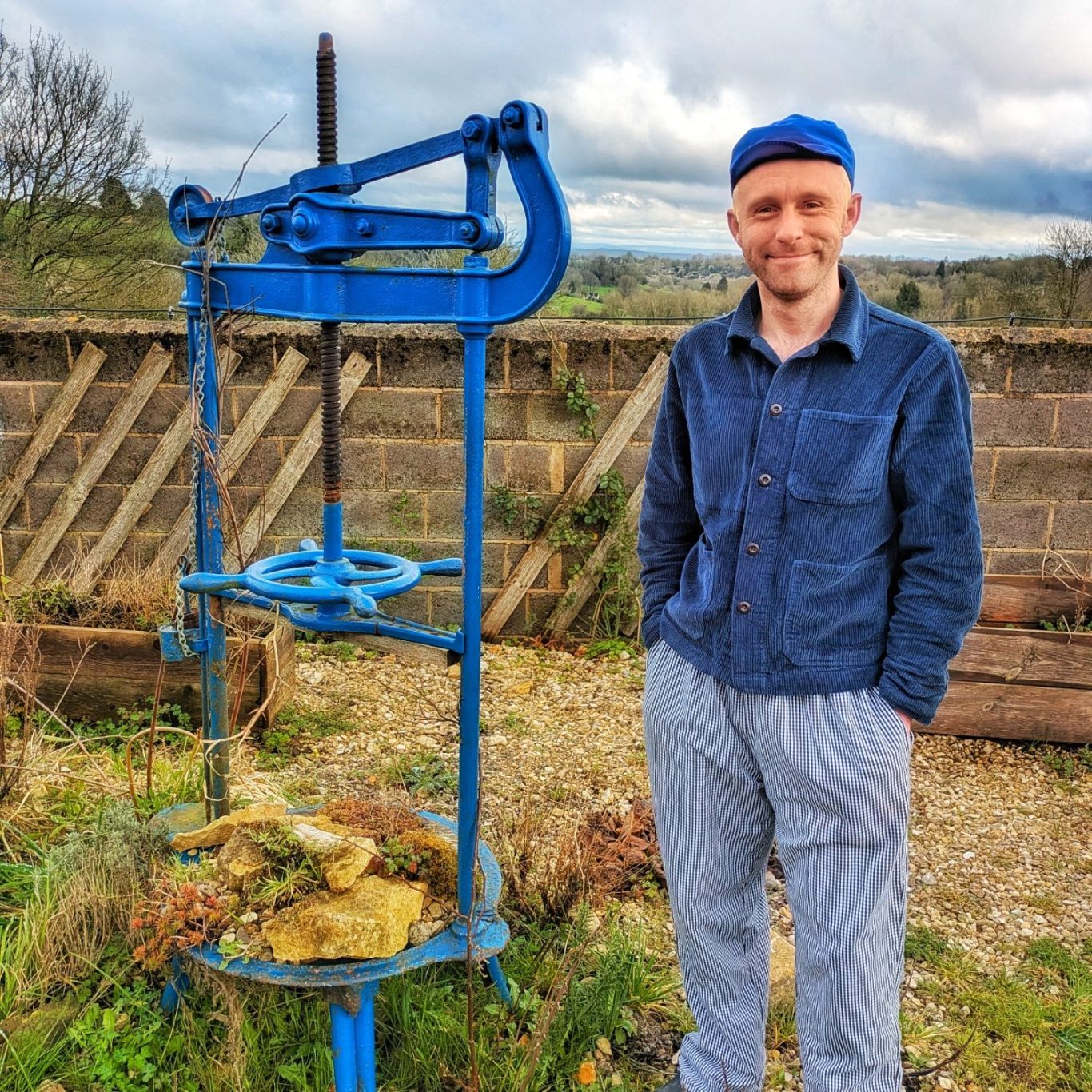
Since 2015, David Jowett has been combining traditional craftsmanship with an almost obsessive passion for independent cheese creations at King Stone Dairy – high up on the chalky terroir of the Cotswolds.
"He is probably one of the best cheesemakers of our time." Even before I met David Jowett and his King Stone Dairy, he had been described to me in glowing terms – for example, by Ned Palmer, author and cheese expert from London. During my research, it became increasingly clear that my encounter with the young cheesemaker from the British Cotswolds would be anything but an ordinary visit to a cheese dairy.
David Jowett, born in New Zealand and raised in Stratford, has travelled remarkably far at the age of 34 – and has held positions that carry weight in the international cheese world. His personal cheese journey took him from co-managing a branch of Paxton & Whitfield to cheese production in Berkswell, to Welbeck Estate and Stichelton Dairy, to the cellars of Jasper Hill Farm in Vermont, to Neal's Yard Dairy in London – and finally spent two years as Head Cheesemaker at Gorsehill Abbey Farm in Worcestershire.
His formative stages and rapid success – listed in the best cheese shops and featured on the menus of renowned restaurants in the United Kingdom – perhaps explain why a team of seven, among the most experienced in the country, has gathered in Chedworth, Gloucestershire. Some have moved here with their families specifically to become part of King Stone Dairy.
Perhaps the magical appeal of this place also lies in the special constellation with Seb Clarke at Manor Farm, which makes the Cotswold Brash tangible and herd life – a truly wild mixture – immediately experienceable. What is certain, however – I sense this from the very first minutes of our encounter – is David's passionate commitment to the terroir of his homeland. Terroir in all its meanings.
His almost obsessive dedication, combined with a deep-rooted perfectionism to always achieve the best possible results, is impressive. It is an attempt to give something back of what this place – Manor Farm, the Cotswolds, Gloucestershire – gives him day after day: the certainty of being able to live here and shape his life.
The heart of England
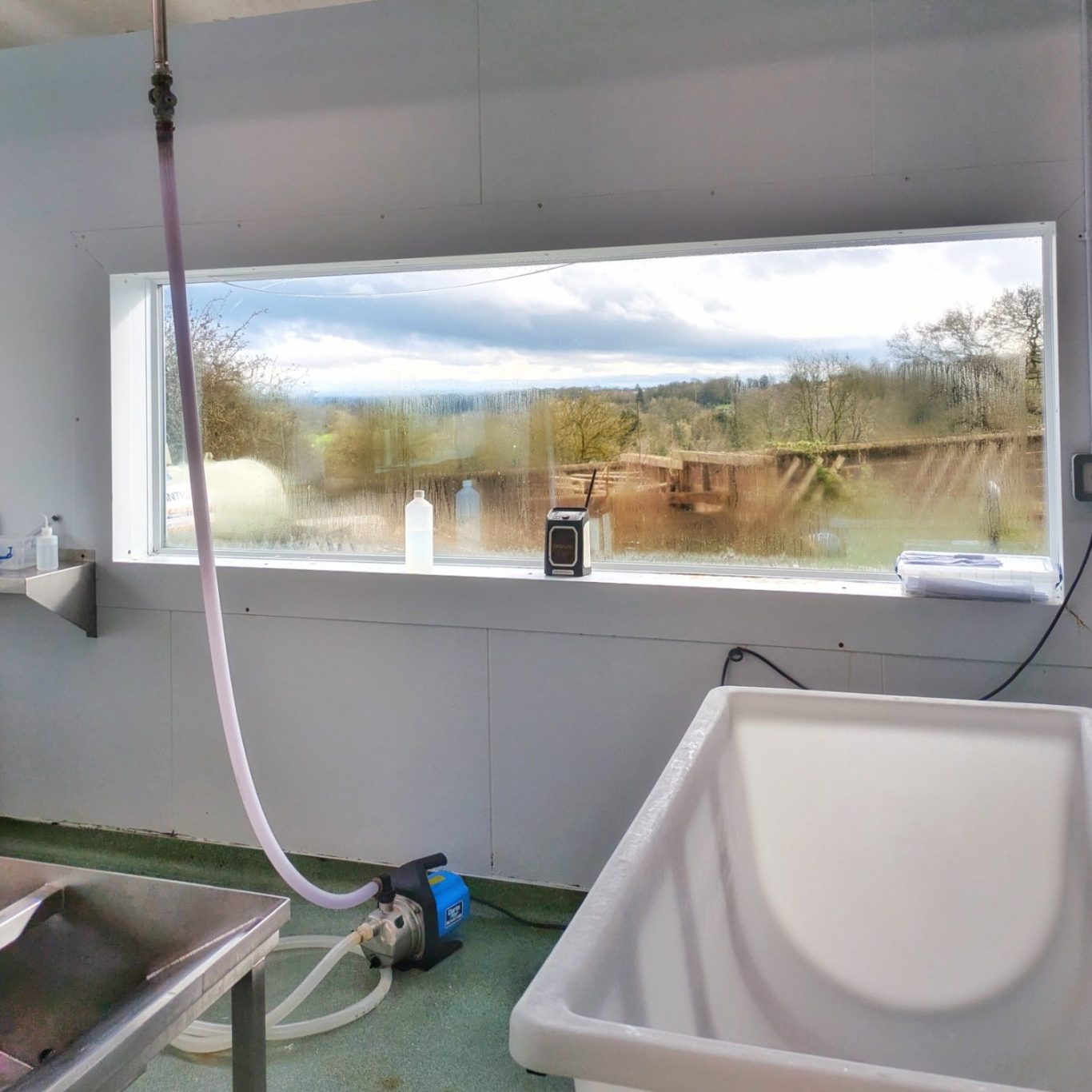
The production room for Rollright and Yarlington soft cheeses offers the seven-strong team – alongside David, the team includes Joe, Alex, Tom, Harriet, Israel and Caroline – uninterrupted views of the Cotswolds during production.
On this last day of February, David picks me up at Kemble station in his – "sorry, it's a little bit muddy" – off-road vehicle. "Is it okay if we take the most scenic route instead of the shortest one?" Of course I agree. When else would I get the chance to take a tour of the sunny Cotswolds? This region in the south-west is considered the "heart of England" – an area of outstanding natural beauty covering over 2,000 square kilometres and stretching across six counties. Gentle hills, chalky soil, honey-coloured stone. Here, the landscape shapes identity.
Wealthy city dwellers discovered the beauty of this natural treasure long ago – with noticeable consequences for tourism and property prices. "There are always two sides to every story. But the people who live here are very different from the posh Cotswolds people they are now reputed to be." My first impressions confirm this. David's warm, direct manner – coupled with a cheerfulness rarely seen on a Friday afternoon after a hard day's work on the farm – is immediately infectious.
"Oh wait!" He swerves to avoid one of the countless pheasants we encounter repeatedly on this half-hour drive. This is his natural environment – you can tell immediately. And yet this man has already travelled far and wide in his young years. Shortly before graduating from catering college, he dropped out of his studies. At the time, he was working at Paxton & Whitfield, which then still had a branch in Stratford – the town where he spent most of his childhood. Instead of graduating, he did a six-week internship at Ram Hall Farm. And the decision to pursue cheese was made.
Back to the beginning
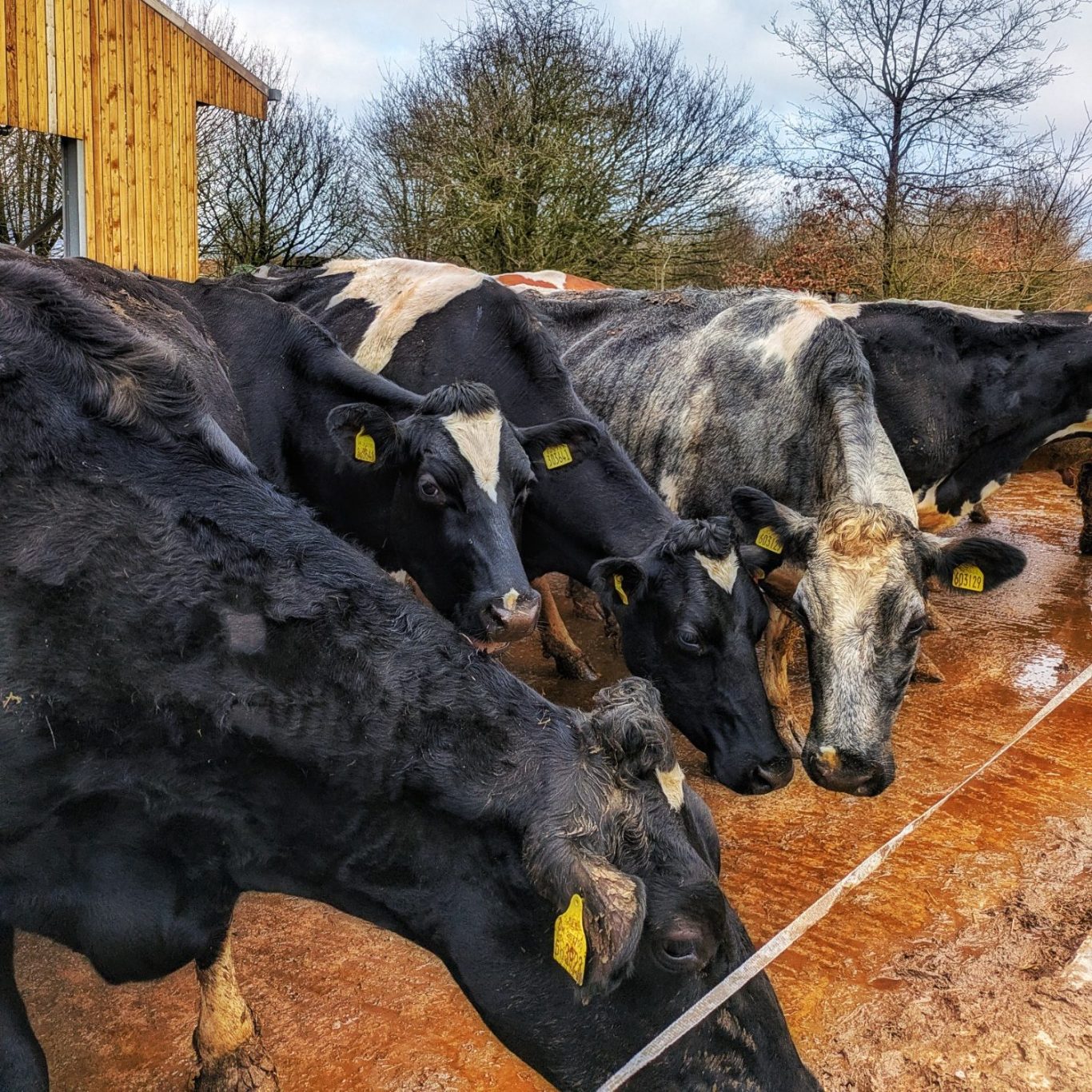
A wild mix of Dairy Shorthorn, British Friesian, Fleckvieh, Normandy, Brown Swiss and Norwegian Reds. In future, the focus will be more on Norwegian Red.
"I just didn't see myself as a head chef in a London kitchen anymore – even though the sheep really did tread a lot," he laughs. So David went to the School of Artisan Food at Welbeck Estate in Nottinghamshire. "That was quite a long way from home." There he met influential figures such as Ivan Larcher and Joe Schneider.
He graduated in 2011, returned to Paxton & Whitfield and began searching for his own cheese dairy. "I made just about every mistake you can make – the biggest one being that I needed cash flow and decided to go for a long-aged Comté." He knows what it's like to fail. But he never lost faith that the path of the cheesemaker was the right one for him.
During a casual conversation in a bar, he learned that a cheesemaker was wanted in the region. The partnership, part one of King Stone Dairy, began in 2015 – and ended three years later. At that point, David not only had formative years of training under his belt, but also extensive experience as a cheesemaker. He had already made a name for himself with his Rollright.
Shortly afterwards, in September 2019, he produced this soft cheese, infused with notes of crème fraîche and wrapped in spruce bark, for the first time on the grounds of Manor Farm in Chedworth. Not only did the signature cheese make the move, but so did the name King Stone Dairy – named after a menhir from the Stone and Bronze Ages in the region. "Manor Farm and the constellation with Seb as farmer were a unique opportunity for me to move directly to the source." Then came Corona. Ashcombe and Burford were created to process the surplus milk – and have remained to this day.
An extraordinary privilege
We go over hill and dale, uphill, downhill, past old cottages, through small villages – and an astonishing number of pheasants. "Have a look!" David points to a building on the horizon. It is the new open stable area at the highest point of Manor Farm – a former airfield from the Second World War. In a few hours, we will be stretching our legs here among the 250 animals.
But first things first: we park at the cheese dairy, just half a mile away. The view from here across the vast landscape of the Cotswolds is at least as impressive as the contrast on the premises themselves: between old, azure-blue cheese presses and the new building, where five varieties are currently being produced. Manor Farm borders directly on Chedworth Cemetery. "It always reminds me of the cycle of life." David's thoughtfulness, coupled with an unwavering affirmation of life, is remarkable.
We let our gaze wander over the horizon. I ask David where his deep love for this place comes from. "It's an extraordinary privilege that I've been given here. Farm-based cheesemaking – there are only a few examples of this in the UK. Supporting regenerative agriculture, taking responsibility for people, animals and the region I come from: how could I not be committed to this?"
In constant dialogue
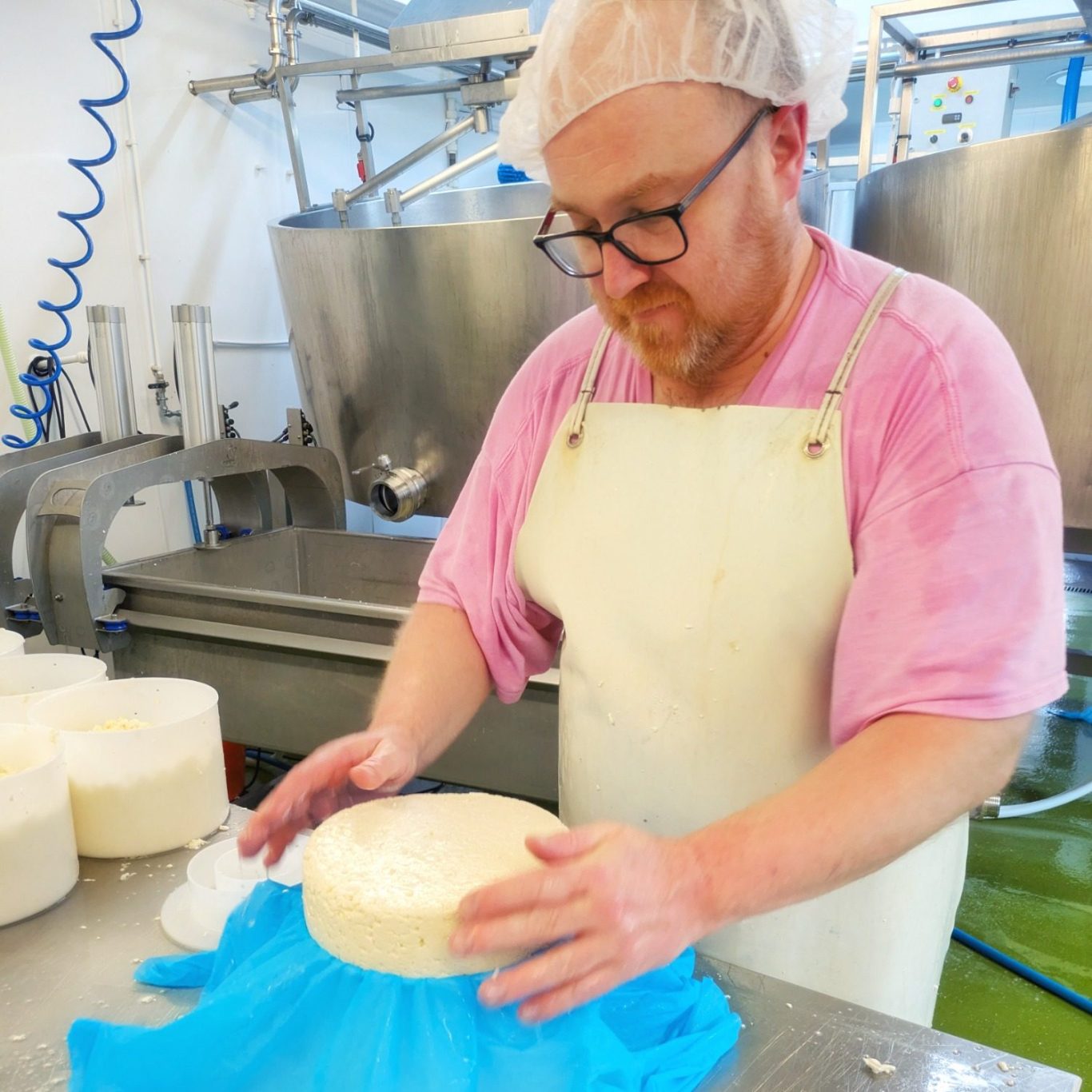
Tom is preparing the Ashcombe wheels for pressing in the hard cheese production room. In the background are the cheese vats from Jasper Hill Farm.
We enter the cheese-making rooms. David says it was important to him to have large windows here. They let in light and offer a view of the surrounding landscape. "While we make cheese, we can see how nature shapes the taste of our milk." Around 2,700 litres of milk are processed at King Stone Dairy every day. This results in Rollright – its original cheese – and the soft cheese Yarlington: a collaboration with the local cider producer Tom Oliver. The hard cheeses are produced next door.
On the way there, we meet Israel, who is maturing the Ashcombe wheels. He is one of the team members who moved here specifically for this job, bringing with him experience from Paxton & Whitfield and London's best cheese restaurants. In the second production room, Tom – originally from Fen Farm – is preparing countless Ashcombe cheeses for pressing. David proudly points to a "happy coincidence" in the gallery: The two cheese vats, each with a capacity of 1,700 litres, come from Jasper Hill Farm – probably his most formative stop. There he learned that nothing is more important than constant dialogue with one's surroundings. That value creation only arises from relationships – with nature, with people and with the conditions of the season, the spirit of the times and the market.
The taste of Manor Farm
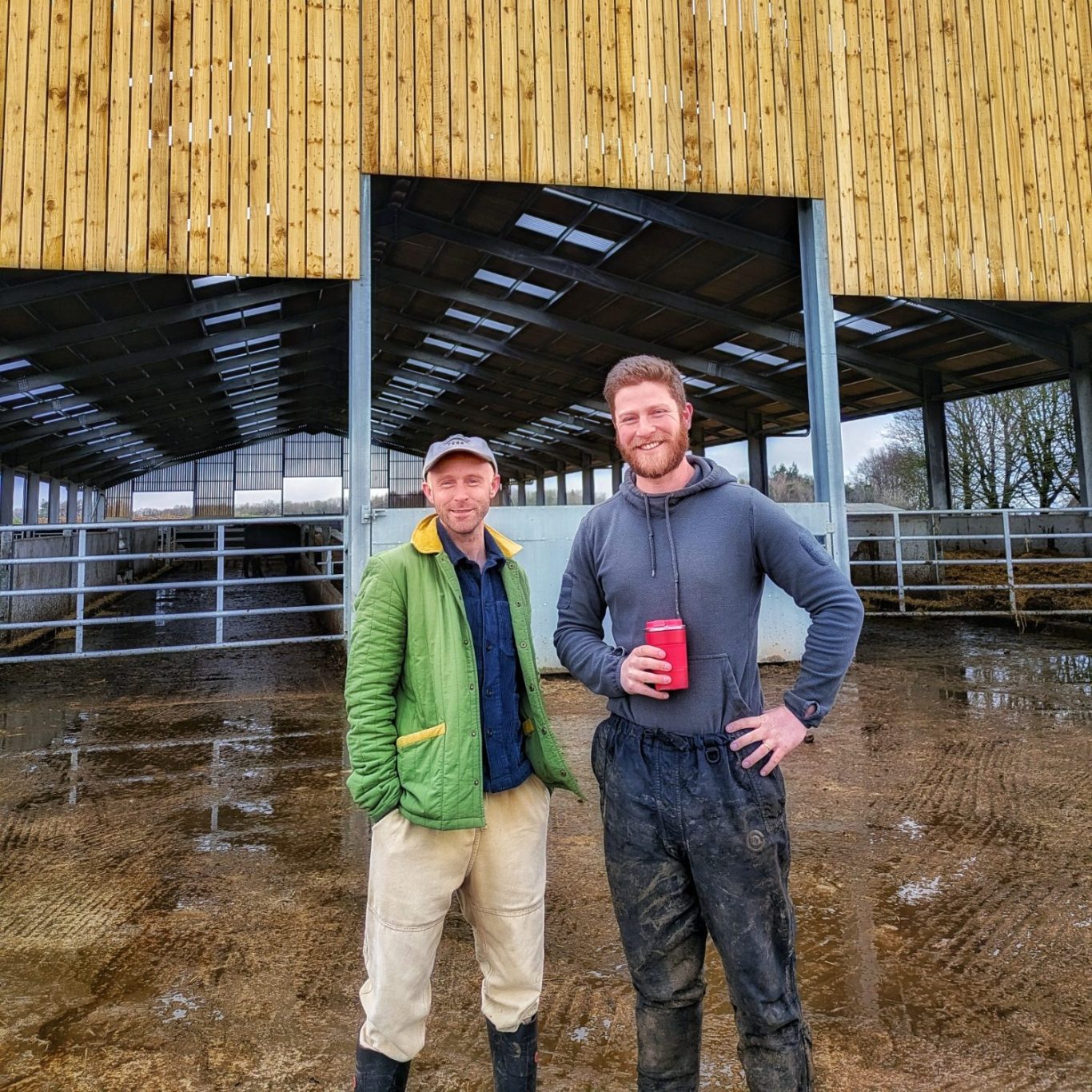
A unique, special situation for David: just half a mile away, Seb Clarke, together with Oli, Owain and Will, looks after the herd of 250 animals.
We need to hurry a little. David leads me into the maturing rooms. And he has nothing less than a mature tasting in mind. He pulls out his cheese harpoon and heads determinedly towards a wheel of Burford – "made with the high summer milk from August". It is the longest matured cheese in the King Stone Dairy repertoire, at least five months old. As we taste it, I am surprised by the tension in the flavour – meaty aromas, hazelnut, a light, almost tropical hint of pineapple. "There's something happening all the time, isn't there?" David beams at me expectantly.
"But you have to try my sauce hollandaise cheese." Ashcombe – made from winter milk and matured for at least two months – has a distinctly richer, creamier texture. It is reminiscent of melted butter, carried by a delicate, precise acidity. Sauce hollandaise, indeed.
As the Morton, a semi-hard mountain cheese, melts in our mouths, David voices what is on my mind: "It's all the same milk. Three hard cheeses, two soft cheeses – each with a different starter culture, its own technique. And yet they have something in common. A shared signature. The taste of Manor Farm."
It's true. It's not even a single, clearly identifiable aroma. We try to describe it, to find words for it. "The sum of all agricultural decisions, the grasses and herbs that have grown over centuries, even the altitude of 800 feet above sea level. If you dig here, you'll hit limestone after less than a metre. All these are conditions that make up this flavour. The terroir of Manor Farm."
"Understanding nature – nearly impossible."
To truly understand the complexity of the area, we set off to visit Seb. On the way, David explains: "When King Stone Dairy moved here, the herd consisted mainly of British Friesians and Dairy Shorthorns. We wanted to introduce more diversity to understand how different breeds change the character of the cheese. Now it's become a really wild mix," he says and laughs. Dairy Shorthorn, British Friesian, Fleckvieh, Normandy, Brown Swiss and Norwegian Reds – you don't see them every day. Seb and he want to focus more on this in the coming months and increase the proportion of Norwegian Reds. On the one hand, the breed is robust enough for the local conditions. On the other hand, its higher casein content ensures a stable texture and a more complex flavour profile in the milk.
We get out of the off-road vehicle. Seb is already coming towards us. "Isn't this amazing?" He is referring to the new barn, which was completed just a month ago. It ensures more consistent conditions – for the animals and thus for cheese production. Until now, extreme weather conditions had a direct impact on the composition of the milk produced by the free-range herd.
It is impressive to witness David and Seb working together, engaging in a dialogue that requires almost no words. "With this situation, we are able to analyse even more precisely which part of the landscape is best suited to which cheese." And there it is again: that almost obsessive passion, always a shade more intense, more consistent, more perfectionist than perhaps necessary – in both of them.
It is difficult to pinpoint the exact reasons why a cheese turns out particularly well on a given day, explains David – especially with Burford, which has such a long maturation period. "Capturing the data is easy. But truly understanding nature – nearly impossible." For both of them, it is a science that will never be complete.
"The highest respect for the milk"
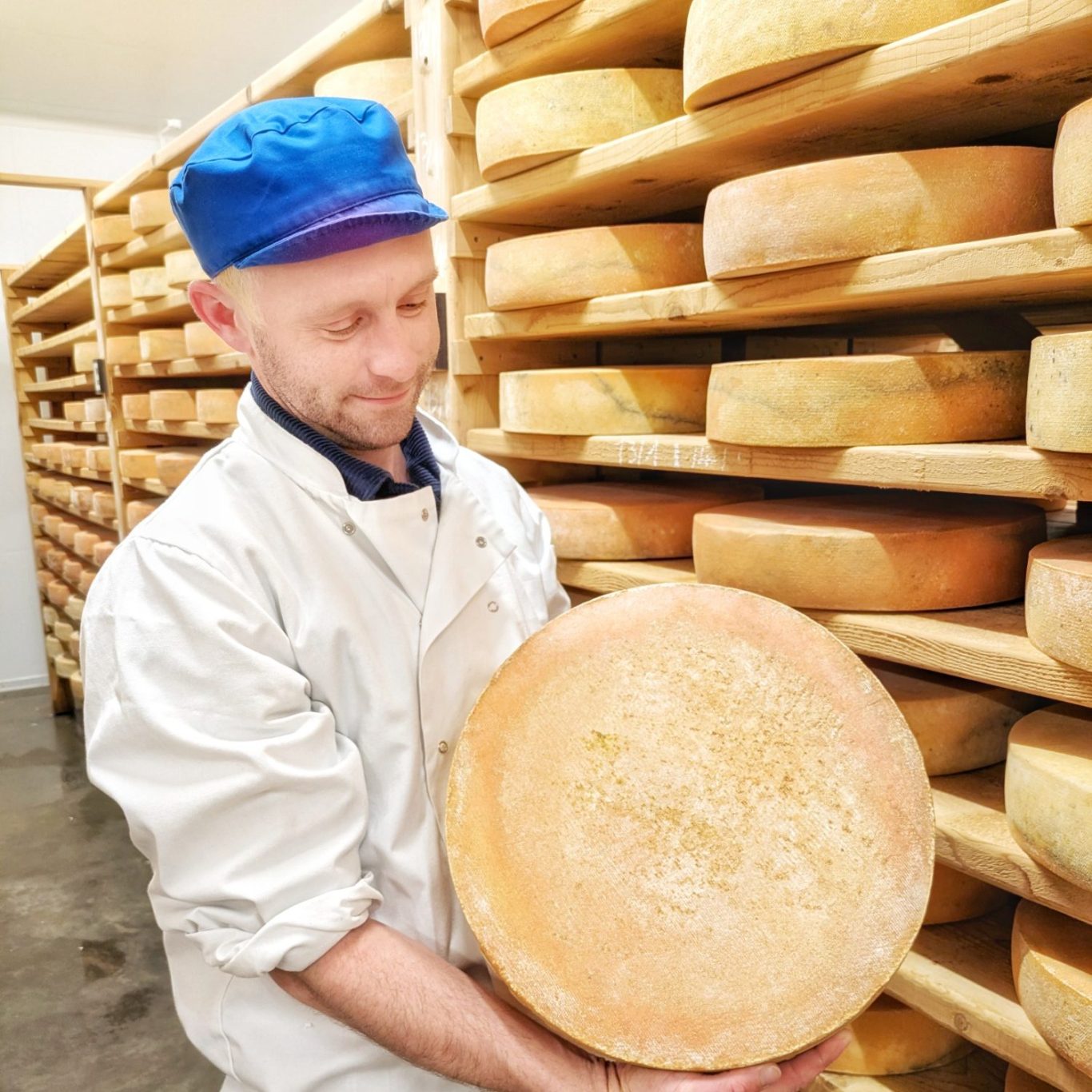
David's "Sauce Hollandaise Cheese": Ashcombe was originally created out of necessity – during the coronavirus pandemic.
We've got stuck again – literally. My return journey to London forces us to take off our muddy boots and continue our conversation in the car. Without Seb, who has long since returned to herding the flock.
After all the impressions I have gathered here, I am left with only one question: does he ever pause for a moment? Does he ever stop and take stock of what has grown from his hands since 2015? As David gallantly dodges another pheasant, he pauses for a moment to think. "I am incredibly proud of this cheese dairy, my team and our work. I find it difficult not to constantly think ahead and experiment – to refine the Geotrichum with a different starter culture."
It's amazing how humbly David responds. So I ask more directly: Why do so many experienced figures from the British cheese world want to work here of all places? "The close integration of agriculture and cheese making is rare. Maybe that's exactly why." I give him space to develop his thoughts. "Maybe because I have the highest respect for the milk." At the beginning of the year, head cheesemaker Joe was on holiday and David took over the hard cheese production completely. There is this one moment – again and again – when he cuts the break. "That milk represents breeding decisions, grazing choices, the people working on the farm. Cutting the curd breaks all of that down into visible pieces."
He feels so personally involved that, despite all his analytical precision, the human aspect of the terroir becomes almost more important than the landscape itself. "To feel how the heart of the Cotswolds gives my cheese its special character. Does that make sense?"
This muddy car is filled with grandeur. King Stone Dairy is much more than a production facility for exceptional craftsmanship. It is David's tribute to his homeland – a commitment to Manor Farm, its people and its milk, which shapes each of his cheeses.
This encounter is part of my ongoing Cheese Stories on international cheese cultures.