6th March 2026
Cheese Stories
German version
20 years of Stichelton Dairy: Joe Schneider and his uncompromising Stichelton
This Cheese Story is based on a visit to Joe Schneider at Stichelton Dairy on the Welbeck Estate in Nottinghamshire. It complements the Cheese Stories about Jonny Crickmore from Fen Farm Dairy in Suffolk and David Jowett from King Stone Dairy in the Cotswolds – and thus completes the picture of the British cheese renaissance with one of its most influential figures.
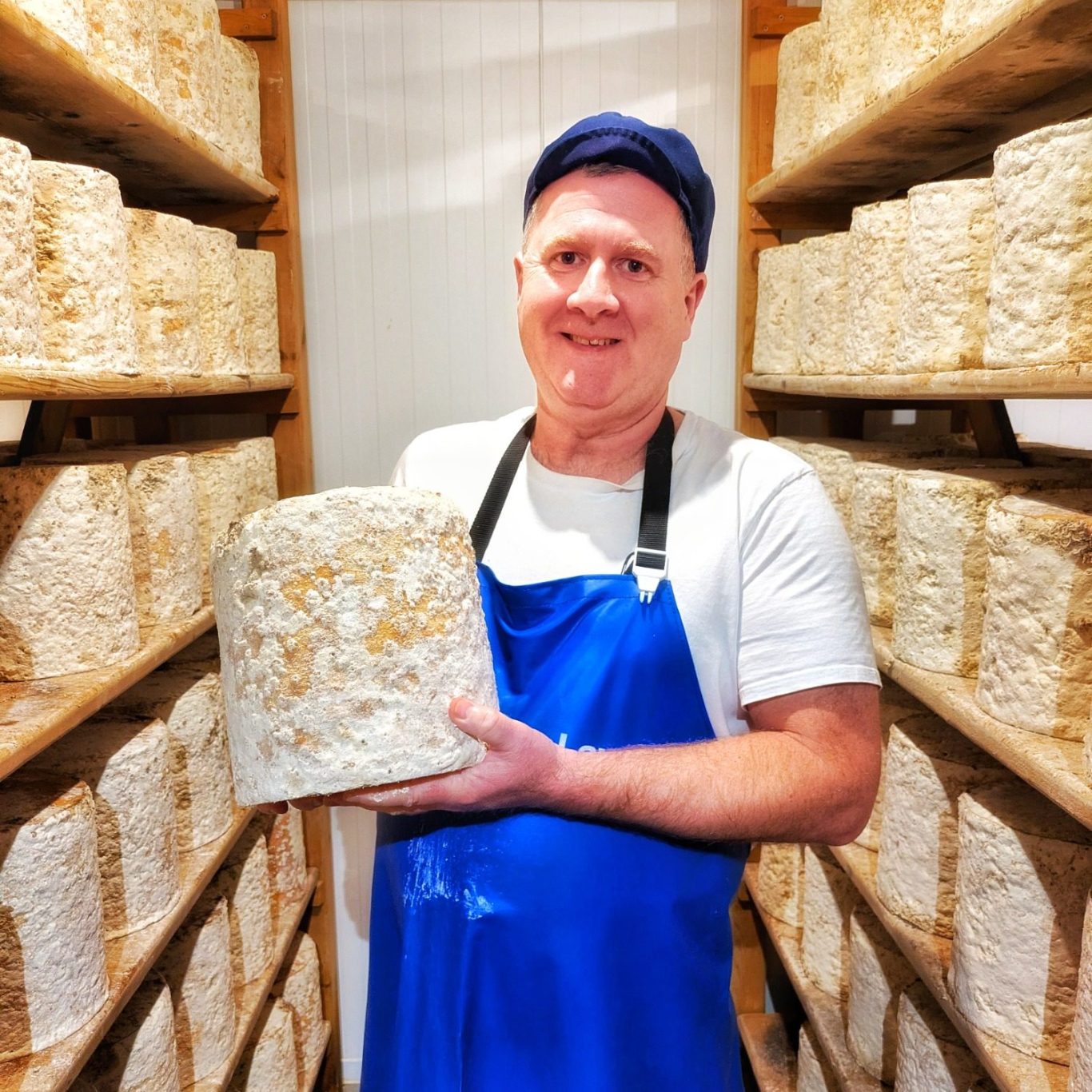
To this day, cheesemaking remains an incomprehensible miracle for him – somewhere between science and alchemy. For 20 years now, the name Joe Schneider has been inextricably linked with Stichelton Dairy.
"You have to call Charlie!" Joe Schneider means the man who knows the Sherwood Forest region best, to take me from Retford station to Welbeck Estate, to Stichelton Dairy. The 30-minute taxi ride – somewhere between Nottingham and Sheffield – turns out to be much more than an idyllic drive through the flat countryside of the Midlands. With every metre, Charlie brings me closer not only to the hallowed halls of Collingthwaite Farm, but also to Joe Schneider, one of the most famous names in the international cheese world. And to what he has created here for the region and British cheese-making as a whole.
"He is our Robin Hood of cheese." The comparison could hardly be more apt. We drive along the edge of Sherwood Forest – the legendary home of the character who is said to have lived here with his Merry Men. Even today, a statue of Robin Hood in the forest village of Edwinstowe commemorates the legend. "It attracts tourists like flies," says Charlie dryly.
With a wink, I ask him, "Is Joe a sly fox, a folk hero, or a lawbreaker who leads a gang of outlaws?" Loud laughter fills the car. "He'll be the best person to tell you that." Then he becomes more serious. It is amazing what Joe has achieved over the past twenty years – not only for the region, but for the entire United Kingdom. He is one of the few who is sticking to his guns.
In October this year, Stichelton Dairy celebrates its 20th anniversary. None other than Randolph Hodgson – known for Neal's Yard Dairy and the British cheese renaissance – approached Joe in the early 2000s with the words: "Let's bring back an amazing cheese!" Their common goal: to finally start producing one of Britain's most famous traditional cheeses, Stilton, from unpasteurised milk again. It had not been produced on a farm since the 1930s, nor had it been made from raw milk since 1988.
In 1996, Stilton was granted Protected Designation of Origin (PDO) status – a European law that regulates the use of certain product names and, in the case of Stilton, expressly excludes raw milk. The aim of PDO is actually to protect regional foods, their authenticity and traditional production methods – but in this case at the expense of raw milk quality, whose aromatic depth Joe strongly defends. So Stilton was not allowed to use its new, old blue. All the more satisfying that they were able to draw on the historical village name Stichelton – first mentioned in the Lincoln Rolls in the 12th century.
"We hope that Joe sticks to his guns. The group of these cheesemakers is getting smaller and smaller." The pressure on raw milk producers has even reached Charlie's taxi. Many have switched over in recent years – such as Fen Farm Dairy. "Of course it affects the cheese," says Charlie. "So enjoy it. And enjoy your time with Uncle Joe!"
Tea time in the attics
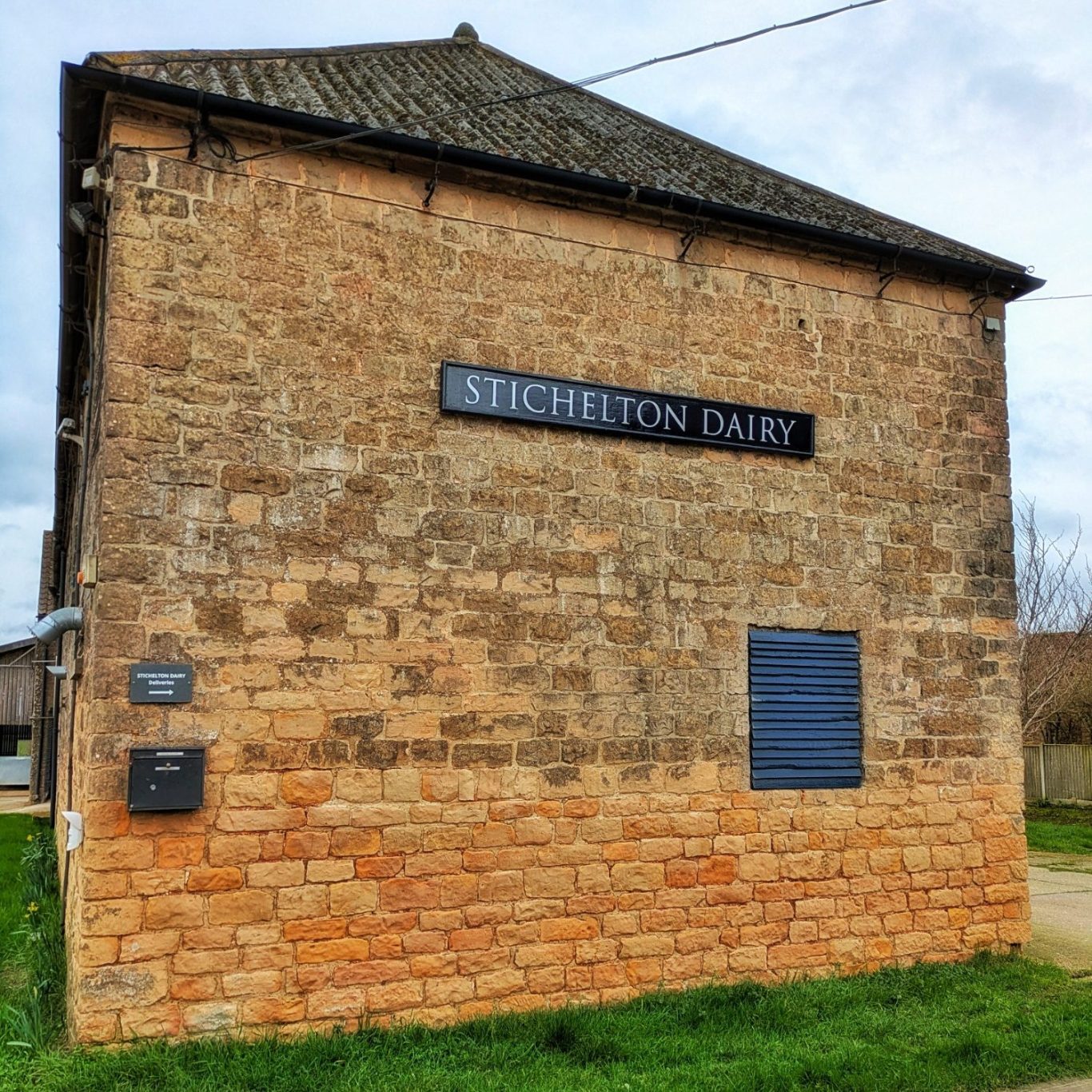
When they arrived at Welbeck Estate in 2005, Joe rolled up his sleeves and got to work.
I slam the car door shut – at the same moment, the azure blue arched door of Stichelton Dairy opens. Joe steps out and greets me warmly: "Shall we go upstairs for a cup of tea first?" Very British, I think. Yet Joe has already travelled remarkably far in his 58 years: born in New York State, he spent his formative cheese-making years in the Netherlands. Nottinghamshire is already his third stop in the United Kingdom.
We have now arrived in the cosily converted attic. Numerous photos from the early years adorn the walls, alongside awards and a cheese map from Neal's Yard Dairy – a miniature museum, almost like that of Bernard Antony, the renowned French affineur from Alsace who, also an advocate of raw milk cheese, has been sourcing Stichelton since its early days.
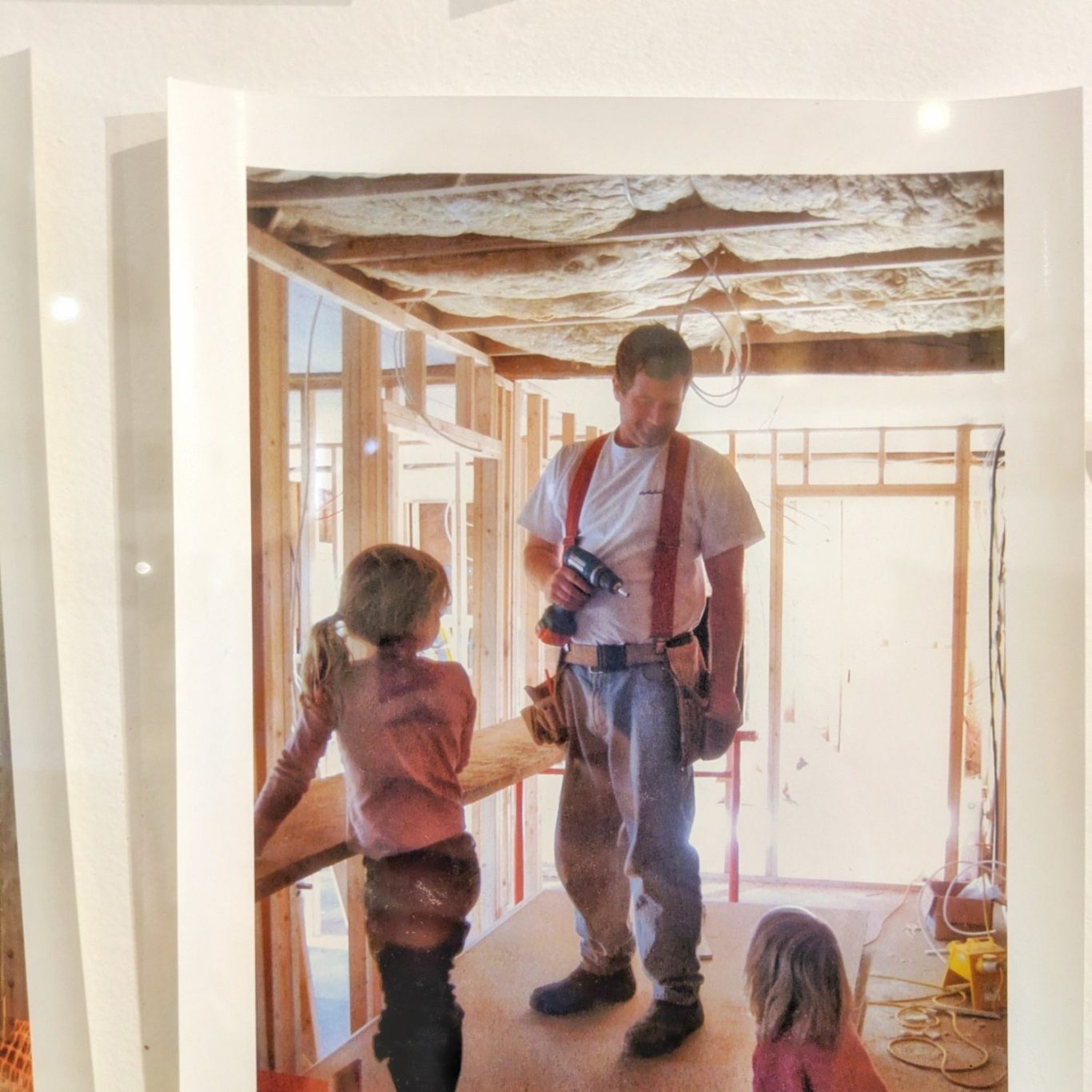
Chance led Joe to Collingthwaite Farm. In 2005, he began searching for a suitable farm. A photo shows the young Joe with a drill in his hand – he literally got his hands dirty here. "When we found this place – we arrived here in 2006 – we were very fortunate to be able to realise our dream of a farm and dairy in one location."
Observe, participate, shape
By "we," he means himself and Randolph Hodgson. For years, Joe had initially been a mere observer of British cheese culture. "Thirty ago, I started making Greek cheese in Holland – more in an industrial style. I was fascinated by what was happening in the United Kingdom. The British had almost lost their cheese culture. Then stories like that of Neal's Yard Dairy began – nothing less than a revolution." Joe no longer wanted to just watch, he wanted to be part of this movement.
So in 1998, he and his wife moved to Plaw Hatch Farm in Sharpthorne to get involved. "A small biodynamic farm in East Sussex that questioned everything I had previously known from the States – let's call it rather one-dimensional food production." Joe immediately fell in love with this philosophy: thinking about food in terms of cycles, understanding its significance and added value. Since then, he has been steadfastly pursuing the "artisanal road".
His second job as a cheesemaker took him to Daylesford Farm in the Cotswolds – and brought him into contact with Neal's Yard Dairy. "Randolph must have approached me with this crazy idea in 2004." What had started as a simple collaboration now became a revolutionary project. Together, they set out to find a suitable location. The Welbeck Estate with Collingthwaite Farm proved to be ideal – the only compromise was the 250-strong Holstein herd.
Identity issues
"I still enjoy coming here every day. Despite all the difficulties."
"Where do you actually feel at home?" I ask Joe. He thinks for a moment. He says that he and his wife have spent most of their life together here. He feels less and less connected to his childhood in the United States – values there have changed too much. Britain has long been his home; after all, his two daughters grew up here. "I am no longer just American – and we will probably never be completely British. Home is definitely where my loved ones are. But home is also where my work is."
Joe still enjoys coming here – despite all the difficulties and enormous pressure. Being a Stichelton cheesemaker is an important part of his identity. He never gets bored of his cheese, nor of the cheese-making process itself. For Joe, cheese-making remains an incomprehensible miracle – somewhere between science and alchemy.
Despite the considerable difficulties they have faced, especially in the last five years. Joe is referring to the small group of British cheese makers who currently still work with unpasteurised milk. Raw milk cheeses are increasingly disappearing from British soil. Pressure from the authorities is making it difficult for many to continue. Year after year, he sees farms switching over because they feel vulnerable. This has also changed the significance of their own work. They are now among the few who remain true to their principles.
Big achievements
"The mood has completely changed in recent years," says Joe. When he saw the large Cheshire wheels at Neal's Yard Dairy twenty years ago and read names like Appleby's, he was deeply moved by the close connection between family craftsmanship, region and tradition – a symbiosis that deliberately opposed industry. "Our business became very vulnerable." Even a small problem could have major consequences. With new technologies, almost anything can be found today if you search for it. The pressure is noticeably increasing.
That is precisely why Joe is so proud to have withstood this pressure over the past twenty years. One of the greatest achievements of this period has been to create a deep connection between the work of the cheese dairy and that of the farmers.
When he and Randolph arrived here, there was a lot of discussion about quality and efficiency. The Holstein herd produced milk like water – the animals were mainly there for milking. Gradually, the farmers' attitudes changed. "We took them to Neal's Yard Dairy in London. There they saw how enthusiastic customers were about our cheese." Finally, they proudly said, "Yes, that's my milk!"
I want to know how he deals with criticism, despite his enormous reputation. And how difficult it is to be confronted with fluctuations in the quality of his cheese in an already stressful situation. "Still go fuck you consistency?" Joe laughs heartily. Yes, that remains his credo. Just as cheese remains a living product. Consistency is not part of honest cheese making. Too many variables come into play. Cheesemaking is farming bacteria – and therefore always involves working with uncertainties. Problems were part of the process.
Muses and heroes
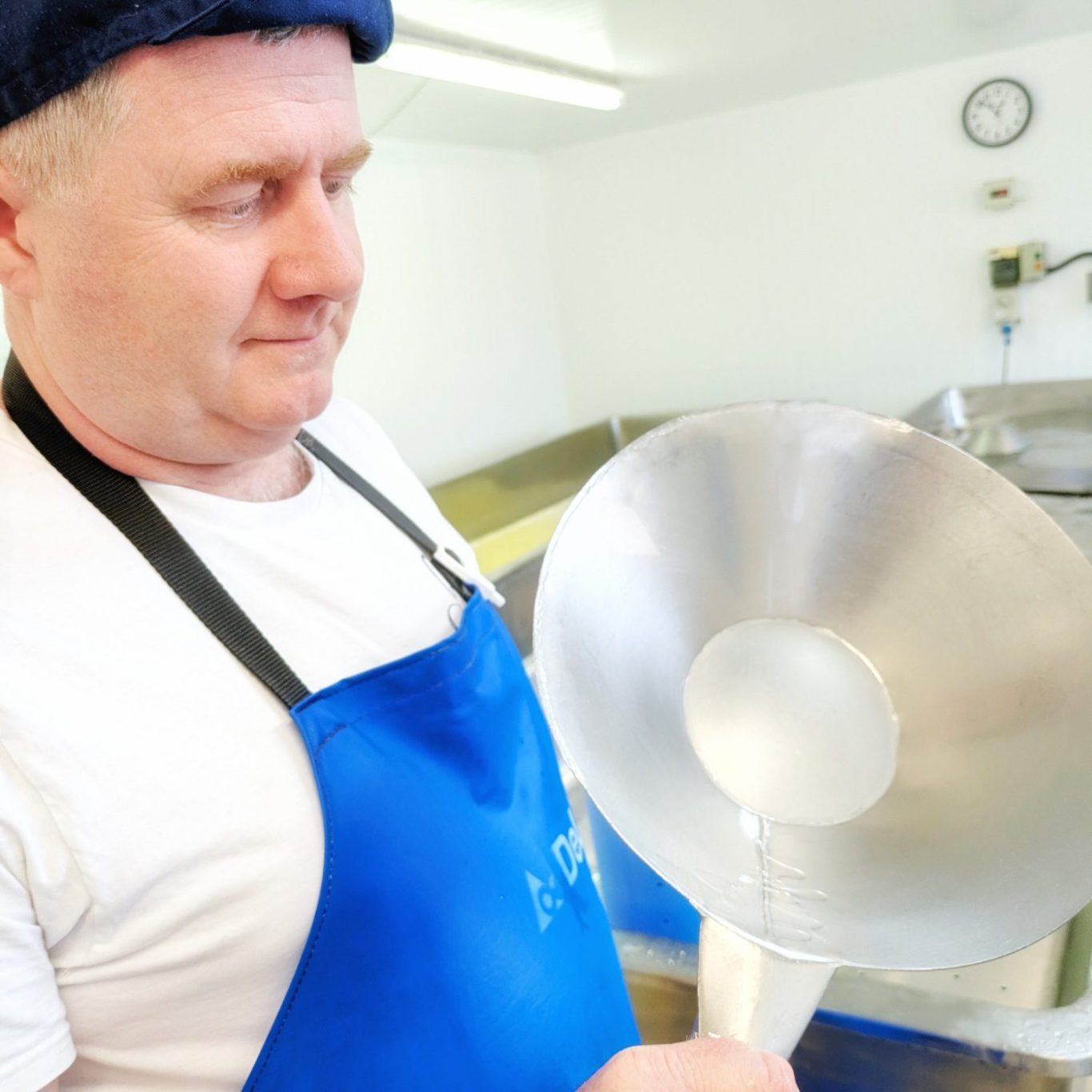
"We only have two of these – and I sharpened them myself with a hammer." A large, saucer-shaped stainless steel trowel, half of whose edge is sharpened like a scythe.
This makes the role of good retailers all the more important. They need to provide support, explain, communicate – and help their customers understand product variations. This is precisely where "the beauty of a conversation about cheese begins". People like those at Neal's Yard Dairy, says Joe, support precisely this kind of approach. He wants to work with partners like this. He is proud of that.
Just as proud as the people who work for Joe here – some of whom have been doing so for decades. After our little tea time lasting almost two hours, we finally make our way to the cheese rooms. In the stairwell, a black-and-white photograph of Ernie Wagstaff beams down at me. "My muse. The last man on earth who made raw milk Stilton at Colston Bassett." But there are also many living heroes and heroines, says Joe. For example, Julie Cheyney from St Jude Cheese or David and Jo Clarke from Sparkenhoe Farm.
In the cheese dairy, we meet Megan Colton, who has been with the team for six years, and John Kirkby, who has been working here for twenty years. The whey has been drained, and the curds, cut by hand, have been waiting undisturbed for two hours to be processed further. Joe picks up a ladle. "We only have two of these – and I made them myself with a hammer." A large, saucer-shaped stainless steel ladle, half of whose edge is sharpened like a scythe. They scoop out flat layers of the curd and carefully layer them into the second cheese vat. This is just one of many special details that later give the cheese its characteristic texture.
Unconditional care
I want to know whether Neal's Yard Dairy still uses the starter culture from Colston Bassett. "Yes – with the sexy name MT36," says Joe and laughs.
Every day, 2,500 litres of morning milk are processed here by just four hands into 36 new Stichelton cheeses. Each step of the production process is carried out with unconditional care. The milk is given sufficient time and space to develop its character – a full 24 hours. Most British cheeses, explains Joe, are produced after four to six hours.
We continue into the maturing rooms. After the curd has drained in tall cylindrical moulds – each wheel turned several times over several days – he proudly holds out a Sheffield butter knife for the so-called rubbing up. This is used to gently smooth the sides and surfaces of the wheels – as if glazing a cake. The air stays out and the blue mould does not start to form too early. At the same time, a protective coating is created that prevents the cheese from drying out during maturation.
Unique items
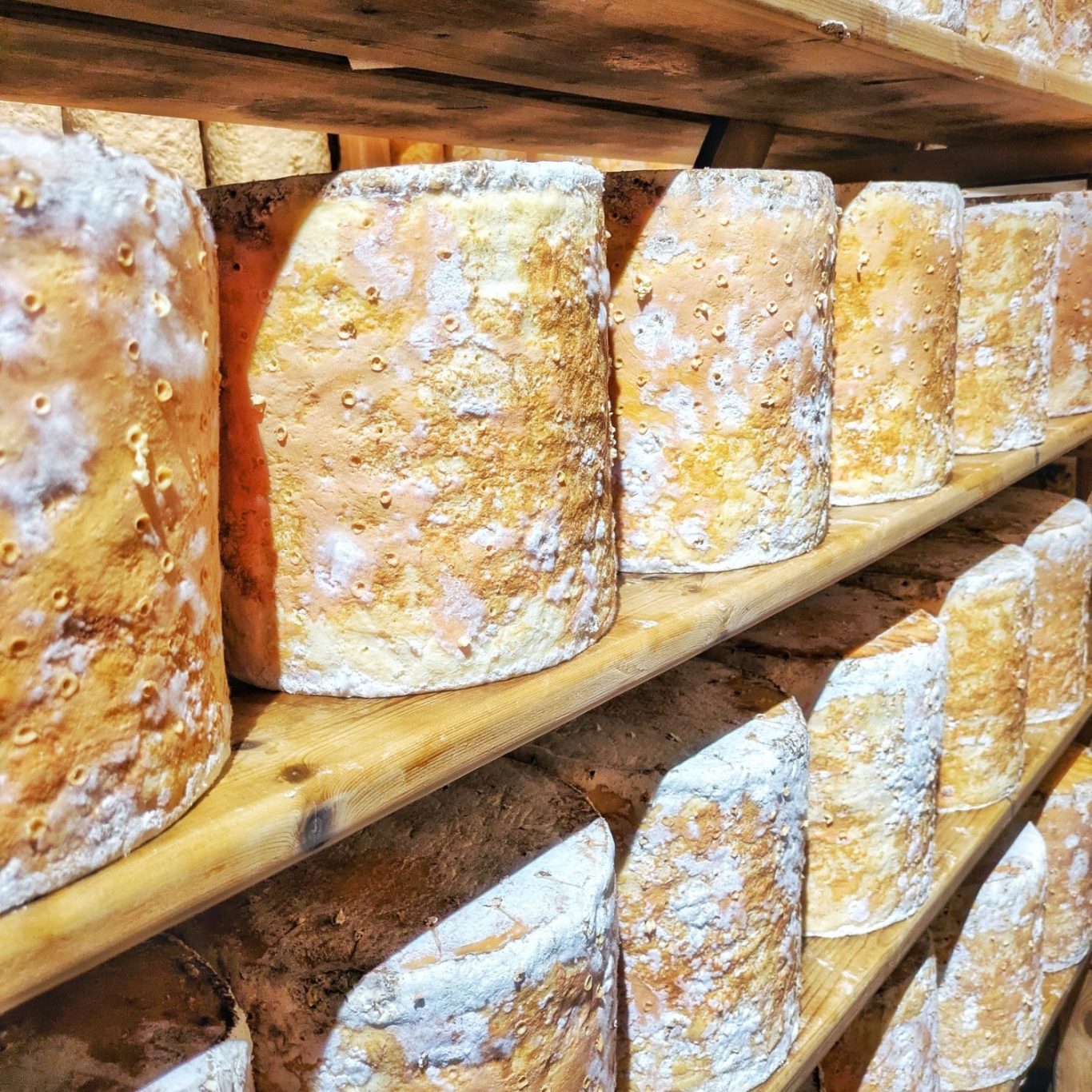
Each loaf is unique: for Joe, consistency is not part of honest cheese making.
The raw milk is given up to seven weeks to develop its individual flavour, complexity and special depth of aroma. Only then is it inoculated with blue mould cultures.
We taste our way through the different stages of maturity. "The magic happens right under the rind," says Joe. The first centimetre is almost reminiscent of a washed rind cheese – with peach notes and roasted butter aromas. When the mould begins to break down protein and fat, it is not the blue area itself that is the most exciting part, he explains, but the zone around it. This is where the real interplay of flavours takes place: sweet, honey-like, astonishingly mellow.
We contemplate the thoroughly colourful spectacle of the rind – shades of red, brown, white and pink, created entirely naturally by the interaction of the cheese and the atmosphere in this room. Each wheel is unique. Just like Joe.
He completely reoriented the value system of his childhood. At first, he was fascinated by British cheese culture. Then he got involved. Finally, he revolutionised it. Today, he is one of the few who can withstand the growing pressure. Because he has to. There is no plan B. Joe says he is not good at thinking ahead. He rarely thinks about the future – he doesn't know where it will all lead. An alternative is out of the question anyway. All of this is part of his identity. "I will stick to the guns."
This encounter is part of my ongoing Cheese Stories on international cheese cultures.