11th February 2026
Cheese Stories
German version
Waves of Joy: Jonny Crickmore's Culture of Responsibility
This Cheese Story is an in-depth reportage following a day at Fen Farm with Jonny Crickmore in the north of Suffolk. It broadens the perspective on English cheese culture beyond the Cheese Story with Roger Longman and brings into focus a culture of responsibility that is deeply rooted in the region while carrying international resonance.
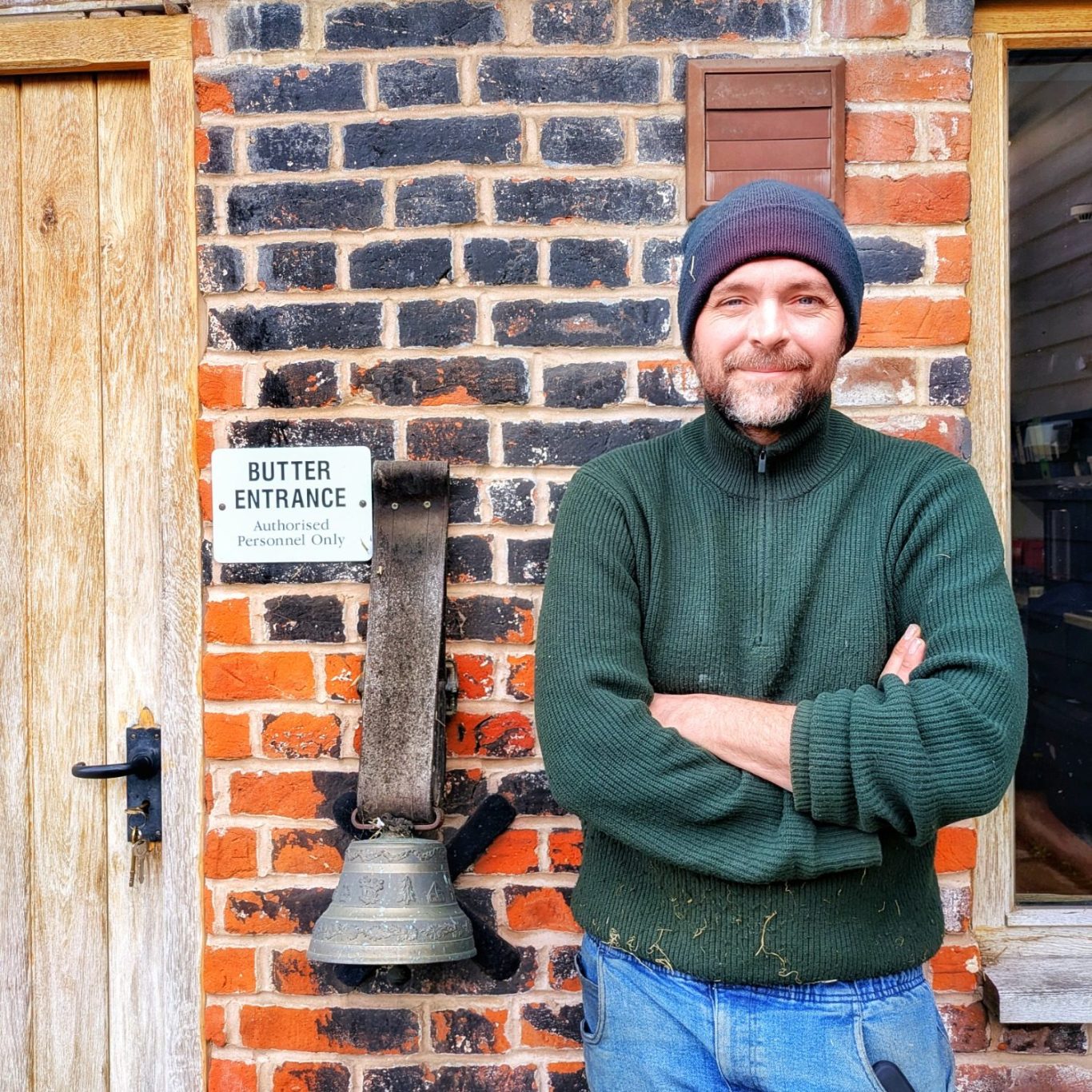
The 45-year-old Jonny Crickmore shortly after his beloved morning routine: “I’m still a farmer and a cheesemaker!”
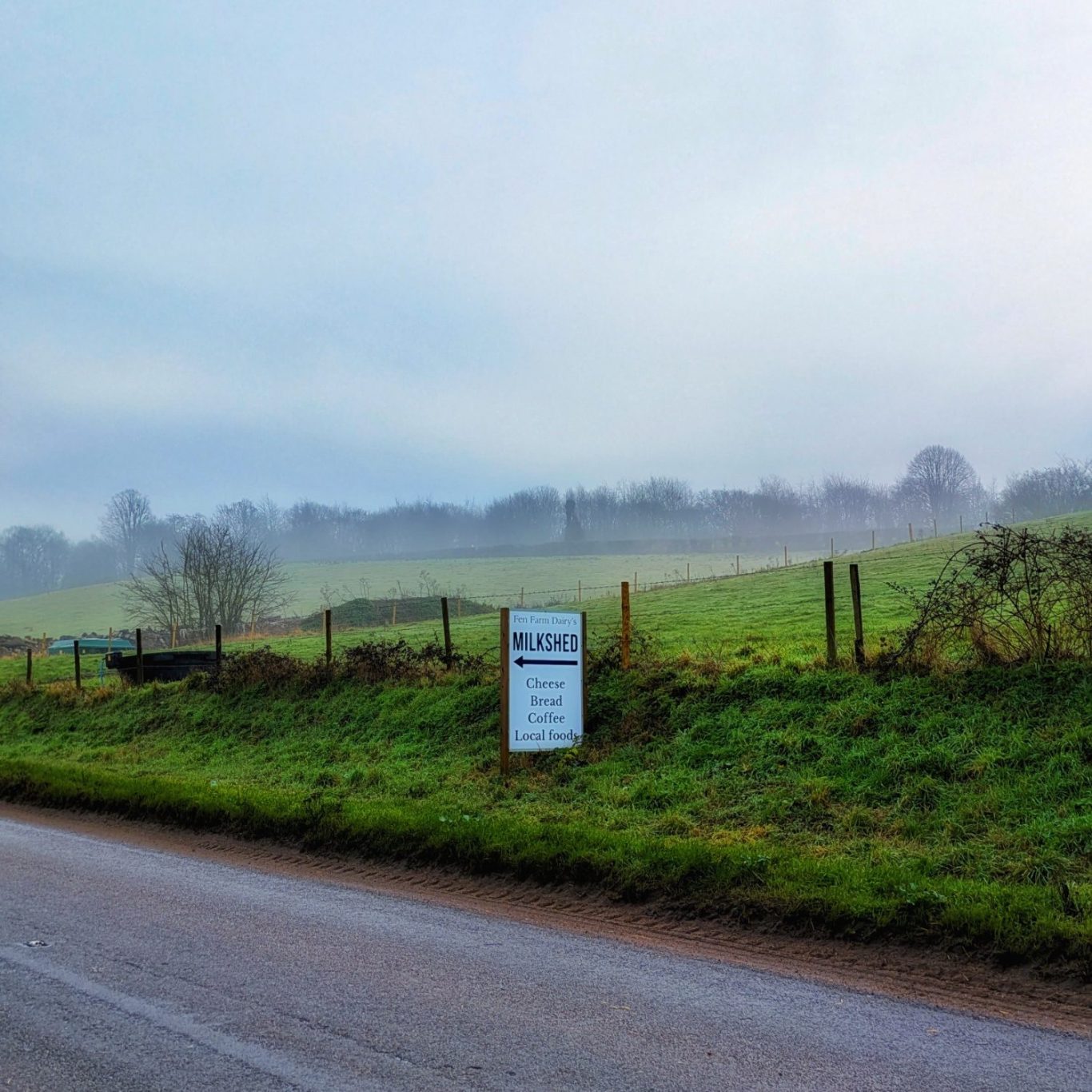
The eastern English county of Suffolk is known for its picturesque coastline and Constable Country – the epitome of English landscape romanticism. High up in the north, at the tip of Suffolk, the lush Waveney River Valley in Stow Fen with its lush, water-rich marsh meadows opens up before me as I arrive on this freezing cold January morning. A fertile, nutrient-rich wetland (fen!), habitat for otters, kingfishers, grey herons, water rats – and for the Montbéliarde herd of Fen Farm Dairy. But not in winter.
‘Wellies wouldn't be enough for our cows – they'd probably need boats,’ laughs Gemma, who picked me up from Halesworth station on this unusually dry day. Our destination: Fen Farm Dairy in Bungay, just a few kilometres away. This is where Jonny Crickmore and his team have been writing their own chapter in British cheese history since 2013. And this is where the herd of 330 animals – without wellies or boats, but with plenty of straw – is housed in open shelters from November to March. ‘Our Montys almost prefer it to the open field,’ I hear Gemma say to my right.
I will get to see all of this later during my stay at Fen Farm, talk at length with founder Jonny and enjoy a spontaneous tasting with head cheesemaker Marc King. But after just a few minutes with Gemma, it is clear that this farm is more than just a workplace. The 28-year-old is bursting with energy and joie de vivre – one of many faces that radiate a special cultural atmosphere without having to name it specifically.
She has been working on the farm for four years. She started as Jonny's personal assistant and now coordinates the farm and dairy teams, among other things. Having grown up just twenty minutes away, she always wanted to work in agriculture. She says she is very grateful that it is this special place.
When I ask what makes Fen Farm so unique for her, her eyes light up. ‘It's Jonny. I don't know anyone else who drives things forward with such energy and is so deeply connected to this area at the same time.’ She says that the people of Suffolk are generally very rooted in their homeland. But what Jonny has built up over the past twenty years is unique. No two days are the same. When she arrives in the morning, she never knows what to expect. ‘It's just exciting – in a very good way.’
My expectations for this visit were already high. But I still don't understand how much this cheese icon called Baron Bigod is just a logical consequence and one of many facets of what guides every move at Fen Farm: a culture of responsibility and unconditional care – for people, animals, the region and its nature.
A little jersey, more fat
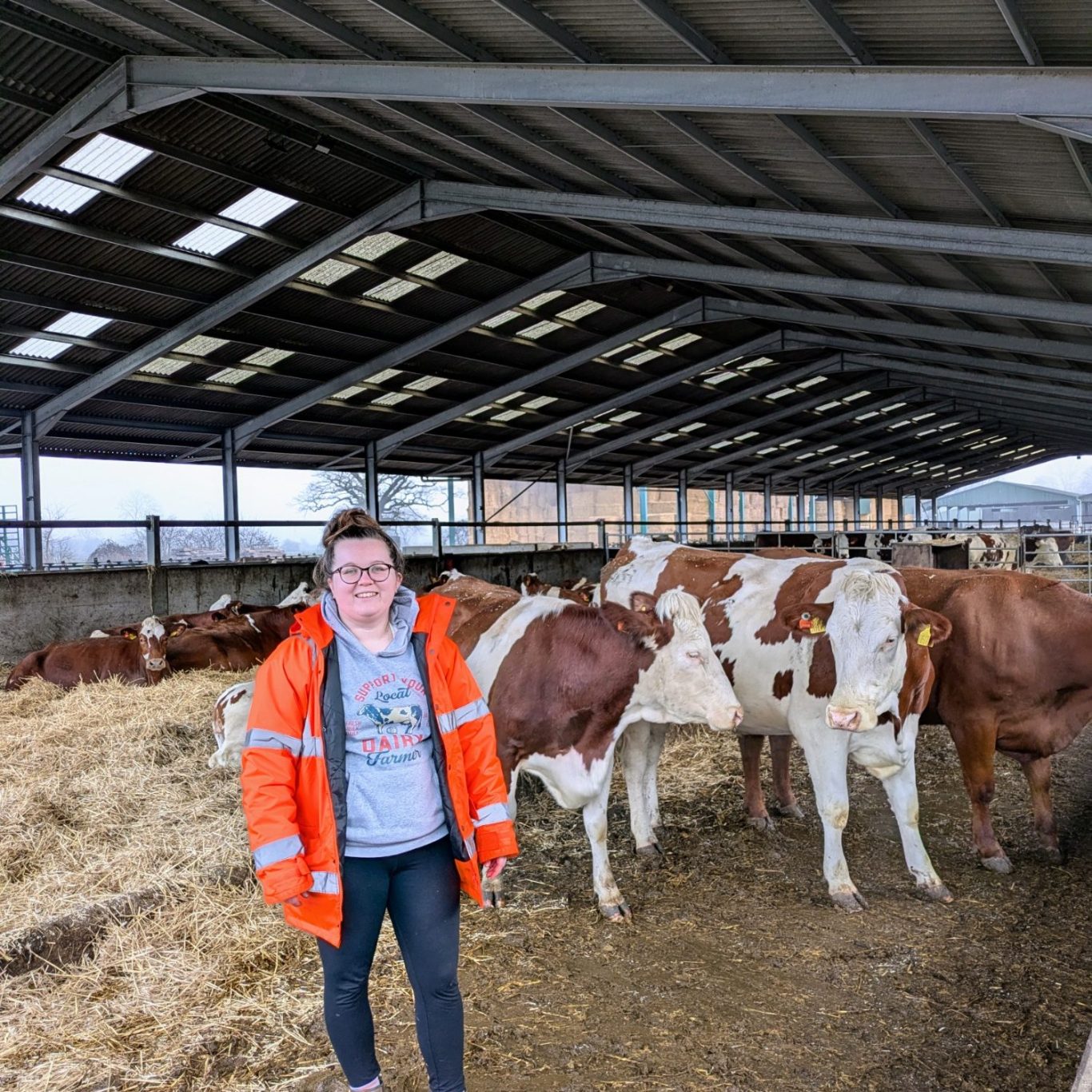
The 28-year-old Gemma has been a core member of the team at the Fen Farm Dairy for four years: “It is just exciting – in a very good way.”
Gemma parks right next to the stables. The residual moisture from the freshly piled hay to our left condenses in the freezing winter air, mixing with the fog that envelops us. Right next to it: a strikingly relaxed group of Montys. ‘Actually, only about seventy percent are purebred,’ says Gemma. ‘The others are crossed with a little Jersey.’
The Montbéliarde – an old breed of cattle from the meadows of the Jura region in the French Alps – was carefully selected by Jonny in 2012 on the advice of cheese expert Ivan Larcher from small farms in the Jura. It is a breed that has proven to be remarkably well suited to the climate of Suffolk. Their milk is rich in flavour, high in protein and ideal for cheese making – think Comté, Vacherin Mont d'Or, Reblochon. ‘But with a little Jersey in there, there's more fat,’ explains Gemma.
I understand. Because the award-winning Baron Bigod – pronounced by-god – is a traditionally produced cheese in the style of Brie de Meaux and therefore needs a certain fat content. Only then can the mushroom-scented, slightly wavy rind enclose a silky-smooth interior with a finely melting core.
Especially in spring and summer, when the cows graze outside on the marsh meadows, a little fatty support is needed. Incidentally, this is exactly where the cattle of the Bungay castle dwellers grazed a thousand years ago. Hence the name: in 1120, the Norman nobleman Baron Hugh Bigod inherited Bungay as a follower of William the Conqueror and had a castle built here. Its ruins are still visible today.
Now, in their comfortable winter quarters, the animals eat their fermented, still steaming winter feed: grass, clover, ribwort and broad-leaved plantain, over 60 different plant species – carefully preserved. But less fresh grass means fewer unsaturated fatty acids, which means more fat in the winter milk. It was precisely for this seasonal reason that Rædwald was created here a year ago. I'll talk about this in detail later with cheesemaker Marc.
Creatures of habit
‘They love their fixed routine,’ Gemma tells me as she strokes Barbara – most of the animals here have their own names. ‘They line up at the milking parlour before the team even arrives. They're creatures of habit, just like Jonny.’ He loves getting up at 5:30 in the morning and starting the day with something tangible: feeding the cows, working in the barn, having a late breakfast with the team – only then do other tasks follow.
We set off for the main house, stopping briefly to see head butter maker Shawn, now in his sixth year at Fen Farm, and watch him roll out butter plates with great care. Obviously a little too long. Gemma's phone rings – it's Jonny, asking where we are. A few seconds later, he comes to meet us: quick steps, open smile, woolly hat, no jacket, still some straw on his jumper. ‘Hi, I'm Jonny. Have you arrived safely?’
‘I'm still a farmer and cheese maker!’
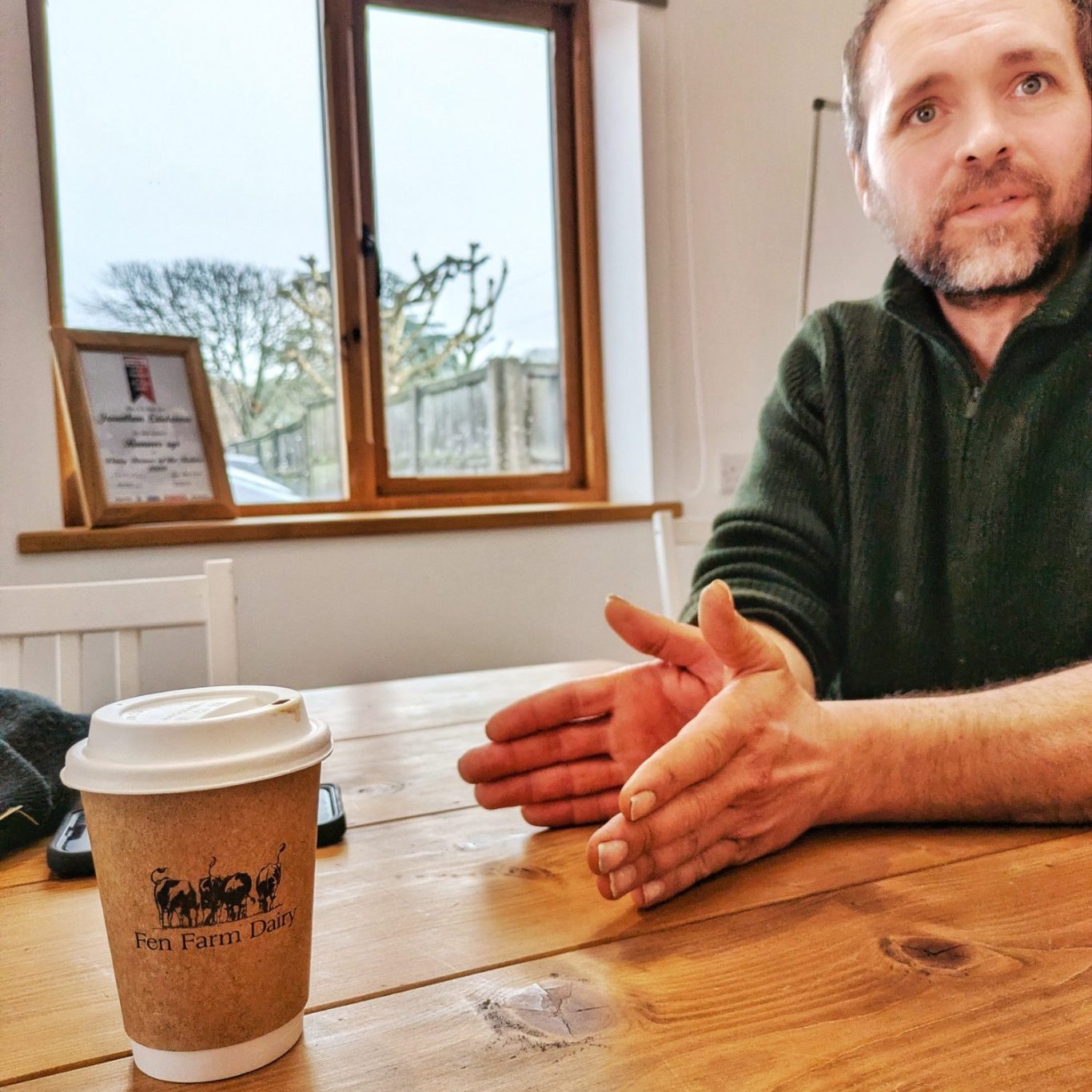
“When you take a path for the very first time, you constantly have to decide: left or right. I could have simply sold the milk — or chosen the more difficult turn and tried to realise the full potential of my farm, spreading the risk across many individual customers.”
We sit down at a long wooden table in the bright meeting room. We have a large black coffee in a Fen Farm mug. I pass on greetings from Ned Palmer – the London cheese expert who is quite jealous that I am spending a day at Fen Farm meeting ‘one of the most inspiring guys’. ‘Oh! I'm not sure about that,’ Jonny laughs modestly. ‘And you've just come from the barn?’ I ask, pointing to his jumper. We both laugh.
‘Yes,’ says the 45-year-old. ‘My days now consist of lots of little things that I have to juggle. But what still fulfils me most are my mornings.’ Only then does the rest of the day begin: meetings with the teams, support in the shops, paperwork – or visitors from Berlin.
Thirteen years after he began writing a new chapter in British cheese history, what would be on his business card today? ‘Oh, I am still a farmer and a cheesemaker!’ He doesn't see himself as an entrepreneur. ‘My biggest love is doing farming well and making good food.’ That's what he gets up for in the morning.
Take the right path
And yet his final years were marked by continuous learning and development – especially his own. In 2012, the ball started rolling: he installed the first raw milk vending machine in the United Kingdom on his parents' farm, which at the time was still a traditional dairy farm supplying supermarkets. He was inspired by the approach of a friend who was a chicken farmer.
He had no idea what would come of it. ‘I had no vision, no plan,’ he says. ‘But I had an idea that felt right.’ The success of the milk vending machine led to the next question: if our milk is so well received by people in the region, how can we make more of it? Products that people really enjoy?
The idea of making cheese was born. "First I had to learn how to sell milk. Then how to make cheese. Then how to hire people. Then how to set up a fully equipped cheese dairy.‘ One step led to the next. With each step, his confidence grew – and slowly, so did his idea of what was possible. ’Over time, it became clearer what the picture could look like,‘ he recalls. ’The design was up to me."
Jonny never chooses the easy path, but deliberately goes against the norm and the industry. ‘When you're breaking new ground, you constantly have to make decisions: left or right. I could have just sold the milk – or I could have taken the more difficult path and tried to exploit the full potential of my farm, spreading the risk across many of my own customers.’ At this point, there are no role models. ‘Every decision can lead in the wrong direction. I had to be very careful.’
A message for the world
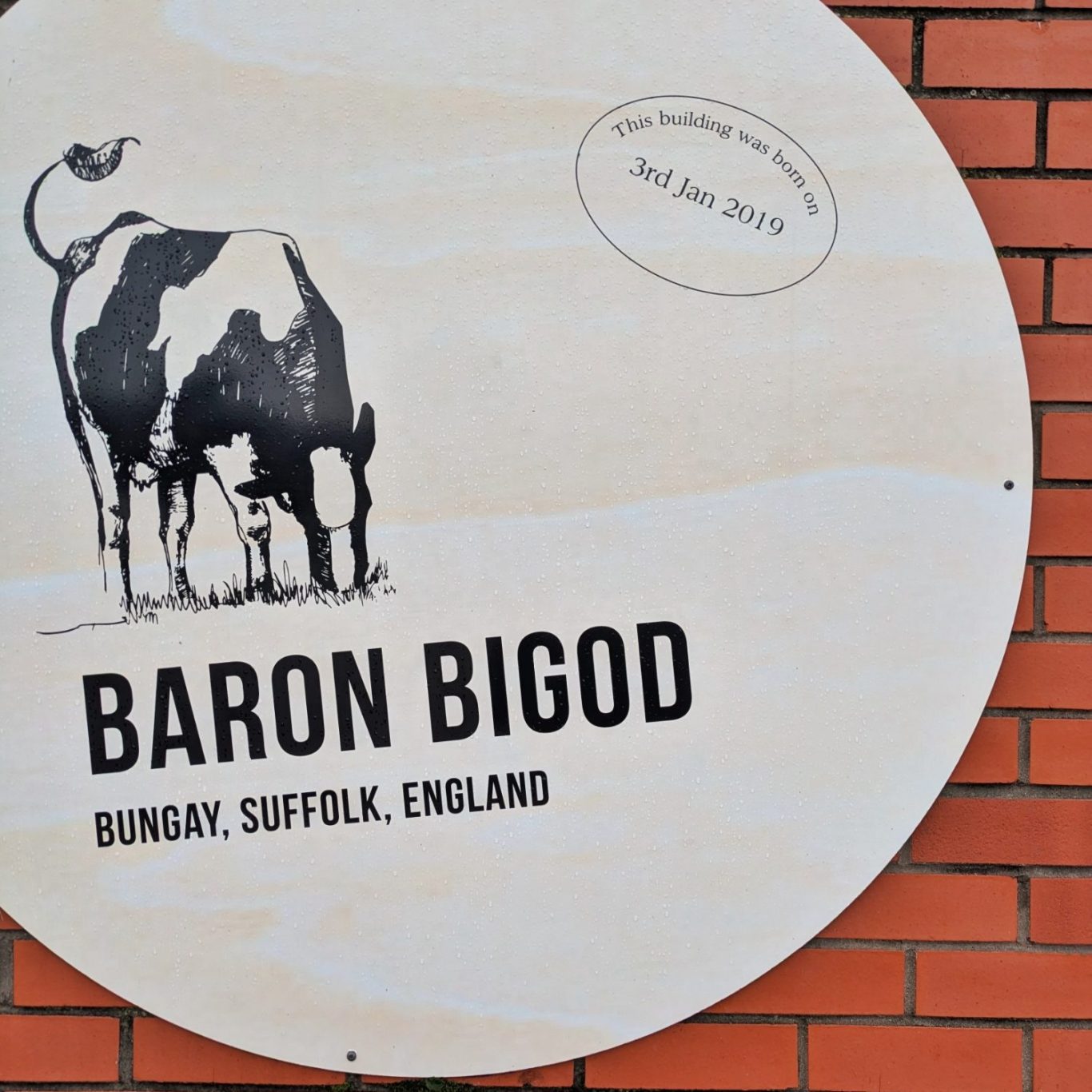
Since the first batch over ten years ago, the quality of Baron Bigod has gained international recognition.
A rocky road. Today, joy prevails. Jonny says he didn't plan anything. But he is proud of the decisions he made – not because they were the most financially successful, but because they were the right ones: for people, animals, the region and its nature.
That is the only reason the farm is where it is today. Its name is well established. ‘The people who buy our products trust us,’ says Jonny. ‘When we say that the milk comes exclusively from our own cows, they believe us.’
Jonny's culture of consistent responsibility extends far beyond the region. It is valued throughout the United Kingdom – and beyond. ‘People associate us with a genuine dairy farm,’ he says. ‘A small business with strong principles.’ Today, his mission is clear, the image clear: to produce the best possible dairy products to nourish nature, animals and people.
‘We work consistently on a regional basis,’ he says, ‘and try to spread a message to the world through our cheese.’ When someone buys a Baron Bigod in the United States, the philosophy of Fen Farm translates into taste. ‘And in the best case scenario, that person will then also support smaller farms in their own region.’
For the benefit for all
“A single dairy farm can support many families — and develop a vision that reaches far beyond the borders of Suffolk.”
For Jonny, appreciating his own region means much more than just local food production. ‘It's great to be able to support sports clubs or the theatre in the neighbourhood,’ he says. His team, now numbering over sixty people, also comes from the region. ‘We want to be a role model,’ he says. ‘A single dairy farm can feed many families – and develop a vision that extends far beyond the borders of Suffolk.’
I don't know how many minutes – or hours – have passed. His consistent attitude, his zest for life, coupled with an almost natural modesty, impress me deeply.
The desire to protect what he has built with Fen Farm in the region and for the families working here ultimately leads him to a difficult decision: in 2022, he will switch from raw milk to pasteurised milk. ‘There was a turning point,’ he says. ‘In the beginning, the dairy business supported the cheese factory. Then the success of his cheese grew – and became bigger than anything else. I had to reduce the risk and sharpen my view of the big picture. It took stability, a solid foundation, to protect my people and at the same time preserve creative freedom.’
New cheeses such as Rædwald are therefore only now emerging – after Baron Bigod has established a firm place in British cheese culture and maintained it over a period of time. Safety before hasty decisions. The well-being of all before one's own creative fulfilment.
The biggest lesson
Jonny beams at me. ‘Does that make sense?’ I ask him how he anchors this joy on the farm – this energy that permeates everything. Everyone seems to be riding a wave of joy. ‘Really? That's good,’ he says. He can only speak for himself. Right now, he is very happy with the cultural atmosphere that has developed over the last few years. He is proud of the people who work here today.
That's his biggest lesson so far: building a culture with the right people – people who inspire each other and contribute their own skills. He's still working on that. Continuing to strengthen this culture, Jonny says, is a prerequisite for being able to retire in the long term. Like Baron Bigod, the company must also stand the test of time.
A business is like a child, he says. You accompany it until it can stand on its own two feet. That's why his eldest offspring is called Fen Farm Dairy, closely followed by Arthur and Ottilie, aged eleven and thirteen. Jonny laughs and looks out of the window for a moment. It's a special feeling to close this cycle yourself: passing on the fruits of your own farm directly to people. This only happens here, where product and people meet.
Would I like to see his fruits? ‘Of course!’ But Jonny has to go. We have talked longer than planned, and he still has a six-hour drive to Devon ahead of him. As chairman of the Specialist Cheesemakers Association, he has to be there by evening. After a warm farewell, he insists on dropping me off at the cheese dairy. ‘Have fun!’
And how I will.
A true baron
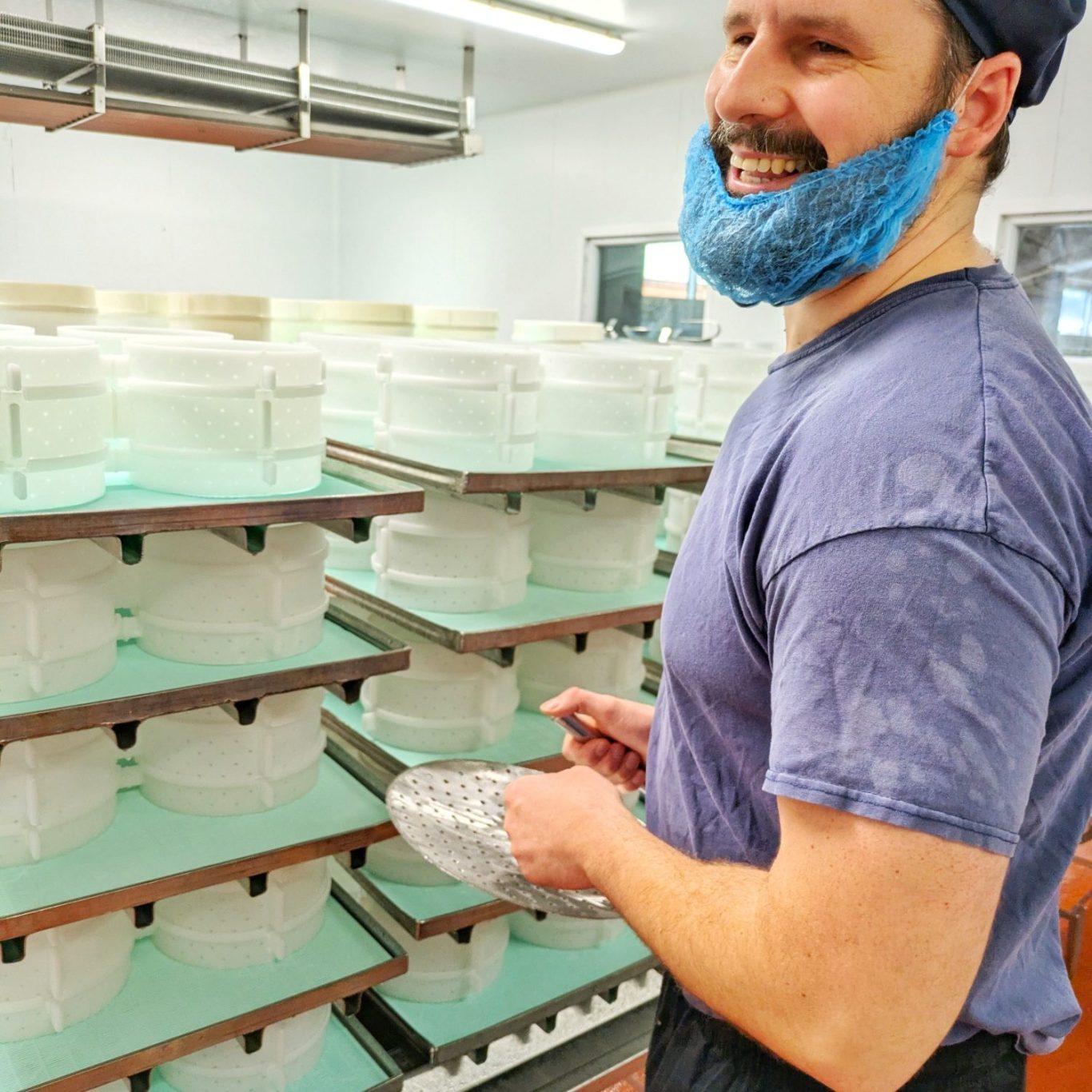
The pelles à brie just before use, ready to gently hand-ladle the extremely delicate, soft curd into the moulds.
Here, I immediately meet the man who coined the term ‘waves of joy’: head cheesemaker Marc King. He has been responsible for Baron Bigod for seven years and for the seasonal Rædwald for one year. Today, 4,800 litres of milk still need to be processed. On top of that, he has visitors from Berlin to deal with. Stress? A foreign word for Marc. Instead, he beams brighter than the white curds from which the whey is currently draining.
The Pelles à Brie are already waiting to be used for the Baron. A cheese from Suffolk, French in character. The curds, cut into cubes, are carefully scooped into the moulds with perforated ladles from the fresh morning milk of the Montys. It then matures for up to eight weeks – time for aroma, structure and those Waves of Joy that give it its name.
‘It's this wave-like effect on the rind,’ explains Marc. ‘When the cheese forms waves, it's a good sign: the moisture content is right. If the surface is too flat, it's either too dry or still too young. After five weeks, the waves of joy should appear. Then it's a real Baron,’ says Marc.
At just the right time
For the first time in a year, Fen Farm's repertoire has been expanded to include the seasonal Rædwald. ‘Yes – our Suffolk interpretation of a traditional French Reblochon,’ says Marc. It is produced exclusively in the winter months from the cows' fresh, particularly creamy afternoon milk. ‘We wanted to find a way to use the surplus of high-fat milk that our cows produce after Christmas.’ So I've come at just the right time!
‘The first batch comes from the first day of January,’ says Marc. Actually, the cheese is still too young and needs a good two more weeks of maturing before it can go on sale. He disappears briefly into the next room and returns proudly with two half-wrapped wheels of Rædwald – named after an Anglo-Saxon king of early Suffolk.
‘Let's try it,’ he says. ‘But keep in mind that it's actually still too young.’ Marc hands me a piece from the first batch of the year, followed immediately by one that is ten days younger. Even here, the range is enormous: crème fraîche and milk aromas on the one hand, meaty and nutty nuances on the other.
I ask him if he prefers this one to the Baron because it is something different. Marc replies confidently that even after seven years, Brie is still his personal favourite. The king's baron – and a unique character, this Marc King.
Care with resonance
I am entrusted with a packed box of Baron Bigods and far too young Rædwalds for the journey back to London. In the evening, I will meet numerous cheesemongers at a meet & greet – after all, the whole of London should benefit from this delicious day and the Waves of Joy.
On the train journey, my phone lights up – it's Jonny. He apologises for not having had much time for me. ‘Did you have a good day at our farm?’
If only he knew how much our time together is already resonating.
This encounter is part of my ongoing Cheese Stories on international cheese cultures.