1st March 2026
Cheese Stories
German version
Golden Cross Cheese in East Sussex: British cheese history in miniature
This Cheese Story is based on a visit to the Blunt family at Greenacres Farm in Holmes Hill, East Sussex. Alongside reports on Jonny Crickmore of Fen Farm Dairy and Roger Longman of White Lake Cheese, it completes the picture of a British cheese renaissance that has been growing since the 1980s – driven by individuals who prioritise attitude over size.
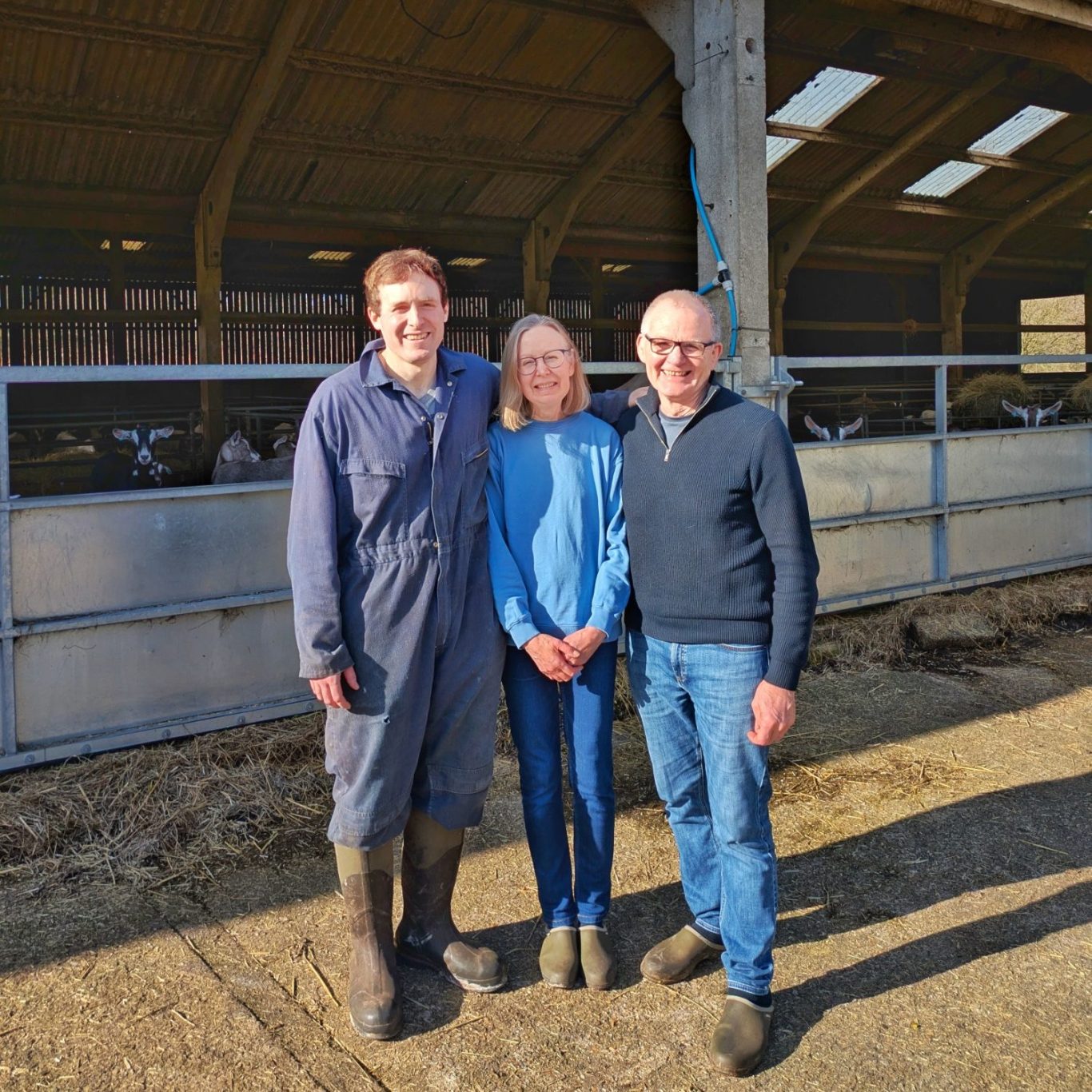
Matthew, 34, has been working full-time in his parents Alison (69) and Kevin Blunt's (70) business since 2014 and is taking on increasing responsibility for the cheese dairy, goats and business management.
Medieval heritage, Victorian seaside resorts, dramatic coastlines: the county of East Sussex in south-east England is known for its rich natural and historical treasures – not least as the site of the Battle of 1066 around Battle Abbey. The white chalk cliffs of the Seven Sisters tower above the English Channel, seaside resorts such as Brighton shape the face of the region, and places like Rye tell of the trade of bygone times.
Coastal towns such as Hastings and Bexhill-on-Sea thrive on restaurants serving the catch of the day: scallops, herring, Dover sole and mackerel. Otherwise, East Sussex seems to be rather low-key in culinary terms. Sussex Sparkling remains an insider tip outside the region. A glance at the regional cheese platter confirms this impression: Brighton Blue and Sussex Charmer – and that's about it. Fish dominates, cheese seems to be a side note here.
It is all the more astonishing that since 1989, the Blunt family at Greenacres Farm in Holmes Hill – somewhere between Crawley and Eastbourne – has become a constant fixture in British cheese culture with Golden Cross Cheese. The name is not a reference to a supposedly "golden" mixture of Saanen, Toggenburg and British Alpine goats in the herd of around 250 animals. It was James Aldridge who suggested to Kevin and Alison Blunt in the 1990s that they use a local place name. Golden Cross refers not only to the district, but also to a pub that was considered the natural meeting place for the area at the time.
During my visit to Holmes Hill, I repeatedly encounter James Aldridge, who died in 2001. To this day, he is considered a formative figure in British cheese history – the initiator of numerous new creations and the driving force behind the renaissance of artisanal farmhouse cheeses. Visionaries like him paved the way for businesses such as the Blunts' to grow and renew British cheese culture.
Four decades of craftsmanship in East Sussex – and only three types of cheese to date. "We never wanted more – and we can't manage more," says Kevin. During my visit, it becomes clear why the three core members of the farm – Kevin, Alison and their son Matthew – hardly ever find the opportunity to attend award ceremonies such as the British & Irish Cheese Awards: the business demands their constant attention.
Between Goat CCTV and Aldridge's legacy, between technical precision and radical limitation to a few small formats, the Blunt family has stayed the course for decades. No expansion, no spectacle – just concentration. A "fairly compact and fairly magnificent craft" that reveals the cultural and historical lines of British cheese culture on a small scale.
Farming instead of laboratories
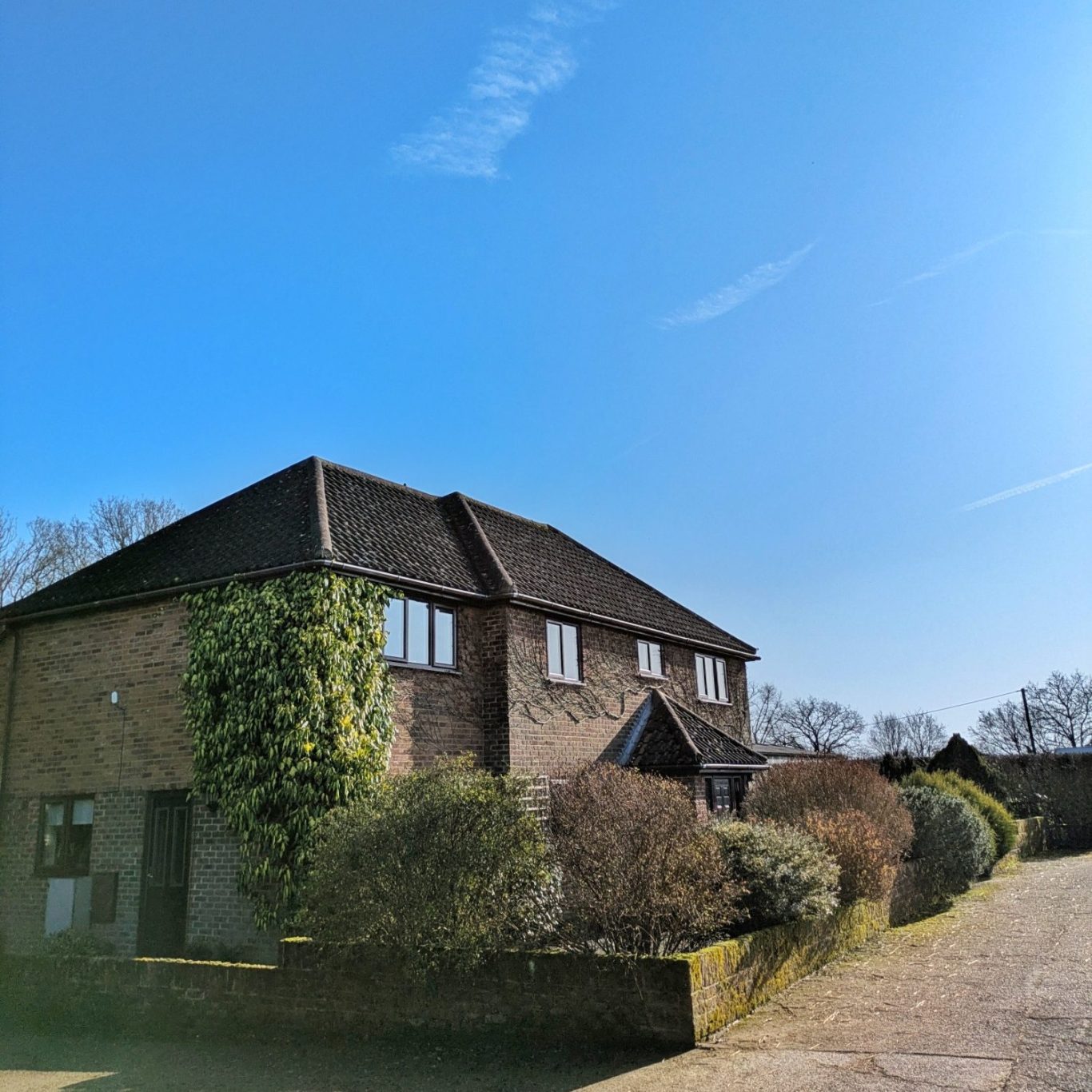
The Blunt family home at Greenacres Farm is just a stone's throw away from the cheese dairy and goat pens.
The first thing I ask Kevin is how he is doing today when he picks me up from Lewes station on this unusually warm February day. "Oh, I am fine!" Until yesterday, he and Alison were still in Eastbourne. "Ali and I are trying to take a bit of a break – but we're still working forty to fifty hours a week."
Since 2014, their son Matthew has been taking on more and more responsibility. He started helping out at the dairy on weekends at an early age. It is a stroke of luck that the youngest of their three children "has developed such a passion for the family farm." It is by no means a given that what Kevin and Alison have built up from scratch here will be continued. Looking back on the early years, Kevin makes it clear that such a life knows no end to the working day, no exceptions. It is characterised by constant responsibility and the unpredictability of a market that is unforgiving.
Kevin was born in the north-east of England, south of Newcastle. His mother remarried after his father died at an early age. "I first came into contact with farming through my stepfather." After studying biochemistry, he was drawn to the countryside rather than the laboratory. He met Alison, a trained nurse, at university. They have been together ever since.
Happy coincidences
"My love of milking came in Leicester." He gained his first experience there as a herdsman for three years. But Kevin and Alison wanted more. Above all, they wanted something of their own. In the 1980s, this was an unusually bold decision. A visit to Alison's parents in Eastbourne brought them into contact with a six acre parcel of land by chance – now home to the family and Golden Cross Cheese.
The small size of the farm ruled out keeping cows from the outset. "We started with six goats, two thousand free-range chickens and a few pigs." They milked the goats by hand. At first, they wanted to sell the milk frozen. But a goat cheese maker from the region showed them how to make a simple, almost rudimentary goat's milk cheese. From then on, cheese became an integral part of their lives. Trial and error – that was all they had back then. There was no internet and no time to learn elsewhere. Five years later, in 1989, they built their house on the property, followed by larger cheese-making facilities.
We turn into the remarkably well-organised grounds of Golden Cross Cheese. The goat barns, residential building and cheese dairy are just a stone's throw away from each other. "First we tried our hand at hard cheese," says Kevin. A few months later, he saw an advertisement from Regis Dussartre in the local newspaper: goat herd and equipment for sale. Included was the recipe for Golden Cross – a lodge-shaped goat's cheese in the style of St. Maure. Another happy coincidence. Since 1991, Golden Cross has been produced in Holmes Hill using a recipe that has remained virtually unchanged.
A great legacy
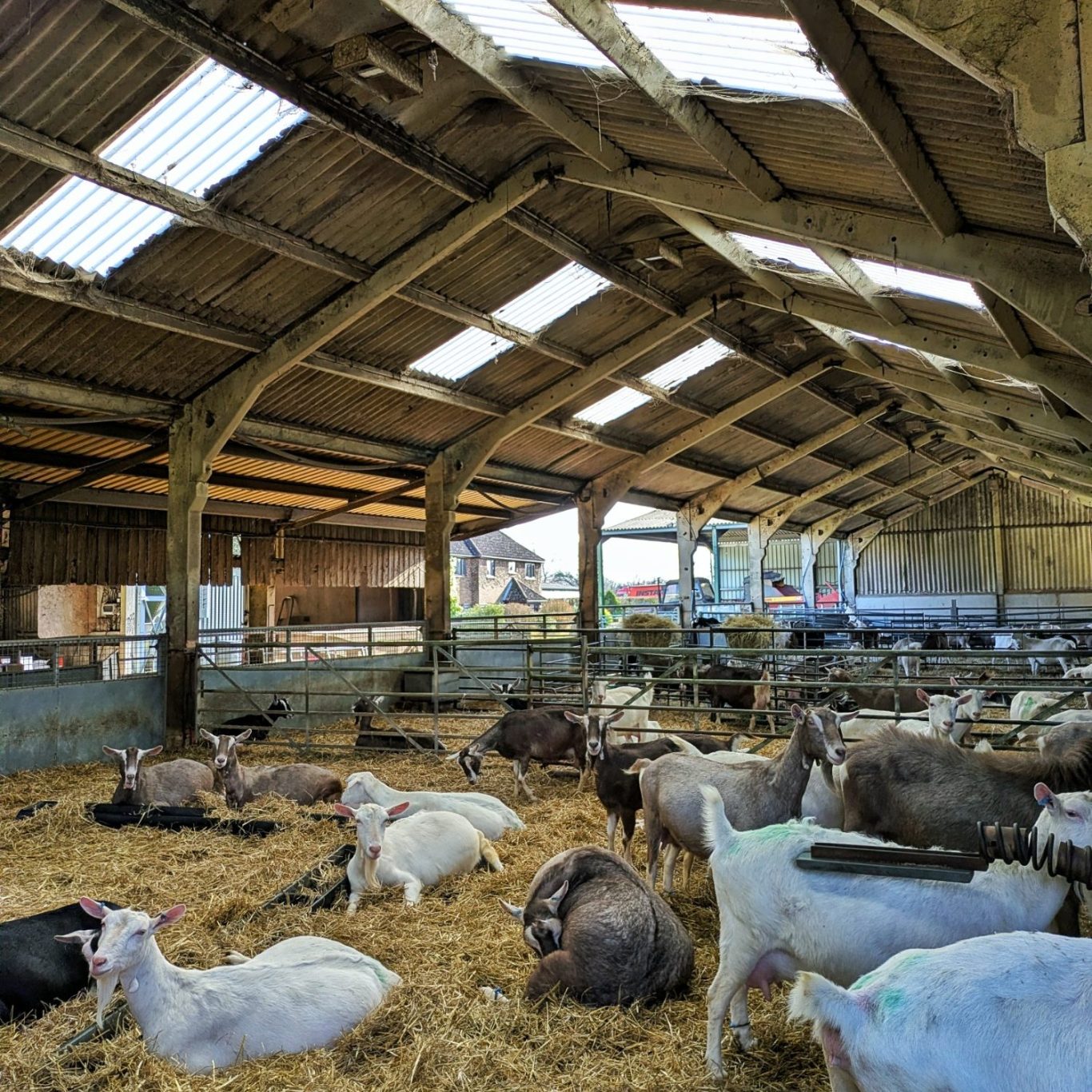
Under constant observation: the family can digitally monitor what is happening in the goat shed at any time via the farm's own "Goat CCTV".
"And then one day James Aldridge stood at the door." It was a defining moment, Kevin recalls. As we put on rubber boots, hats and protective gowns, I learn that Aldridge had given the Blunts the recipe for Flower Marie – a small, white mould-ripened cheese made from sheep's milk. And there's more: "When we expanded the cheese dairy, he helped us design the concept and equipment." A testament to this period can still be seen in the room today: the cheese vat with a capacity of 600 litres. Its previous owner: James Aldridge. "We have inherited a great legacy," says Kevin. "Without his support, we would certainly not be where we are today."
And yet, a lot has changed since the 1990s. "This is our Goat CCTV." Kevin points to a screen showing live footage from the goat shed. "It helps us enormously. We can also check it on our mobile phones – it's a bit of quality of life. When we hear a noise, we don't have to jump up immediately and run to the shed." Digital support to enable rest periods in the evening and at night.
The workload – two milking sessions and up to 550 litres per day – takes its toll. Her herd of goats has grown by thirty young animals in the last few days. "Matthew is feeding the newborns right now. Shall we go?" Kevin and I have been talking in the maturing rooms for far too long. Time is a precious commodity here – even more so than on other farms.
As we make our way to the barns, I ask Kevin what he has been particularly proud of over the past few decades. "Above all, the fact that we have been listed with partners such as Paxton & Whitfield, Harvey & Brockless, The Fine Cheese Co and La Fromagerie for so many years." Their biggest customer is The Cheeseman Brighton who buys three hundred Golden Cross cheeses a week.
"Pretty compact and pretty amazing"
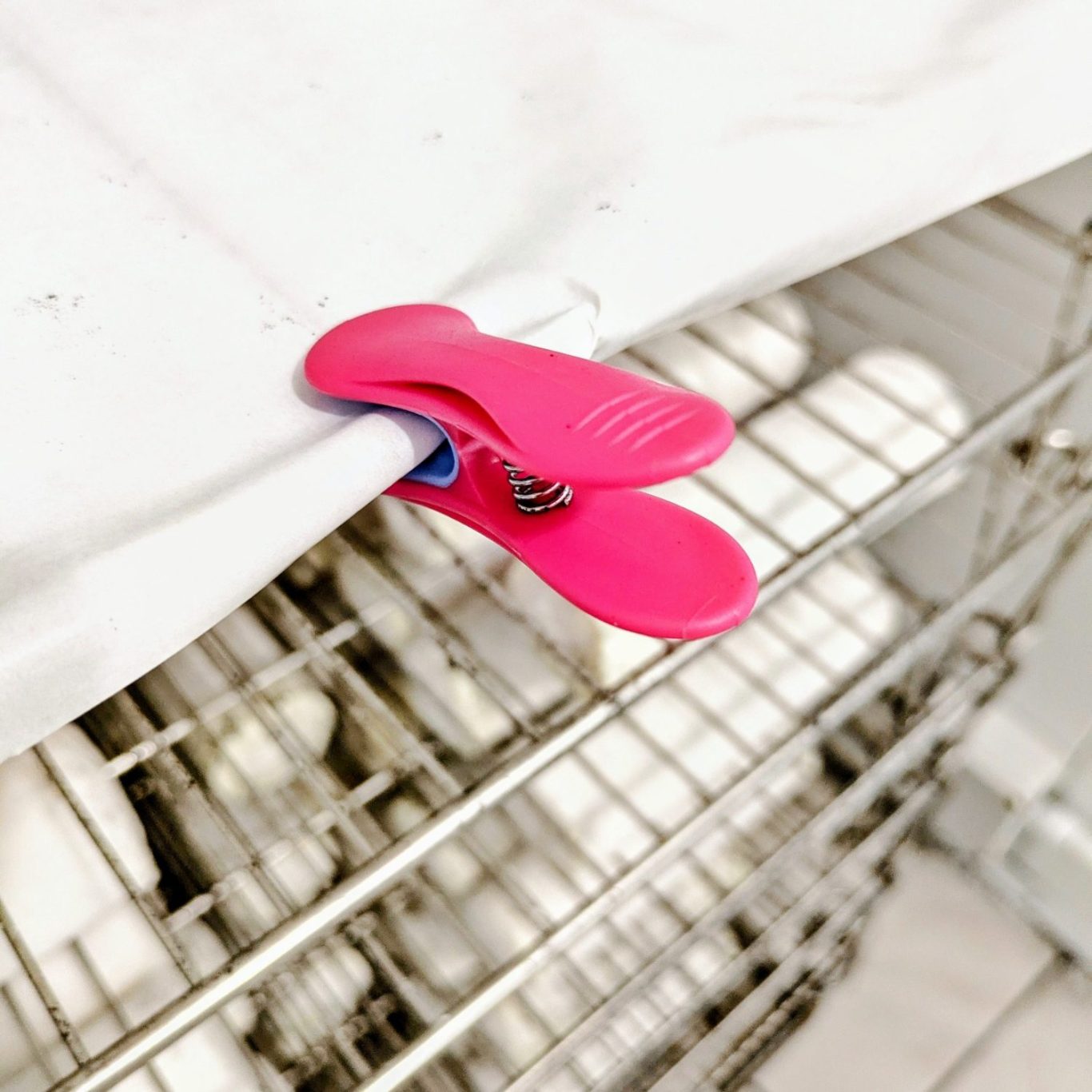
Coloured clothes pegs mark the production week of Golden Cross – a wedge-shaped goat's cheese in the style of St. Maure.
We step outside into this sunny February afternoon. Matthew is already coming towards us. I cautiously ask if they would both be willing to have their photo taken. "But not without Mum." She is the heart and soul of Golden Cross, Kevin says quietly. He disappears briefly into the house to ask her to join us.
"A pretty compact thing, eh?" I hear Matthew say. For a moment, I think he's talking about the cheese. "No," he laughs, "I mean our little operation here." A quick tour is enough to see that everything is close together. Pretty compact, indeed. "And pretty amazing," I reply. Because as I stand here – Alison has joined us in the meantime – it becomes clear what the hands of a single family have built over decades.
Golden Cross Cheese's cheeses have won numerous awards. Alison says that the James Aldridge Award in 2001 was a special honour. Not only because of the presence of Charles III, then still Prince of Wales. They made an exception for their late friend – and actually left the farm.
"Actually, it's impossible. It's not just a job – it's the life you've chosen." Matthew decided to work here full-time more than ten years ago. "But of course, it ties you to the place." That's not a problem for him. Once a year, he recharges his batteries by skiing, and every week by playing cricket. No complaints, no shortcomings. Rather, quiet pride – and probably pure passion for what they have been maintaining here in the region for decades.
Golden Cross every morning
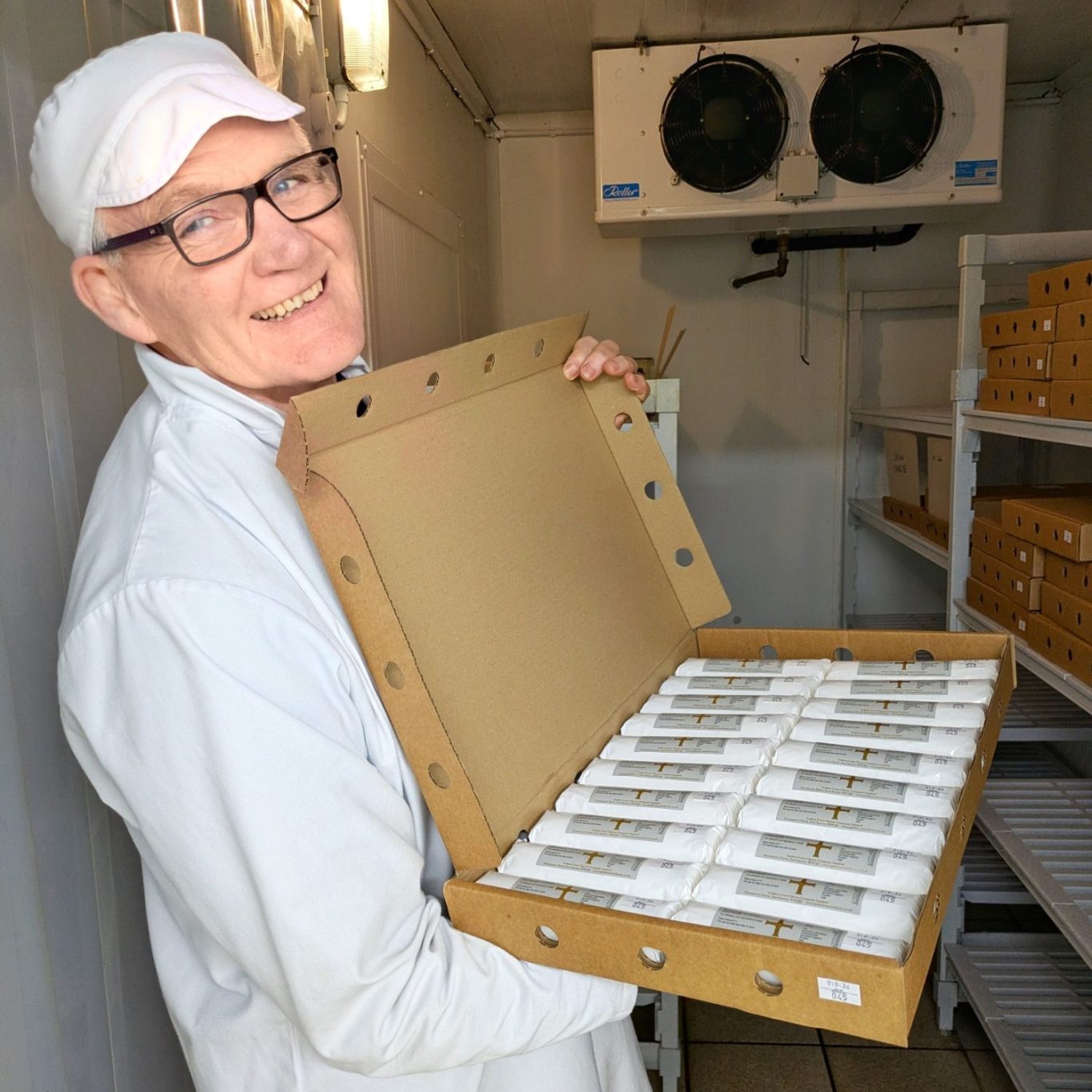
"I am particularly proud that we have been listed with partners such as Paxton & Whitfield, Harvey & Brockless, The Fine Cheese Co and La Fromagerie for so many years."
"I want this to last." New cheeses, a larger herd? Matthew shakes his head. "Mum and Dad manage everything here together – and that's challenging enough. Gradually taking on this responsibility alone is a big step. Our Flower Marie, Golden Cross and Chabis are enough for me.“
As manageable as the farm, stable and cheese dairy may seem, this is precisely where freedom comes from. Freedom through limitation. "This manageability allows me to stay focused and continue what my parents built here with a clear commitment to quality over quantity."
I ask the group how their cheese is connected to the county of East Sussex. Of course, the terroir plays a decisive role in the taste of their cheese. "The best hay you can possibly buy – it comes from Pevensey," Alison interjects. Especially for raw milk cheese, the feed is one of many variables that shape depth and expression.
Unpasteurised milk is non-negotiable for Matthew. His job as a cheesemaker is to balance all internal and external factors. Kevin adds dryly: "Oh yes. First Brexit, now the current electricity prices."
How have they managed to remain successful over the years with essentially three products in a region that does not have a deep-rooted cheese tradition? Kevin says that the strength of their cheese lies in the fact that it does not have a pronounced goat flavour. "It's best on its own," adds Matthew. He himself prefers to eat it plain – just with a few crackers. Kevin laughs. "He has his Golden Cross every morning." If his son doesn't get tired of him, it seems, neither will others.
This encounter is part of my ongoing Cheese Stories about international cheese cultures.