28. November 2025
Cheese Stories
So viel mehr als Wrångebäck: Wertschöpfung auf Almnäs Bruk
Almnäs Bruk ist mehr als ein landwirtschaftliches Gut – es ist ein lebendiges Archiv schwedischer Käsekultur. Neben den Cheese Stories über Schwedens prägende Gestalt Kerstin Jürss fügt sich Almnäs Bruk als zentraler Ort in die Betrachtung der heutigen schwedischen Käselandschaft ein.

„Ich will nicht die Welt verändern – ich will Almnäs verändern.“ Im Jahr 1987 übernahm Thomas Berglund, damals erst fünfundzwanzig Jahre alt, die Verantwortung für 3.500 Hektar Land – ein Besitz, der sich inzwischen in der vierten Generation in Familienhand befindet.
Auf der Zugfahrt von Göteborg nach Skövde begleiten mich unzählige Birken, ihre weiß schimmernde Rinde kaum zu unterscheiden vom gefrorenen Waldboden. Es ist erst Mitte November, doch Götaland liegt bereits wie eine still atmende Eislandschaft vor mir, ein sonnig-klares Spiel aus Wäldern, roten Holzhäusern und glitzernden Seeufern.
In gut einer Stunde wird mich Thomas Berglund am Bahnhof Skövde Central erwarten, danach teilen wir uns eine halbe Stunde Fahrt durch diese winterhelle Welt. Vor zwei Wochen hörten wir zum ersten Mal voneinander, vor einer Woche umarmten wir uns auf der Cheese Berlin – und vor zwanzig Minuten rief er noch einmal an, um sich für die Verspätung der schwedischen Bahn zu entschuldigen. Würde er wüsste, dass eine Dreiviertelstunde in Deutschland als pünktliche Abfahrt gilt.
Was vor mir liegt, ist weit mehr als nur ein Besuch der Käserei von Almnäs Bruk: Ich werde einen Tag auf einem Gutshof verbringen, dessen Wurzeln bis ins Jahr 1225 zurückreichen – und damit in eine andere Zeit eintauchen dürfen. Ein Tag, der zeigt, dass Zeit nicht einfach chronologisch vergeht, sondern im gemeinsamen Erleben entsteht: aus der Vergangenheit schöpfend und zugleich die Zukunft gestaltend.
Eine große Verantwortung
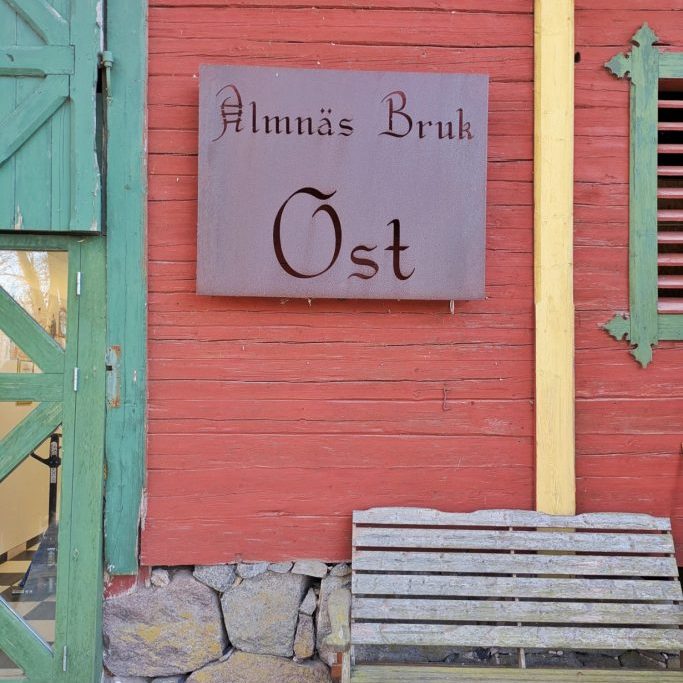
Almnäs Bruk umfasst eine Fläche von 3.581 Hektar, davon 1.985 Hektar Wald, 1.031 Hektar Acker- und Weideland, 250 Hektar sonstige Flächen sowie 315 Hektar Wasser. Das Herrenhaus ist von einem Ensemble historischer Wirtschaftsgebäude umgeben: Schmiede, Speicher, Schlachthaus, Stallungen und einer ehemaligen Brennerei.
Thomas empfängt mich in dunkelbraunem Cord, rotem Halstuch und – wie ich kurz darauf im Auto erfahre – einer selbstgestrickten, wolligen Schafsmütze. „Für mehr reichen meine Strickkünste nicht“, sagt er lachend. Und sofort zeigt sich jene bescheidene Bodenständigkeit, die ihn auszeichnet: ein Gutsherr, der mit Demut und klarer Haltung ein Leben führt, das Wirkung entfalten soll. Noch im Parkhaus sprechen wir – in der Kurzfassung – über Werte, Wertschöpfung und Unabhängigkeit.
Als ich ihn zu Beginn frage, wie er die Entwicklung des Västerbottensost als Handwerkskäse im frühen 19. Jahrhundert hin zum modernen Supermarktklassiker sieht, antwortet er gelassen: „Ich spreche nicht gern über andere. Das raubt Zeit und Kraft, die ich für Kreativität brauche. Ich konzentriere mich auf uns und unsere Käse. Denn nur damit kann ich etwas bewegen.“ In diesem Moment glaube ich noch, er spreche über die industriell geprägte schwedische Käsekultur im Allgemeinen. Doch dann setzt er nach: „Ich will nicht die Welt verändern, ich will Almnäs verändern.“
1987 übernahm der damals erst 25-jährige Thomas die Verantwortung für 3.500 Hektar Land – inzwischen in vierter Generation. Seither hat er das Gut behutsam, aber entschlossen aus der Rolle eines Rohstofflieferanten für die Industrie hin zu einem handwerklich arbeitenden Käsebetrieb geführt. „Ich versuche, aus dem System auszusteigen, damit wir wieder eigener Herr sein können. Das gelingt nur, wenn ich aus dem Land, das mir anvertraut wurde, einen Wert schöpfe, den Menschen gerne kaufen.“ Ob er es mag, dass seine Arbeit – etwa mit der Wiederbelebung des traditionsreichen Wrångebäck oder mit Neuschöpfungen wie dem Tegel und Anno 1225 – zu einer schwedischen Käse-Renaissance beigetragen habe. Thomas wählt seine Worte sorgfältig: „Ich sage lieber, dass Almnäs dazu beigetragen hat. Ich war nicht allein. Ja, ich habe es angestoßen, aber: It takes a village to make good cheese. Wir sind und bleiben ein Familienhof. Meine Geschwister mussten diesen Weg mitgehen – und haben mir von Anfang an großes Vertrauen geschenkt.“
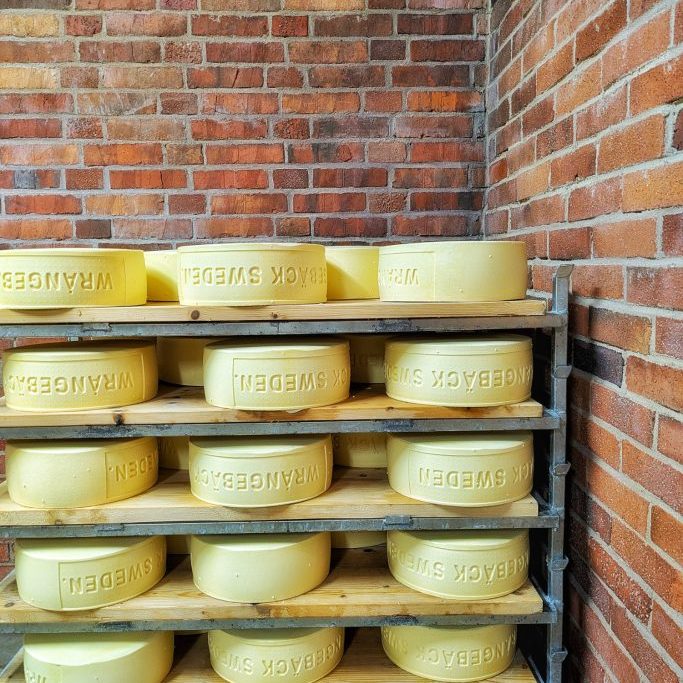
Im Reifekeller von Almnäs Bruk reift der Wrångebäck langsam zu dem Käse, der bis heute für Kontinuität und Handwerk steht.
Frei von Landesgrenzen
Umso wichtiger ist es Thomas, die Vision von Almnäs stets mit wirtschaftlicher Klarheit zu verbinden. Ideale seien ein starker Antrieb, sagt er, doch allein trügen sie keinen Gutshof oder zahlten Gehälter. „Nur wenn wir ausreichend verdienen, können wir diese Kultur hier erhalten.“ Ob er sich als Bewahrer schwedischer Kultur sehe? Seine Antwort knüpft nahtlos an den Gedanken an, der 2019 zur Gründung der Nordic Cheesemongers führte: „Ich denke nicht in Landesgrenzen. Ich verstehe mich eher als Europäer. Wir machen keinen schwedischen Käse – wir machen Käse von Almnäs Bruk.“ Gerade deshalb sei ihm die Gemeinschaft der Nordic Cheesemongers so wichtig, deren Idee bei einer langen Frühstücksrunde zum verspäteten zehnjährigen Jubiläum der neuen Käserei entstand. Hier könne man Synergien nutzen – und etwas zurückgeben. „Weißt du, ich habe mein Leben lang so viel Unterstützung von außen bekommen. Das möchte ich weitergeben.“ Anders als im industriellen Wettbewerb seien handwerkliche Betriebe in der Lage, „aus zwei und zwei fünf zu machen“, wie er sagt. „Darin liegt unser Vorteil gegenüber den Großbetrieben: Wir stehen nicht im Wettbewerb zueinander. Wir sind keine Konkurrenten, sondern schreiben gemeinsam das Buch der nordischen Käsekultur gemeinsam neu.“
Gelebte Geschichte
Wir haben erst zwanzig Kilometer zurückgelegt, und doch sind wir bereits in einen so köstlich tiefen Austausch versunken, dass mir kaum Gelegeneit bleibt, die vorbeigleitende Eislandschaft Skaraborgs zu würdigen – diese weite Region zwischen Falköping im Süden und Mariestad im Norden, eingebettet zwischen den Seen Vänern und Vättern. An den Ufern des letzteren werde ich in wenigen Minuten stehen, den Blick über das stille Wasser schweifen lassen – und mit einem Gefühl von Erhabenheit meinen Fokus wieder ganz auf das Gespräch mit Thomas richten.
Nach vielen geraden Kilometern biegen wir plötzlich scharf links in eine schmale Allee ein und halten wenige Meter neben dem Haupthaus – dem Zentrum eines Ensembles aus alten Wirtschaftsgebäuden, Schmiede, Kornspeicher, Schlachthaus, Stallungen und einer ehemaligen Brennerei. Heute dient ein Großteil davon der Käseherstellung. Es ist einer dieser Orte, die spürbar Geschichte erlebt – und überlebt – haben. Almnäs Bruk existiert seit dem 13. Jahrhundert. Zisterziensermönche nutzten den Hof wohl als Rückzugsort und zur Versorgung ihres Klosters Alvastra am Ostufer des Vättern. Über die Jahrhunderte wechselte das Gut mehrfach den adeligen Besitz, bis es 1916 in die Hände der Familie Berglund kam – und dort bis heute geblieben ist. 1987 übernahm Thomas die Verantwortung für den Hof – und damit auch für ein Stück schwedischer Käsegeschichte: den Wrångebäck, dessen Markenname bereits 1889 als erste schwedische Käsemarke registriert wurde und der als erster Käse in Nordeuropa eine geschützte Ursprungsbezeichnung erhielt. Nur ein kleiner Ausschnitt einer eindrucksvollen Geschichte, die inmitten dieses winterlichen Naturschauspiels mit großer Kraft auf mich einwirkt.
Alles nur Marketing?
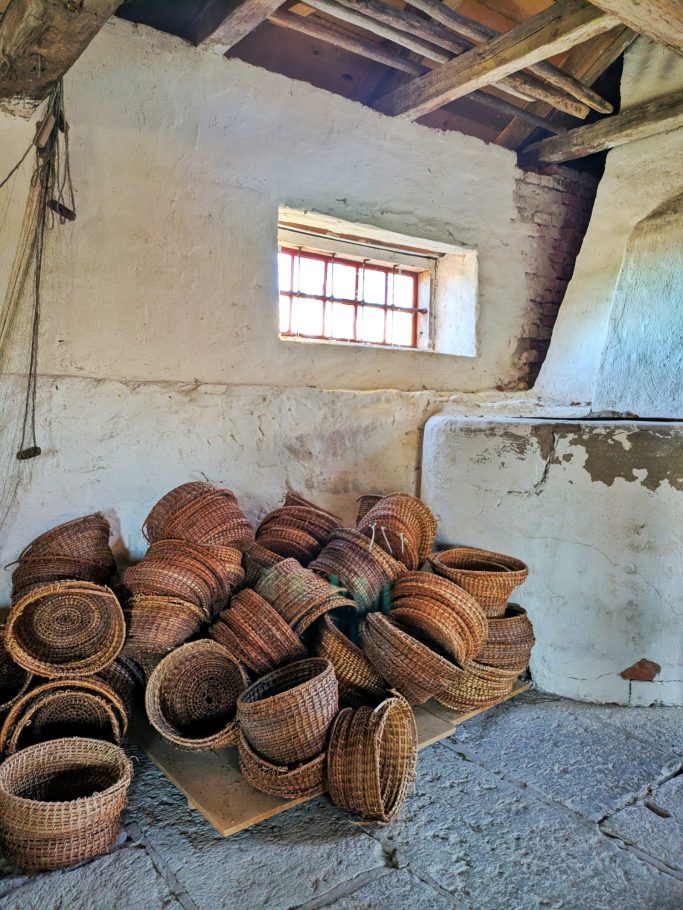
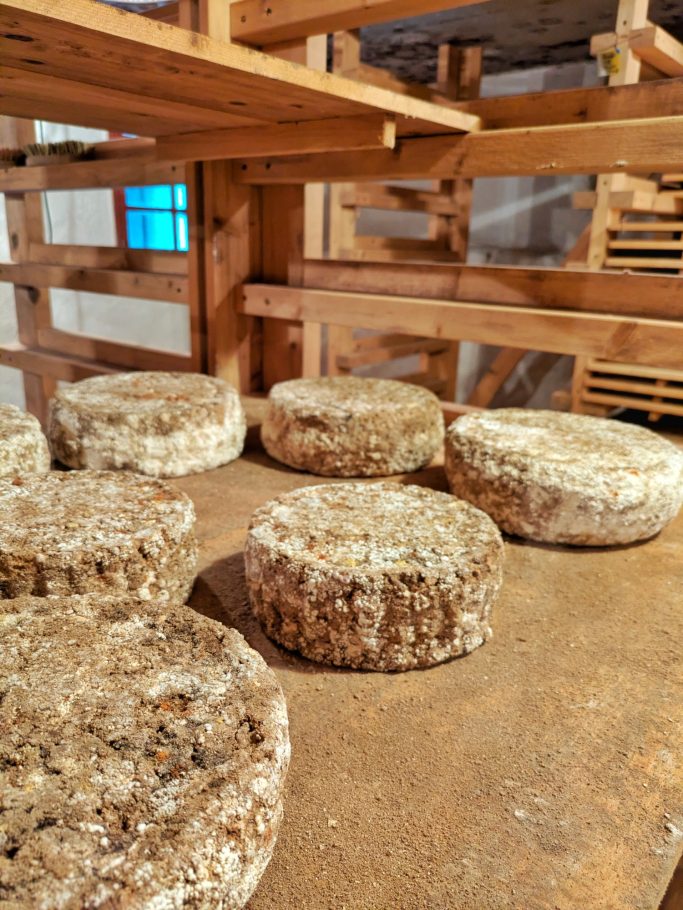
Die traditionellen Korbformen prägen nicht nur die äußere Struktur des Käses Anno 1225, sondern verweisen auf die handwerklichen Ursprünge der schwedischen Käsekultur auf Almnäs Bruk.
Ich lasse Laptop und Rucksack im Fußraum des Beifahrersitzes zurück, denn unser erster Weg führt – natürlich – in die Käserei. Dort begegne ich den Käserinnen Kerstin Johansson, Amalie Larsen und Evelina Engstrand beim Reinemachen. Im Reiferaum der Wrångebäck-Laibe sagt Thomas einen Satz, der hängen bleibt: „Man kann gute Leute einfach nicht gut genug bezahlen.“ Diese Form der Wertschätzung durchzieht den ganzen Ort – gegenüber dem Handwerk, der Geschichte, den Menschen, aber auch den Tieren. „Wir stellen gerade von Holstein auf Brown Swiss um“, erzählt er. „Nicht nur, weil meine Mutter Schweizerin ist und das gut zu unserer Familiengeschichte passt. Vor allem, weil die in der Industrie bevorzugte Holstein-Rasse nichts ist, worauf wir stolz sein könnten. Brown Swiss geben weniger Milch, aber ihre Qualität ist unvergleichlich.“ Qualität vor Effizienz, Souveränität vor Anpassung.
Unser Weg führt weiter in die ehemalige Schnapsbrennerei, wo mein persönlicher Favorit aus dem Hause Almnäs Bruk reift: der Anno 1225. Er lagert getrennt von den anderen Käsesorten und wird nicht in Salzwasser gewaschen. Denn die lokalen Pilz- und Hefekulturen bilden hier von selbst eine gleichmäßige Schimmelschicht. Alle drei bis vier Tage müssen die Laibe dafür gewendet werden. Der kühle Duft im Raum ruft augenblicklich meine Erinnerung an den ersten Bissen Anno auf der Cheese Berlin wach – ein herrlicher Kontrast zu seinem frischen, feinen Geschmack, der ihm 2012 bei den World Cheese Awards in Birmingham Gold einbrachte. Was mich an diesem Käse besonders begeistert, sind seine kulturhistorischen Bezüge. Die Form des Anno 1225 schafft ein Korb aus Weidenzweigen, geflochten von der lettischen Korbflechterin Astrida Smilktene – nach exaktem Vorbild jener Körbe, die hier vor Jahrhunderten üblich waren. Einige davon sind im Regionalmuseum von Västergötland in Skara zu sehen. Weitere stehen, ausgemustert und voller Geschichte, im Vorraum der Brennerei. Einen davon darf ich tatsächlich mit nach Hause nehmen.
Ich frage ihn ganz offen, ob die Geschichte vom Anno und seinem Weidenkorb nicht doch vor allem Marketing sei. Thomas lächelt. „Weißt du, ich kann weder gut malen noch musizieren, und andere Talente habe ich auch nicht. Aber der Käse und Almnäs geben mir die Möglichkeit, kreativ zu sein. In der Geschichte dieses Hofes finde ich Inspiration. Das ist meine Art, etwas zu erschaffen.“ So könne er auch einen knapp vier Kilo schweren Laib mit einer Geschichte noch mehr Gewicht geben. „Denn bei all unserem ethischen und moralischen Anspruch ist es entscheidend, den Hof wirtschaftlich zu führen. Nur dann kann ich Gehälter zahlen, die meine rund dreißig Mitarbeitenden für ihre gute Arbeit mehr als verdienen. Nur dann kann ich alte Fenster von Handwerkern aus der Region erneuern lassen. Und nur dann kann ich eine lettische Korbflechterin unterstützen, die unserem Anno im wahrsten Sinne des Wortes ein prägendes Muster verleiht.“
Ein reichhaltiges Mittagessen
Thomas lässt es sich von diesem Moment an nicht nehmen, mir den ausrangierten Weidenkorb hinterherzutragen. So stehen wir – er, der Korb und ich – am Ufer des Vättern, direkt neben dem kleinen Gästehaus, das Besuchern von Almnäs Bruk Aufenthalte erlaubt, die weit länger dauern dürfen als meine viel zu kurzen Stunden hier. Und als wäre all das Gesehene und Gesagte nicht schon Geschenk genug, folgt die nächste Überraschung. Thomas wirft einen Blick auf seine Armbanduhr und sagt: „Wir müssen schnell rein, das Essen ist fertig!“
Also eilen wir los – keine Zeit für Nachfragen – schnurstracks vom Seeufer hinauf zum Herrenhaus und hängen unsere Winterjacken an die Garderobe. Wir steigen die schmale Holztreppe hinauf in die Privatwohnung der Berglunds. Wohnung ist dabei ein fast schon mutiges Understatement: Ich betrete ein beeindruckendes Ambiente vergangener Zeiten, ausgestattet mit goldgerahmten Gemälden, schweren Purpurteppichen und funkelnden Kronleuchtern. Während ich noch staune über diese geschmackvolle Historienästhetik, steigt mir der Duft frisch gekochter Speisen in die Nase. „Meine Frau Birgit hat für uns gekocht. Lass uns schnell essen, bevor es kalt wird“, sagt Thomas. In diesem Moment purer Gastfreundschaft wird mir einmal mehr bewusst, wie tief auf Almnäs Bruk Wertschätzung und Wertschöpfung ineinandergreifen – als Haltung, die jede Handlung durchzieht.
Als wir uns an den gedeckten Tisch setzen, entzündet die 27-jährige Tochter Maria Kerzen und setzt sich zu uns. Unsere gemeinsame Sprache ist – wie überall auf dem Hof – Englisch: ein Miteinander jenseits nationaler Grenzen. Birgit stammt aus Norwegen, Thomas’ Mutter aus der Schweiz, Maria spricht mehrere Sprachen. Englisch ist der natürliche Konsens. Wir sprechen über die Monarchie und den Besuch von Victoria und Daniel auf Almnäs Bruk, über den Aufstieg rechter Bewegungen in Europa und weltweit, über die Zukunft des Hofes in Marias Händen – der „Victoria von Almnäs“ – und natürlich über das, was uns alle an diesem Tisch verbindet: die Liebe zu einem Produkt als Ausdruck von echter Handwerkskunst, Geschichte und Gemeinschaft.
Internationale Präsenz
Ich frage Thomas, wie sein handwerklich hergestellter Käse heute in Schweden angenommen wird – und warum so viel davon ins Ausland geht, nach Deutschland, Österreich, Frankreich oder sogar nach Kanada. Er lacht verschmitzt: „Na, weil es Spaß macht, meine Käse in der Welt zu verteilen.“ Seine Sprachkenntnisse – unter anderem Schweizerdeutsch, Englisch, Französisch – helfen ihm im internationalen Austausch natürlich enorm. Außerdem sei er lange davon ausgegangen, dass das Premiumsegment in Schweden schnell ausgeschöpft sei und er das Risiko breiter streuen müsse. „Aber als die Leute hier hörten, dass wir zum Beispiel bei Harrods in London gelistet sind, ist das Interesse sprunghaft gestiegen.“
Wir sprechen über den Wert von Auslandsreisen, auch für Mitarbeitende, über internationale Vernetzung auf Fachmessen und über den Unterschied, den echtes Handwerk im kulturhistroschen Gesamtkontext macht. Und während wir bereits die Hälfte des köstlichen Mittagessens verputzt haben – den nussigen Kürbis aus dem eigenen Garten, frischen Salat und ein cremig-käsiges Steinpilzrisotto – denke ich nur: Dieser Tag darf bitte niemals enden.
Individuelle Handschrift
Muss er aber, denn mein Rückzug nach Göteborg ist bereits gebucht. Doch eine entscheidende Frage bleibt: Wohin bewegt sich die schwedische Käsekultur aus seiner Sicht? „Wir haben immer noch eine sehr junge Käsekultur und befinden uns aktuell in einer Phase, in der wir aus dem reinen Ausprobieren und Adaptieren herauswachsen“, sagt Thomas. Für ihn gibt es eine feine Linie zwischen Käsen, die „genauso wie etwas“ sein wollen, und solchen, die „inspiriert von etwas“ entstehen. Sein Tegel sei etwa von einem Gruyère inspiriert – „aber er hat eine ganz eigene Identität, einen eigenen Geschmack, eine neue Geschichte.“ Dass schwedische Käsemacher die Kopierphase allmählich hinter sich lassen und zu einer eigenen Handschrift finden – mit historischen Wurzeln, Einflüssen von außen und viel individueller Persönlichkeit – ist für ihn eine zentrale, wenn auch überfällige Entwicklung.
Thomas und ich verquatschen uns so sehr, dass er an vielen Stellen der Autofahrt die Geschwindigkeitsbegrenzung großzügig nach oben aufrundet, damit ich meinen Zug noch erwische. Das tue ich – irgendwie schade. Am Gleis versprechen wir uns ein zeitnahes Wiedersehen – und dass dies nur der Anfang einer engeren Verbindung zwischen Deutschland und Skandinavien ist. Ob ich einen guten Eindruck von ihm und Almnäs Bruk gewonnen hätte? Ich kneife ihn, gerührt und voller Dankbarkeit, kurz an seiner selbstgestrickten Mütze. Mehr ist in diesem Moment wirklich nicht zu sagen.
Diese Begegnung ist Teil meiner fortlaufenden Cheese Stories über internationale Käsekulturen.