25. November 2025
Cheese Stories
Eirný Sigurðardóttir – Ihre sieben Super Heroes und Islands neue handwerkliche Käsekultur
Diese Cheese Story porträtiert Eirný Sigurðardóttir als prägende Stimme der neuen isländischen Käsekultur. Im Kontext einer jungen Bewegung von Produzentinnen und Produzenten – darunter auch Ann-Marie Schlutz als eine ihrer sieben „Super Heroes“ – eröffnet sie den Blick auf Island als Land im vorsichtigen, aber entschlossenen Aufbruch zu handwerklicher Käsevielfalt.

Eirný Sigurðardóttir gilt als eine der zentralen Stimmen der neuen isländischen Käsekultur. Mit Fachwissen, Haltung und einem tiefen Respekt vor Herkunft und Handwerk prägt sie die Wiederbelebung der isländischen Milch- und Käsekultur.
Eigentlich schreibt sie selbst das Drehbuch zu einem neuen, gereiften Kapitel der jungen isländischen Käsegeschichte – und spielt zugleich die Hauptrolle darin: Eirný Sigurðardóttir, jene Frau, die von ihrem Freund Trevor Warmedahl einst augenzwinkernd zur „Iceland Cheese Queen“ gekrönt wurde. Was Warmedahl, ein ebenso passionierter Käsephilosoph wie internationaler Verfechter handwerklicher Reifekunst, schon früh erkannte: Eirný Sigurðardóttir sollte zur Pionierin einer ganzen Bewegung werden.
In einem Land, dessen kulinarische Milch- und Käsetradition über viele Jahrzehnte nahezu eingeschlafen war, gelang es ihr, echtes isländisches Käsehandwerk neu zu beleben – mit Respekt vor der Natur, den Tieren und jenen Herstellungsmethoden, die im Laufe des 20. Jahrhunderts beinahe verloren gegangen waren.
Doch wer sie nach den wahren Heldinnen und Helden dieser Wiedergeburt fragt, erhält keine selbstbezogene Antwort. Stattdessen verweist sie bescheiden auf ihre „sieben Super Heroes“ – jene Käserinnen und Käser, die in den vergangenen zehn Jahren mit Mut, Konsequenz und Leidenschaft die isländische Käsewende entscheidend mitgeprägt haben.
Mehr als Skyr
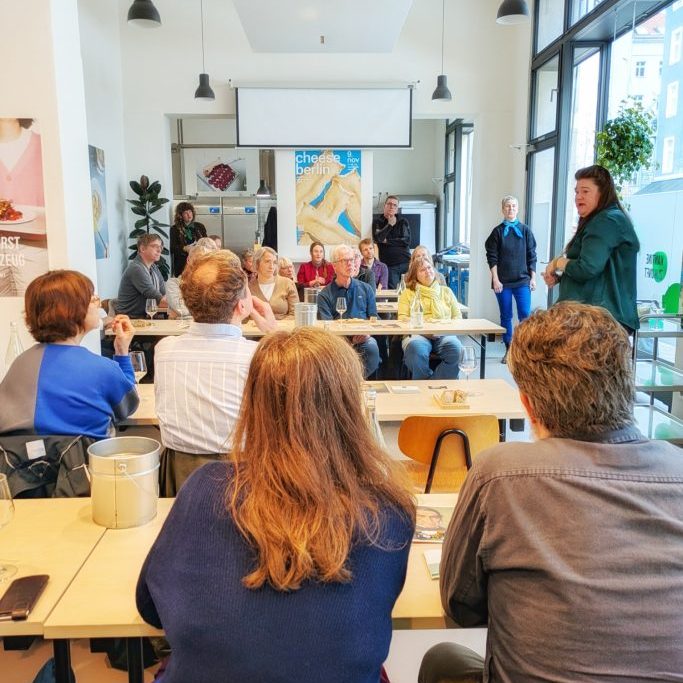
In Workshops und Gesprächen vermittelt Eirný Sigurðardóttir ihr Wissen über Milch, Käse und Herkunft. Bildung, Austausch und Gemeinschaft sind für sie zentrale Bausteine für die wachsende internationale Bewusstheit der neuen isländischen Käsekultur – hier auf der Cheese Berlin 2025.
Denn Island kann weit mehr als Skyr – jenes „marketer’s dream“, das in den vergangenen Jahren als High-Protein-Low-Fat-Produkt zum internationalen Kassenschlager avancierte. Und doch hat der echte Skyr aus Island nur wenig mit dem „Skyr nach isländischer Art“ gemein, der heute in europäischen Supermarktregalen zu finden ist.
Traditioneller Skyr wird ausschließlich aus der Milch isländischer Kühe hergestellt. Das Endprodukt, dessen Säureprofil eher an deutschen Quark erinnert, ist kein Joghurt. Seine Herstellung folgt alten, nahezu archaischen Methoden: Die frische Milch wird auf Körpertemperatur erwärmt und mit einem Rest Skyr vom Vortag „beimpft“, bis sie dicklich und leicht säuerlich wird. Anschließend lässt man sie in Leinentüchern abtropfen und presst sie aus. So entsteht jene konzentrierte Masse, die schließlich mit etwas Milch wieder geschmeidig gerührt wird.
Rückkehr zum Ursprung
Vielleicht war es gerade eine tiefe Verwurzelung zur Milchkultur ihrer Heimat, die Eirný – international viel rumgekommen – später dazu bewegte, in Island selbst ein neues Kapitel aufzuschlagen. Aufgewachsen in Tansania, Kenia und Nigeria, verbrachte sie fast zwei Jahrzehnte in Edinburgh und arbeitete dort in Restaurants und Feinkostbetrieben – stets nah an einer hochwertigen Esskultur.
In Edinburgh war sie als Käsehändlerin, Köchin und Dozentin an der Edinburgh School of Food and Wine tätig. Sie gründete ein Cateringunternehmen sowie einen Oliven-Großhandel, verkaufte auf Farmers’ Markets und betreute exklusive Cateringaufträge, unter anderem im 600 Jahre alten Invercauld Castle in Royal Deeside. Zudem führte sie sechs Jahre lang eine Bar im Stadtzentrum. Doch die Sehnsucht nach echtem Handwerk und Milch mit klarer Herkunft führte sie schließlich zurück nach Reykjavík.
Dort eröffnete sie mit Búrið den ersten unabhängigen Käseladen Islands im Herzen von Reykjavík – eine kleine Revolution im hohen Norden. Kurz darauf initiierte Eirný den größten Bauernmarkt des Landes in der Hauptstadt: einen Ort der Begegnung für Produzentinnen und Produzenten, Käseliebhaberinnen und Käseliebhaber sowie neugierige Besucherinnen und Besucher.
Heute gilt Eirný als eine der prägenden Stimmen der neuen isländischen Milchkultur. Sie setzt sich für alte Tierrassen, besondere Milchqualitäten und die Bedeutung von lokaler Gemeinschaft ein. Ihre Expertise ist international gefragt, zuletzt als Jurorin bei den World Cheese Awards. „Ich bin seit 30 Jahren im Käsegeschäft. Es ist surreal, dass sich Menschen für mich interessieren – aber schön. Ich liebe es einfach, über den Käse meiner Heimat zu sprechen.“
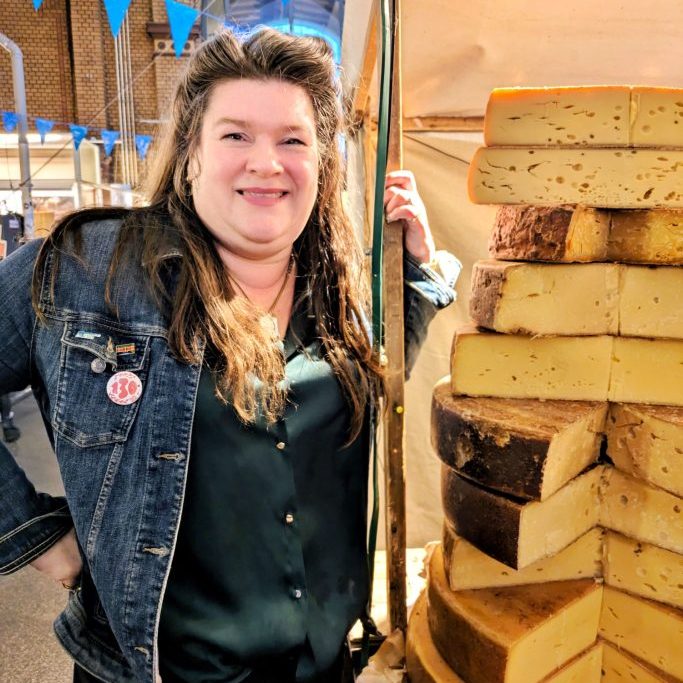
Auch international macht Eirný Sigurðardóttir die neue isländische Käsekultur sichtbar. Auf der Cheese Berlin 2025 sprach sie über Herkunft, Handwerk und das wachsende Selbstverständnis eines Landes, das seine Milch- und Käsekultur neu entdeckt.
Eine Milchgeschichte
Denn die Käsegeschichte Islands zeigte sich über lange Zeit in einem einheitlichen Gelb: industriell, massenhaft, austauschbar. Dabei konsumieren die rund 400.000 Einwohner:innen des Landes pro Kopf mehr Käse, Milch und Butter als in vielen anderen westlichen Nationen.
„Unsere Käsegeschichte ist eigentlich eine Milchgeschichte“, erklärt Eirný Sigurðardóttir. Noch vor etwa 150 Jahren war Schafsmilch aufgrund ihres höheren Fettgehalts das wertvollere Produkt. Doch im frühen 20. Jahrhundert wurde die Schafsmilchwirtschaft zugunsten der Fleischproduktion zunehmend zurückgefahren – und die Kuh übernahm die Rolle der wichtigsten Milchlieferantin.
Die isländische Kuh ist eine alte Siedlerrasse, die seit dem 9. Jahrhundert, seit der Ankunft der ersten Menschen, isoliert auf der Insel lebt. Ihre Milch ist außergewöhnlich süß und reichhaltig und weist eine eigene Zusammensetzung auf, die die Herstellung von Käse hoher Qualität ermöglicht.
Und doch: Bis 1987 galt in Island ein striktes Importverbot für Käse – und bis heute ist es gesetzlich untersagt, Rohmilchprodukte für den gewerblichen Verkauf herzustellen.
Mehr Farbe im Einheitsgelb
Der Käsehunger der Isländerinnen und Isländer, ihre ausgeprägte Neugier und der wachsende Tourismus haben in den vergangenen Jahren neue Farbe in das üer viele Jahrzehnte gewohnte Einheitsgelb gebracht. Neben den industriellen Produkten der großen Molkereigenossenschaft Mjólkursamsalan treten zunehmend kleine Produzentinnen und Produzenten hervor, die sich fehlender Infrastruktur mit Mut, Kreativität und handwerklichem Anspruch entgegenstellen.
Da ist etwa Anna María Schultz, die auf ihrem Hof Sauðagull Käse aus isländischer Schafsmilch herstellt – angelehnt an Feta, doch unverwechselbar nordisch im Charakter. Die gebürtige Deutsche lebt seit 2016 in Island und bietet im Sommer sogar Schafsmilcheis aus einem Imbisswagen am Wasserfall Hengifoss an.
Oder Jóhanna B. Þorvaldsdóttir, die seit über 30 Jahren auf ihrem Hof Háafell im westisländischen Borgarfjörður die vom Aussterben bedrohte Islandziege rettet. Dank ihrer Arbeit wuchs der Bestand von nur 80 auf heute über 1.500 Tiere – ein Erfolg, der 2014 nur durch eine internationale Crowdfunding-Kampagne möglich wurde. „Spannend, oder? Dass das isländische Käsehandwerk im Ausland mehr Aufmerksamkeit erhält als Unterstützung im eigenen Land“, kommentiert Eirný schmunzelnd.
Und dann ist da Stefania mit der Familie Ríkharðsson vom Hof Brúnastaðir, die seit 2020 Ziegen- und Schafsmilch zu feinem Käse verarbeitet. Im Sommer melken sie rund 70 Ziegen und 40 Schafe, die frei in den Bergen von Tröllaskagi weiden. Ihr bekanntester Käse, der Brúnó, ein mindestens drei Monate gereifter Hartkäse, hat das Terroir dieser Landschaft in sich aufgenommen: salzige Meeresluft, Kräuter, Felsgestein.
Solche Geschichten, sagt Eirný, lassen sie „wie einen Vulkan sprudeln“. Denn das ist – neben all ihren Rollen – ihre liebste: über die neuen isländischen Käse zu sprechen, „die aus dem Boden schießen und Käsegeschichte schreiben“.
Käse mit Geschichte
Im Land der Sagas und Mythen spielt Storytelling seit jeher eine zentrale Rolle – auch beim Käse. Wer in Island Käse verkauft, erzählt immer auch eine Geschichte: vom Hof, vom Tier, von der Landschaft. Genuss entsteht hier nicht nur auf der Zunge, sondern auch im Kopf.
Elfen, Feen, Gnome und Trolle prägen Islands Erzähltradition – und selbst in der Saga von Grettir taucht Skyr als Mittel der Ehrverletzung auf. So überrascht es kaum, dass auch die neuen Käserinnen und Käser des Landes ihre Produkte bewusst mit Geschichten verweben. „Storytelling schafft Vertrauen“, sagt Eirný. „Es verbindet Käse mit Emotion, mit Saison und mit Herkunft – und macht ihn zugänglich, gerade für jene, die neu in der Käsewelt sind.“
„Käse ist weiblich“
Auffällig dabei: Sechs ihrer sieben „Superheroes“ sind Frauen. Warum? Eirný lacht. „Natürlich! Käseherstellung ist etwas genuin Weibliches. Während die Männer auf dem Feld arbeiteten, kümmerten sich die Frauen zu Hause um die Milch – um das Leben. Wir waren schon immer diejenigen, die daraus etwas gemacht haben. Und jetzt schreiben wir die isländische Milchgeschichte weiter.“
Die Bewegung erinnert, so Eirný, an die norwegische Käseentwicklung: „Wir sind nur ein paar Jahre zurück“. Denn trotz wachsender Vielfalt steht Island weiterhin vor strukturellen Hürden: das gesetzliche Verbot von Rohmilchkäse, die Dominanz der großen Molkereigenossenschaft und ein begrenztes Vertriebsnetz erschweren den Marktzugang. Umso wichtiger bleiben Bauernmärkte – lebendige Treffpunkte, an denen handwerklich hergestellter Käse direkt in der Region verkauft wird und seine Geschichten weitergetragen werden.
Wenn man sie dann in Reykjavík zwischen Käselaiben und neugierigen Besucherinnen und Besuchern erlebt, wie sie Kostproben reicht und mit leuchtenden Augen über Textur, Aroma und Reife spricht, wird klar: Für Eirný ist Käse mehr als ein Produkt. Er ist ein Prozess – lebendig, eigenwillig und stets in Bewegung. Genau wie Island selbst.
Diese Begegnung ist Teil meiner fortlaufenden Cheese Stories über internationale Käsekulturen.