8th April 2026
Cheese Stories
German version
A delicious bridge between cultures: Marco Dell’Olio’s artisan cheese at Bæst in Copenhagen
This Cheese Story is based on a meeting with Marco Dell’Oglio at the Bæst restaurant in Copenhagen. Like the Cheese Story featuring Marie Linea Østergaard and Mikkel Poulsen at Søtofte Gårdmejeri, and the one with Siri Vilmann from Hårbølle Mejeri, it exemplifies a committed generation of young Danish cheesemakers, intercultural dialogue and the successful fusion of urban craftsmanship and regional roots.
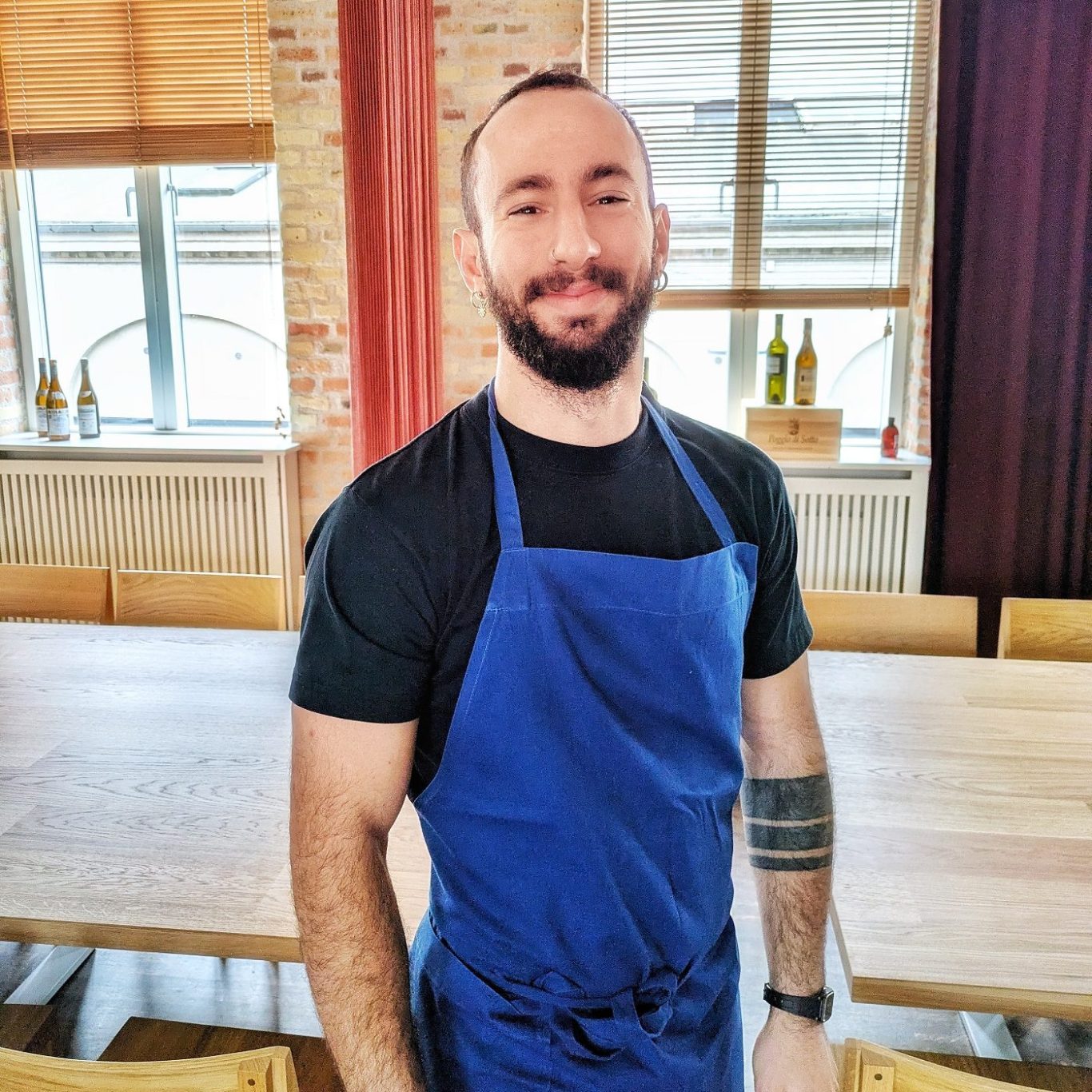
With just six years’ professional experience as a chef, he has been head chef since September 2025 – and is responsible for cheese production at the Copenhagen restaurant Bæst: Marco Dell’Oglio.
Nothing less than the “coolest neighbourhood in the world”: this is the accolade that Time Out magazine bestowed upon Copenhagen’s Nørrebro district in 2021. Big words – but by no means unfounded. As one of Copenhagen’s ten districts, Nørrebro stands out for its exceptionally diverse, multicultural atmosphere and a palpably vibrant scene. This is particularly evident around Sankt Hans Torv and along Jægersborggade: Cafés, bars, pubs, vintage shops and street food markets line the streets here, one after another.
Once a classic working-class neighbourhood, Nørrebro is now a vibrant hub for students, creative types and people from migrant backgrounds. Literally translated as ‘northern bridge’, the name could hardly be more apt: a place where a wide variety of cultures come together in a shared fabric – and, gentrification or not, interact with one another in a remarkable way.
And there is hardly any other culinary venue that bridges divides quite as effortlessly as Bæst in the heart of Nørrebro. For none other than Christian Puglisi – a Danish-Italian chef and restaurateur with years of experience at Noma and other Michelin-starred restaurants – created a place here in 2015 where Italian roots meet a steadfast commitment to regional, organic craftsmanship.
What at first glance seems very Italian – pizza is the big seller here – is, in practice, quintessentially Danish. This is because everything is grown, reared and processed locally and in the immediate region. An approach that isn’t limited to the dishes on the menu, but extends all the way to the first floor, where the restaurant’s own cheese dairy is located.
“A restaurant like this can really only exist in this form here in Nørrebro.” The career path of Marco Dell’Oglio, Head Chef at Bæst since September 2025 and responsible for the daily production of fresh mozzarella and burrata, reflects a similarly precise bridging of cultures as the restaurant itself, but also the neighbourhood that surrounds it.
The 31-year-old Sicilian welcomes me on this late March morning with a warm “Ciao, Laura”, before we hurry up to the first floor and sit down over an espresso. There isn’t much time to spare. At 12.30 pm, the curd needs to be processed, doused with hot water and stretched into delicious pasta filata creations. So I don’t waste a minute and ask Marco what makes this place so unique to him.
An incredibly complex field
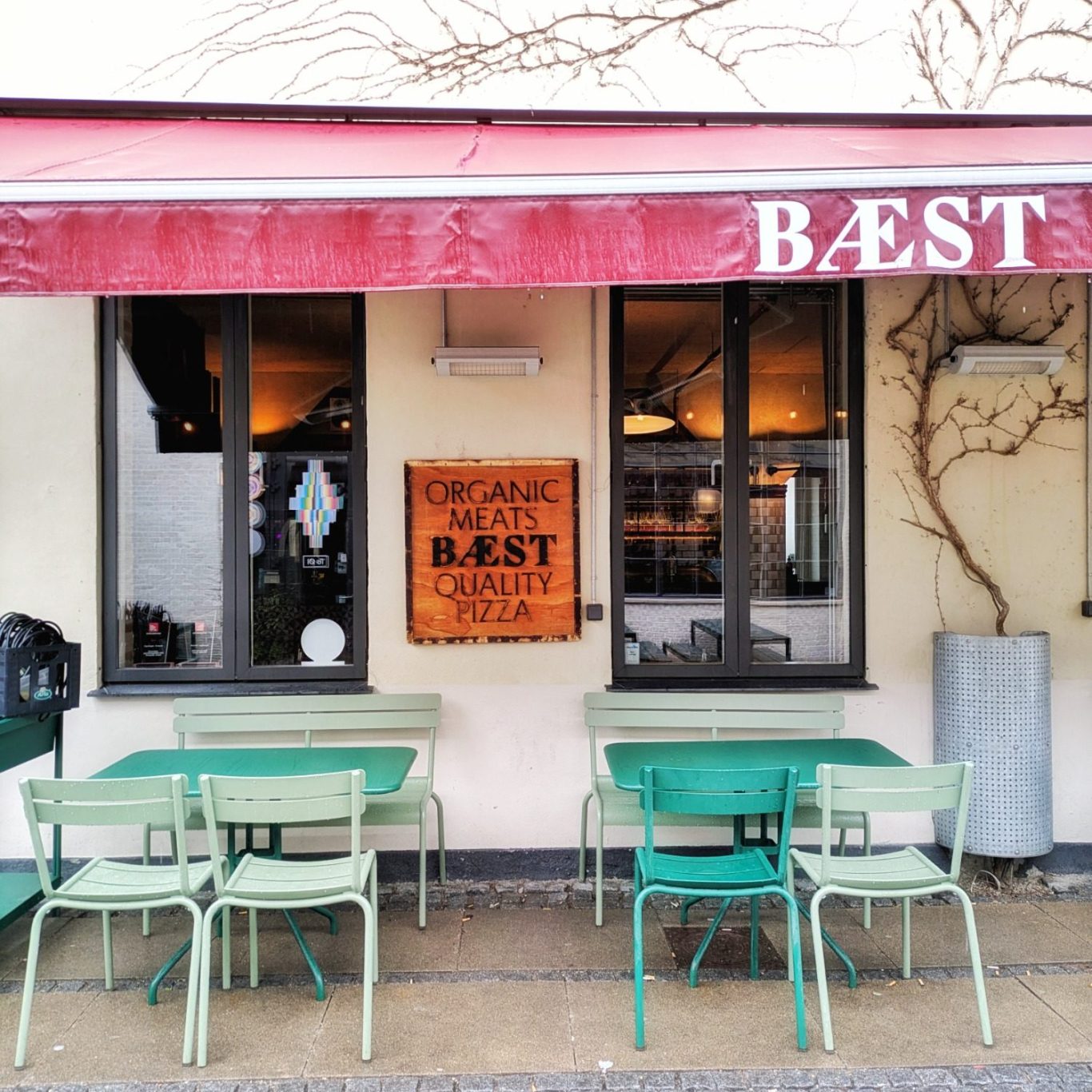
Founded in 2015 by Christian Puglisi, the restaurant, located in the heart of Copenhagen, focuses on producing its own cheese, sourdough and charcuterie.
“The fact that we cover at least 30,000 steps a day in here,” he laughs loudly across the room. “No, seriously: I’ve never come across a restaurant where cheese is made fresh every day – sourdough, charcuterie, everything made in-house.” This unwavering focus on in-house craftsmanship makes the place one of the most exciting of all for him: a space where skills can be developed to a depth that is hardly possible elsewhere.
He soon turns to the subject of cheese-making. Together with the sous chef, Marco is responsible for producing the pasta filata specialities. Before that, he had never had any experience with cheese-making. “It fascinated me from the very first moment. Even though, at first glance, we focus here on just one family of cheeses, it’s an incredibly complex field.”
Marco has been making cheese every day at the start of his shift for the past year and a half. “And I’m still learning something new every day. At first, I thought I could standardise processes and procedures. But I soon had to learn that I’m working with a living product that can’t be controlled fully.”
Every day, 120 litres of fresh organic raw milk are delivered from the herd of around 120 Jersey cows at Svanholm Gods in northern Zealand trough Hårbølle Mejeri– to be processed into mozzarella and burrata creations for the restaurant’s evening service on the very same day. But related Italian classics such as ricotta, mascarpone and stracciatella are also made here from the same milk.
“Our crown jewel is and always will be the mozzarella. We heat the high-fat Jersey milk to 37 degrees early in the morning, add the lactic acid bacteria culture – and wait.” Marco laughs. He’s clearly getting restless. Whilst the milk is curdling in the next room, his gaze keeps wandering to the clock. We still have a few minutes to spare before it’s time – enough to hear about his anything but conventional path to the cheese-making trade.
A true Italian soul
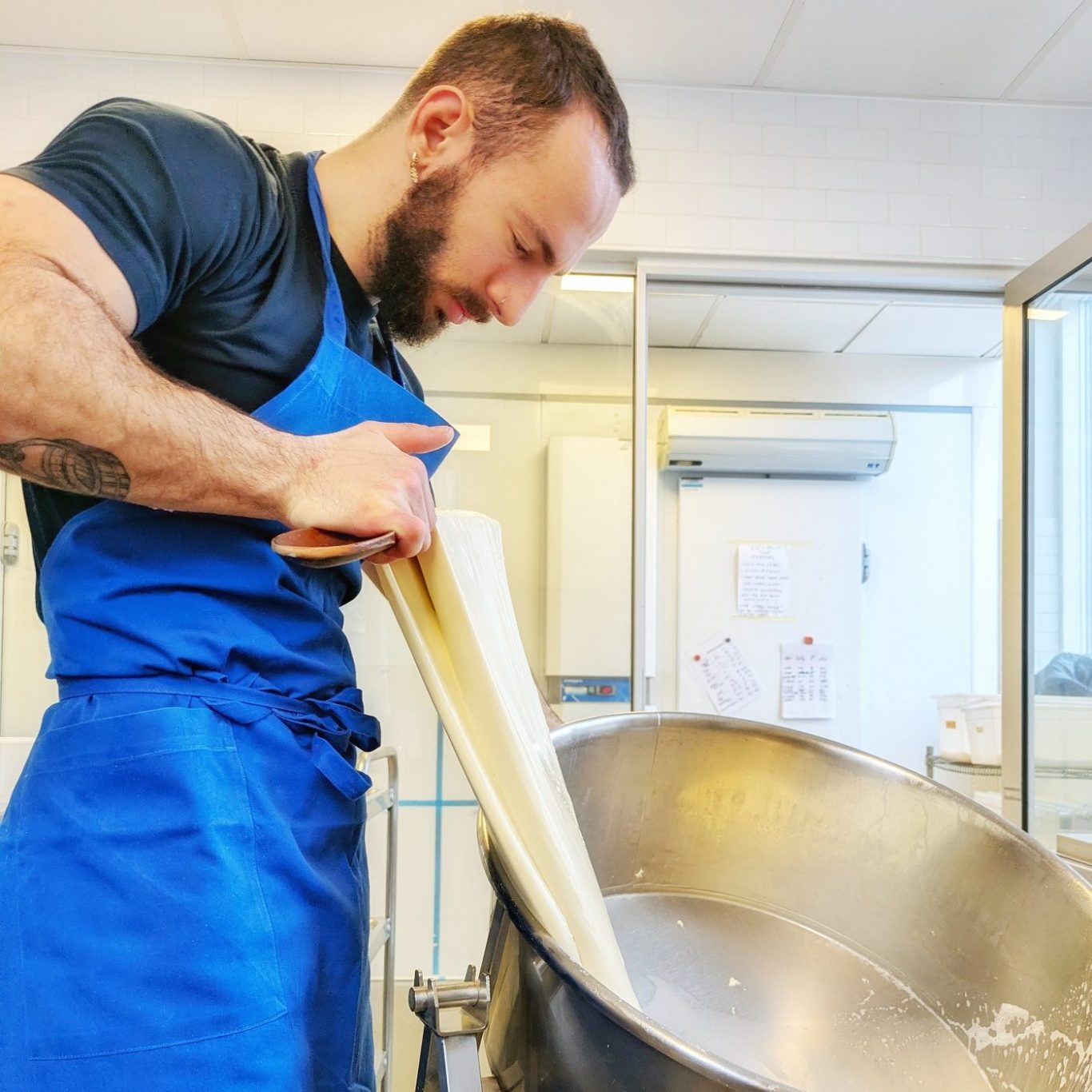
Marcos favourite part of cheese-making: when hot water and salted curd combine to form a silky, glossy texture as he stirs them with the wooden handle.
In fact, Marco didn’t decide to spend his life in the kitchen until he was 25. Born and raised in Palermo, he initially went to Milan to study psychology. It was only there that he realised another path was calling him – that of a chef. “I knocked on the doors of every restaurant I could find and asked if I could work for free.”
Marco is a quick learner, focused and meticulous. He went on to work in upmarket restaurants on Lake Garda, first as a commis chef, then as a chef de partie. He moved on to Slovenia, to the country’s first Michelin-starred restaurant, Hiša Franko in Kobarid, and finally to Paris to work with Giovanni Passerini, a protégé of Alain Passard. “He remains my muse to this day.”
15-hour shifts in the heart of the French capital, hundreds of kilometres away from his home – – and a growing sense that none of this resonated with the cuisine he came from. For Marco, it was clear: he had to move on. Here, to Bæst. It wasn’t just the restaurant’s Italian soul, but the way in which the ingredients and genuine craftsmanship are allowed to speak for themselves here – without any grand spectacle. “You have to imagine that at that point I actually only had six years’ experience as a chef. And yet, from the very first moment, I was shown enormous appreciation.”
A playground without a fridge
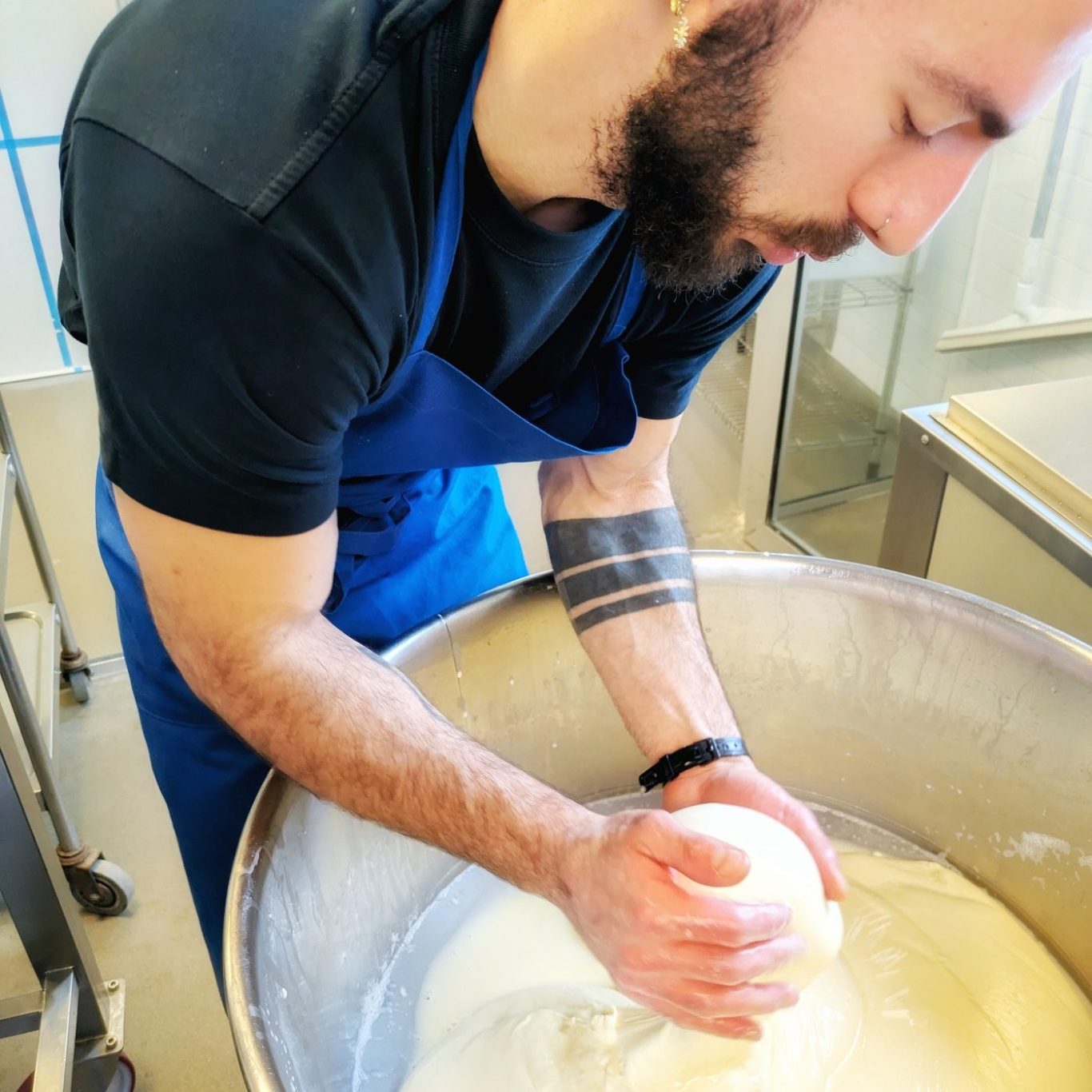
“Of course, we’re in direct competition with the pasta filata specialities from my home region. But we’ve got nothing to be ashamed of when it comes to this cheese – quite the opposite.”
The espresso has long since been finished, and at 12:25 pm Marco – after all, he’s got those 30,000 steps to clock up today too – can’t sit still any longer. One door down, after a quick change of clothes and some sanitising, we’re already inside the Bæst cheese dairy. It’s a relatively small room, but despite its size, it has enough space for a complete pasta filata production line – similar to the one I remember from my visit to the Bobalis farm back home.
With practised ease, Marco cuts the curd into 2-centimetre cubes and then drains off the whey. “I’m so incredibly proud of this product, which we make right here. Guests can taste mozzarella here that has never once been in the fridge. Where else can you find that?”
It is his playground, his natural habitat. And I cannot help but think that it is a stroke of good fortune for everyone involved that this Sicilian, after his many adventures, has ended up right here – in this very place, to produce precisely these Italian classics.
Salt, hot water, a long wooden handle – and then 40 kilograms of curd are stretched. Marco’s rhythmic hand movements quickly create a silky, glossy texture. “Have a taste!” I’m amazed at how complex the milky flavours unfold on the palate – despite the milk being pasteurised. “Of course, we’re in direct competition with the pasta filata specialities from my homeland. But we’ve got nothing to be ashamed of with this cheese – quite the opposite.”
It's not a case of either/or
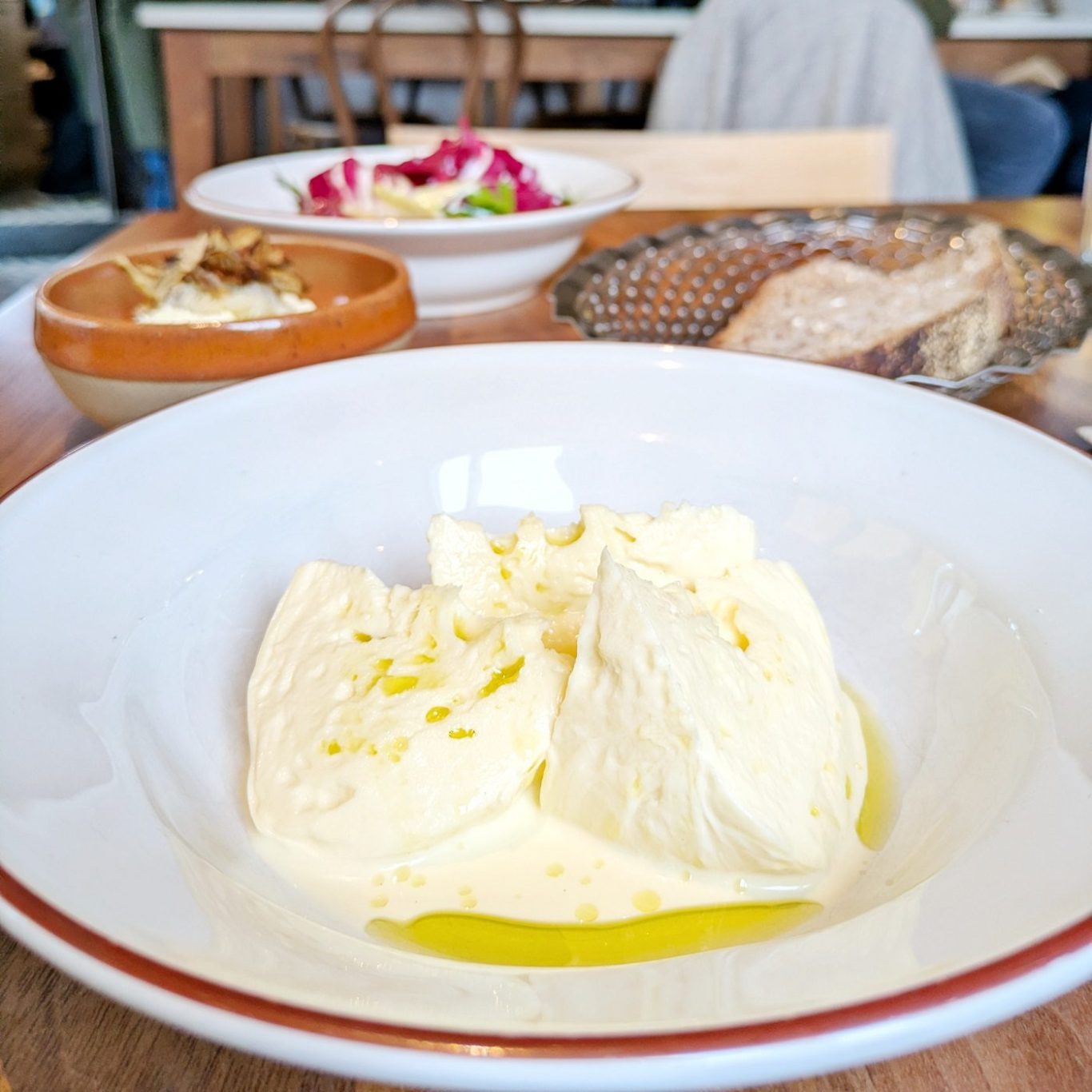
Never seen a fridge before: mozzarella from the restaurant’s own cheese dairy, one floor above the dining room.
For a moment, I forget that we’re in one of Copenhagen’s trendiest restaurants. That we’re on Danish soil. Marco’s Italian zest for life, that unmistakable mozzarella-making craft – the setting transports me for a moment to the Amalfi Coast. His words, however, quickly bring me back to reality. “I’m not a cheesemaker; it would be presumptuous to claim that. There are so many out there who devote their entire lives – often with the whole family – to the art of cheese-making.”
In fact, he is a chef who spends a few hours a day making cheese. “Fortunately. Because standing up here day in, day out has sharpened my perspective on life.” And there it is, faint and almost unobtrusive: his background in psychology, his thoughtful approach to the world around him.
“Cheesemaking has taught me to let go of control and to be open. To what nature gives me today, to what moves people at this very moment, to how my own outlook is changing.” After a long journey, Marco seems to have finally found his place here. He wants to stay. Here at Bæst – as a chef who makes cheese. As a person who is appreciated. And who passes that appreciation on.
For just a few minutes later, I find myself sitting at a lavishly laid table in the restaurant. A table that positively glows. With its gleaming white mozzarella, burrata and stracciatella creations – and brimming with hospitality. Delicious, magnificent. Italy on the tip of my tongue – or is it Denmark? At this moment, it doesn’t matter.
This isn’t about an either/or situation. Rather, it’s about that unique, delightful way of bridging the gap. About moments that bring everything together. And about fantastic craftsmanship that defies categorisation.
This encounter is part of my ongoing Cheese Stories on international cheese cultures.