1st April 2026
Cheese Stories
German version
A new Danish cheese culture: Marie and Mikkel from Søtofte Gårdmejeri
This Cheese Story is based on a meeting with Marie Linea Østergaard and Mikkel Poulsen at Søtofte Gårdmejeri in Zealand, Denmark. Much like the Cheese Story featuring Siri Vilmann from Hårbølle Mejeri or the one with Marco Dell'Oglio from Bæst in Copenhagen it exemplifies a dedicated generation of young Danish cheesemakers who – despite restrictions on raw milk – are passionately committed to the national cheese-making craft and are making a lasting impact on it.
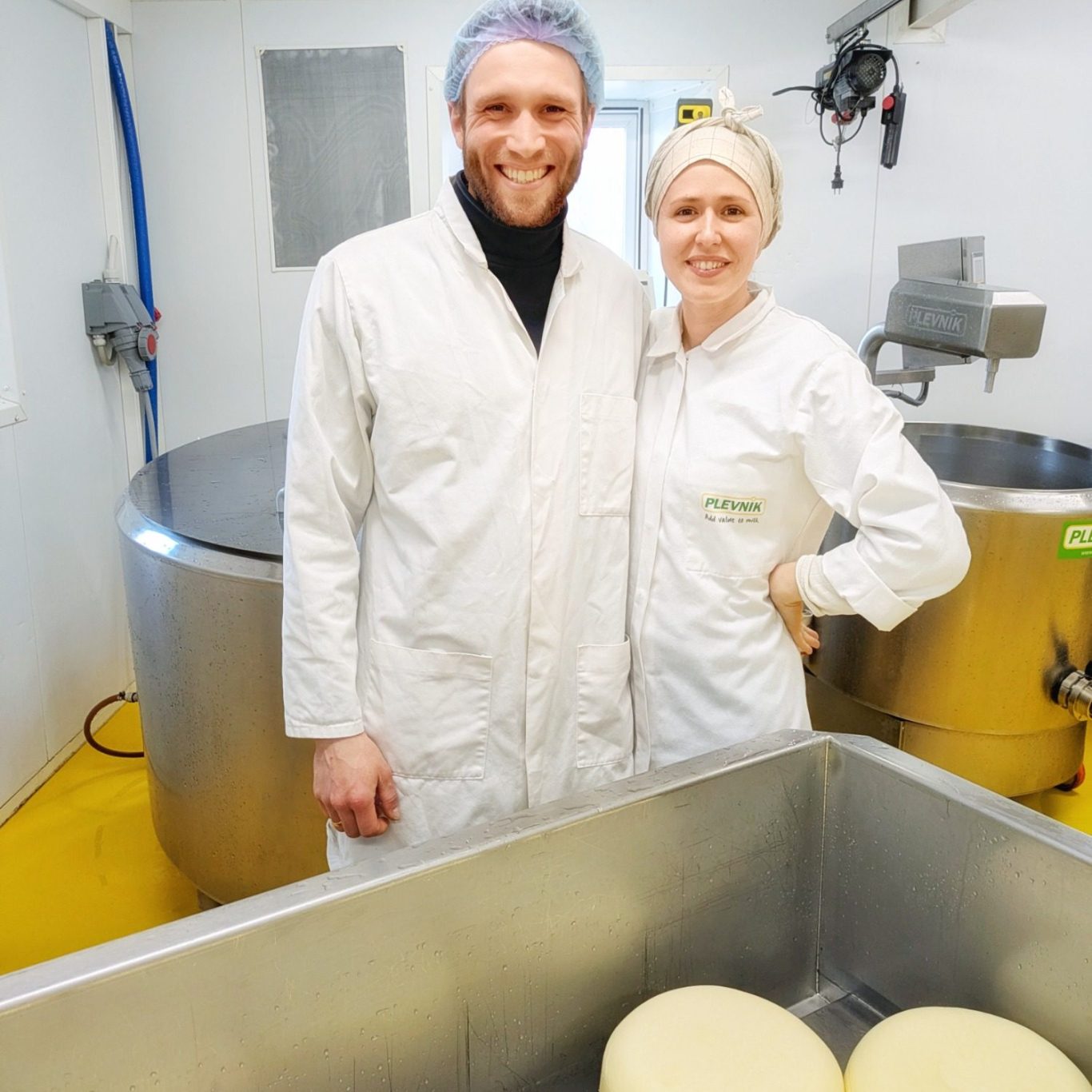
Since 2019, Mikkel Poulsen and Marie Linea Østergaard (both born in 1992) have established nothing less than a flagship for the Danish cheese-making industry here at Søtofte Gårdmejeri.
First, I’m greeted by the scent of freshly baked cinnamon buns. Then, as I step into the living room of Marie Linea Østergaard and Mikkel Poulsen on this March afternoon, I see the lovingly laid coffee table. Next to the cinnamon buns on the table: the baby monitor, in case two-year-old Ida wakes up.
We have deliberately chosen this time slot. The daily life of a family of four and a business that has only been running for six years – Søtofte Gårdmejeri near Ringsted, between Roskilde and Sorø, about an hour’s drive west of Copenhagen – call for careful coordination.
For one thing has become clear to Marie and Mikkel over the past two years: however much the success of their craft may validate their efforts – their milk, yoghurt and cheese products are now sourced by top restaurants across the country – the sobering reality has come to the fore alongside their ideological drive.
Whilst their five-year-old son is at nursery and Ida is having her afternoon nap next door, the two of them take the time to spend their break with me in this delightful way. Marie pours us all a cup of filter coffee, and I tell them about my visit yesterday to the Prolog Coffee Bar in Copenhagen, one of their customers. The mention of Søtofte Gårdmejeri was enough to set the barista there gushing: They are so convinced of Marie and Mikkel’s work there that they even play the sound of their cows in the toilet (it’s true!).
Here in Mid-Zeeland, the farmer and the dairy technologist – both born in 1992 – have, in a very short space of time, set up an organic and regenerative farm with dairy cows and their own on-farm dairy. “Our first dairy cow, Dottea, arrived in May 2019,” recalls Mikkel. Guided by a holistic approach, Søtofte Gårdmejeri has since become a beacon of Danish cheese culture.
Marie and Mikkel have forged a path that places love for the raw product at the heart of everything – as well as an appreciation for animals, people and the cycle that connects it all. Ein Weg, der von Anfang an steinig war, nach wie vor bleibt und für die beiden alles andere als zu Ende gegangen ist. A journey that was fraught with difficulties from the very start, remains so to this day, and is far from over for the two of them.
Unequal conditions
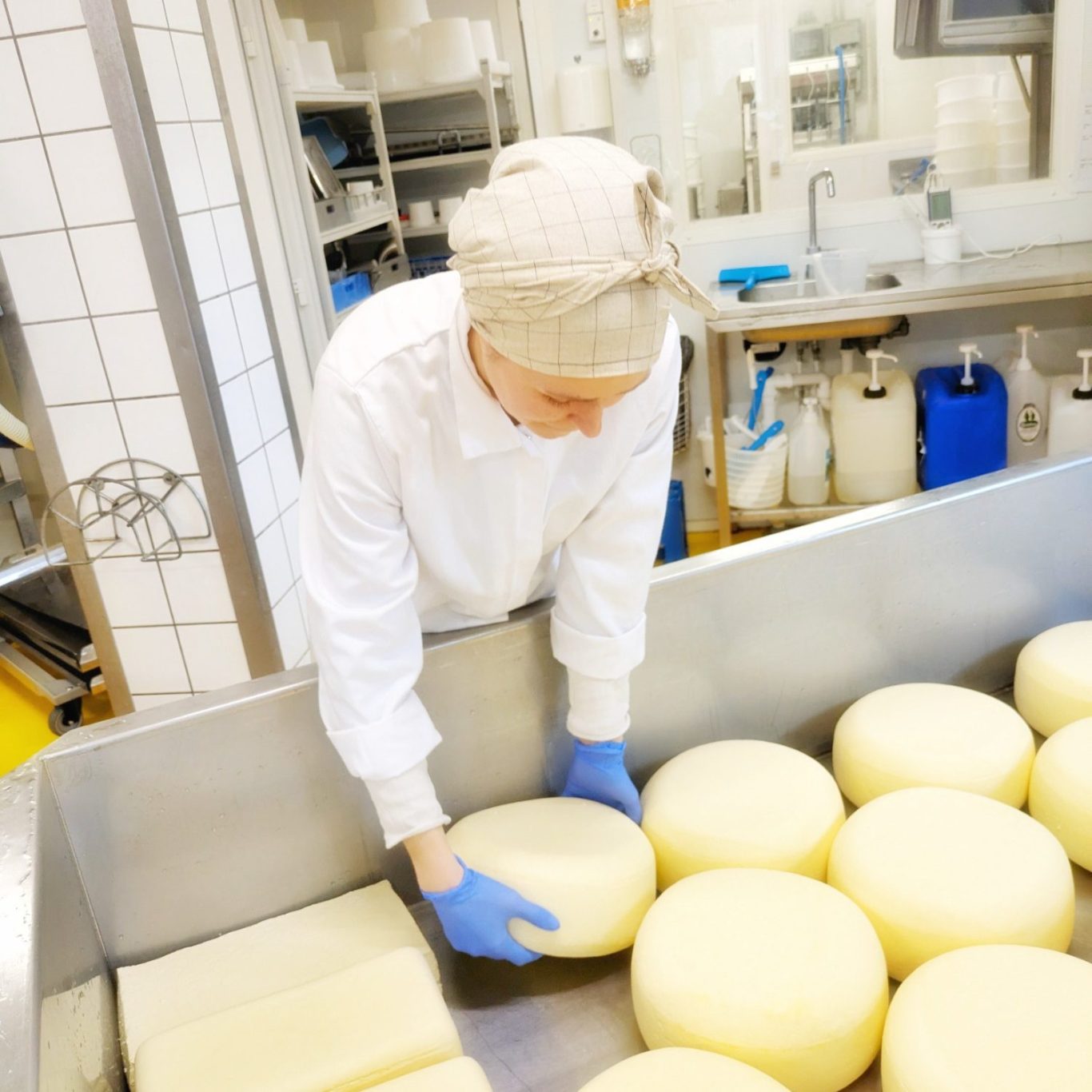
“The issue of raw milk is a real headache for me – and remains one of my greatest motivations. But in recent years – ideological convictions aside – I’ve had to accept that I need to choose my battles wisely.”
“Black or with milk?” We get stuck on this very point – and I have no idea yet just how sensitive the issue is that I’m touching on. First of all, I’d like to understand why there is hardly any locally produced raw milk cheese to be found in the Danish countryside – even though cheese counters, such as the one at Omegn & Venner in Copenhagen’s market halls, are well-stocked with raw milk delicacies from abroad.
Marie’s response is as matter-of-fact as it is complex: there is certainly enthusiasm among customers. But anyone wishing to work with raw milk here in Denmark must apply for official authorisation. Three key criteria must be met – and these are set so high that they are virtually impossible to fulfil for many, particularly small businesses. The cheeses must have been matured for a long time, and the milk must first be heated to a specific temperature; soft cheeses are effectively ruled out. Danish bureaucracy makes it virtually impossible.
Marie wrote her thesis on raw milk. In theory, she could think big, but in practice she was able to put very little of it into action. “This issue is a real headache for me – and remains one of my greatest motivations. But in recent years – ideological convictions aside – I’ve had to accept that I need to choose my battles wisely. It’s tough building a business as a couple whilst starting a family, making a home and coping with the financial pressure.”
And yet Marie’s greatest wish remains to make her own raw milk cheese in the near future: “My cheeses are on the shelves in direct competition with raw milk cheeses from France and Italy.” She feels that the starting point for producing her own cheeses is already at a disadvantage. Above all, however, she is concerned with the complexity of flavour that her own cheeses could offer. “Just imagine what else might be possible if we delved deeper!”
Happy coincidences
Marie and Mikkel first met at the Cheese Festival in Copenhagen in 2017 – they hit it off straight away. At the time, Marie was working in a small cheese dairy in southern Denmark whilst studying, and realised that she wanted to set up her own business.
As fate would have it, Mikkel asked her if she could imagine working with him. “We met a few times to discuss setting up a yoghurt production facility here on Mikkel’s parents’ farm. When I saw this place, I fell in love not only with Mikkel, but with this farm too.”
Marie had always dreamed of a glass-walled cheese dairy in the city. A native of Copenhagen herself, she wanted to bring authentic craftsmanship – similar to that of the Munich cheese factory – back into the city, close to the people. Now she is happy that things turned out quite differently. Here in Ringsted is now her home, her family – and Søtofte Gårdmejeri.
Focus on family and accessibility
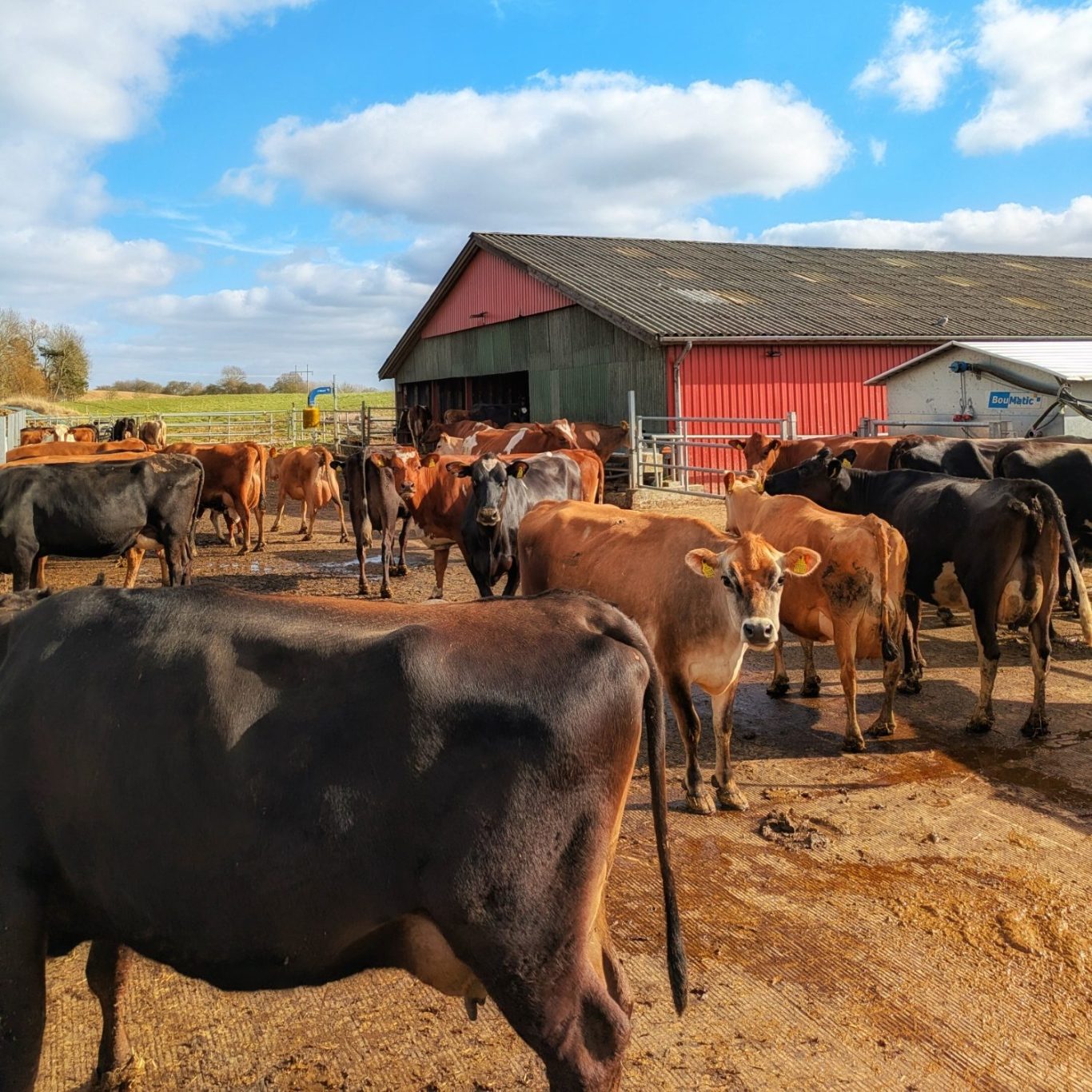
The mixed herd, currently numbering 55 animals and comprising Jersey, Red Danish Dairy and Holstein cattle, is less than a kilometre away from Søtofte Gårdmejeri.
That is why the couple have made a decision that is unusual in the farming world: family comes first. Here, work is adapted to family life, not the other way round.
“We have five employees looking after 55 cows, which is a huge undertaking. That’s why everything has to work together seamlessly: production, the dairy and sales. I realise that I probably couldn’t manage that in West Jutland. It makes a big difference that we’re only an hour away from Copenhagen,” says Mikkel.
This also makes it easier for them to supply the city’s top restaurants directly and gain direct access to customers. “We work every day to develop the culture here as a whole, to raise awareness of high-quality craftsmanship – and to let people experience the quality behind it on their palates.”
After all, cheese from Søtofte Gårdmejeri is meant to be anything but a “posh product for the discerning palate”. “I don’t want our cheese to be served only in top-class restaurants like Bæst, for example. That’s a great honour for us. But my main aim is to help bring about a holistic shift. My aim is not only to establish raw milk production in Denmark, but to lead by example, to make our craft accessible to the wider public – and in doing so, to inspire other farmers too.” Marie’s eyes begin to light up.
A battle against windmills
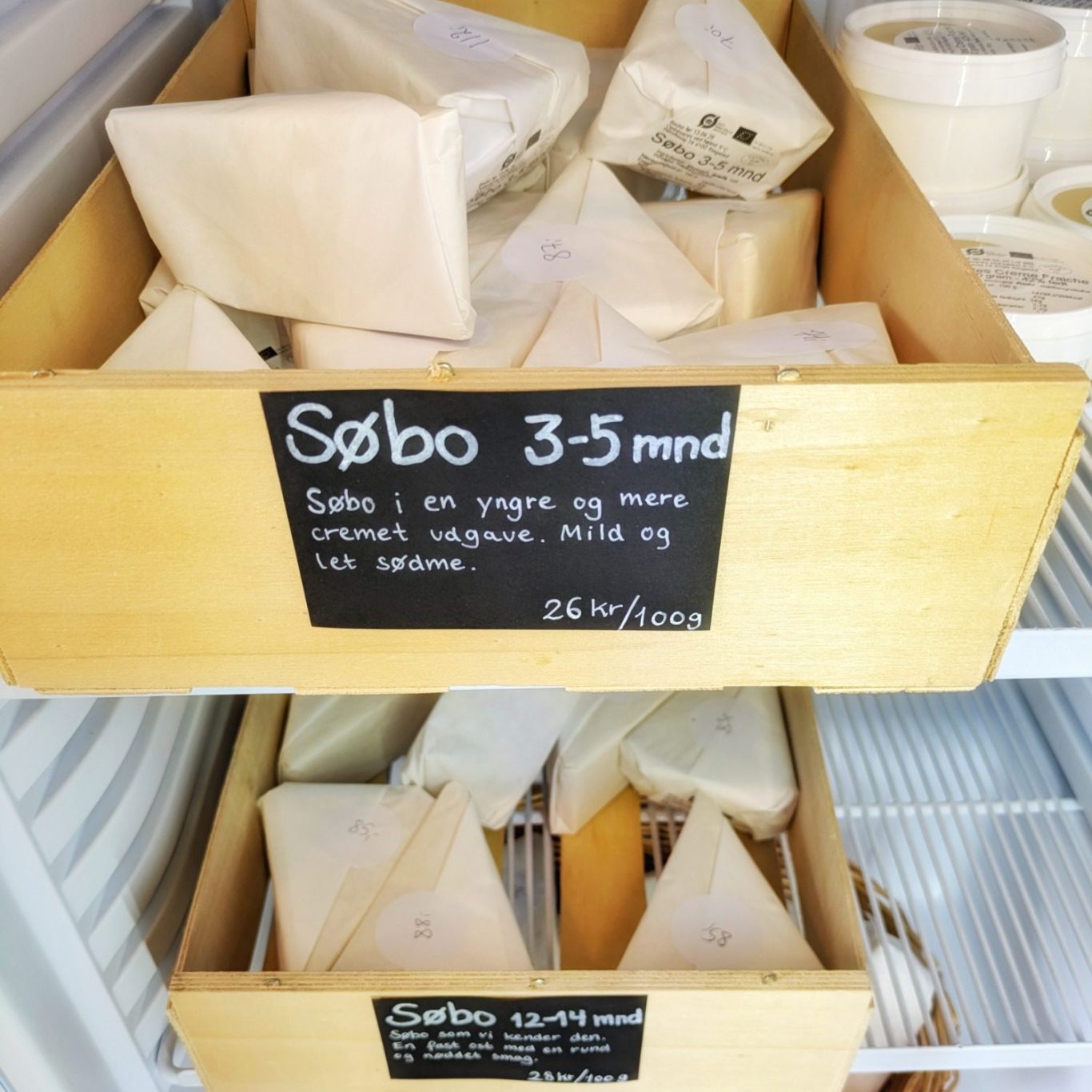
“At the heart of our range is Søbo, a Gouda-inspired cheese with lots of small, delicate holes. It matures for seven to eight months, developing a full-bodied, slightly nutty and creamy-sweet flavour – striking a balance between a pleasant mildness and the greatest possible complexity.”
She was particularly inspired back then by the parents of her best friend from school. As early as the 1990s, they were selling exclusively artisanal food products in Denmark. She tasted the cheese there – and the flavour stayed with her ever since. But her time with Joe Schneider at Stichelton Dairy also left a lasting impression on her. This cheese, British cheese culture, the celebration of craftsmanship – all of that is still missing here at the moment.
“And that starts right from university. After all, milk production is ultimately about a living being, about a mother.” She felt that this perspective – that animals should be treated with the utmost respect – was missing. “During my studies, the focus was primarily on efficiency and productivity. It was never about the best possible taste or the quality of life for people, animals and nature.” Now, the two of them are putting precisely that into practice here. A battle against industrial windmills.
A few years ago, if asked how much it frustrated her not to be able to make raw milk cheese, she would probably have given a different answer. “It’s my struggle and it remains my struggle. But I have a life, a family routine, children. Acting sustainably also means putting some struggles on hold and being realistic. But I’m sure the right time will come eventually.”
Growing sustainably
The coffee has been finished. Mikkel wakes Ida from her afternoon nap, whilst Marie shows me round her cheese dairy – with a quiet confidence, almost casually proud. Just a simple wooden door separates the living room from the production areas. “The centrepiece is our Søbo, a Gouda-inspired cheese with lots of small, fine holes. It matures for seven to eight months, developing a full-bodied, slightly nutty and creamy-sweet flavour.” – a balance between pleasant mildness and the greatest possible complexity.”
900 litres of milk are processed here every day – in as natural a way as possible. And with the use of technology where it makes sense. “Of course we want to grow. The key to this is that the milk quality remains at this consistently high standard – and that our animals are well looked after.” For the two of them, growth does not automatically mean that quality suffers. “You just need to know how to scale your business in the best possible way,” says Mikkel.
The mixed herd of Jersey, Red Danish Dairy and Holstein cattle is currently in its open winter pens, less than a kilometre away – for now. Soon they will move on to the open pastures. Drone footage helps Mikkel select the best possible grazing area for the animals at the right time. A transponder in the animals’ stomachs alerts him to even the slightest changes in their health, enabling an immediate response.
Fine-tuning our ideals
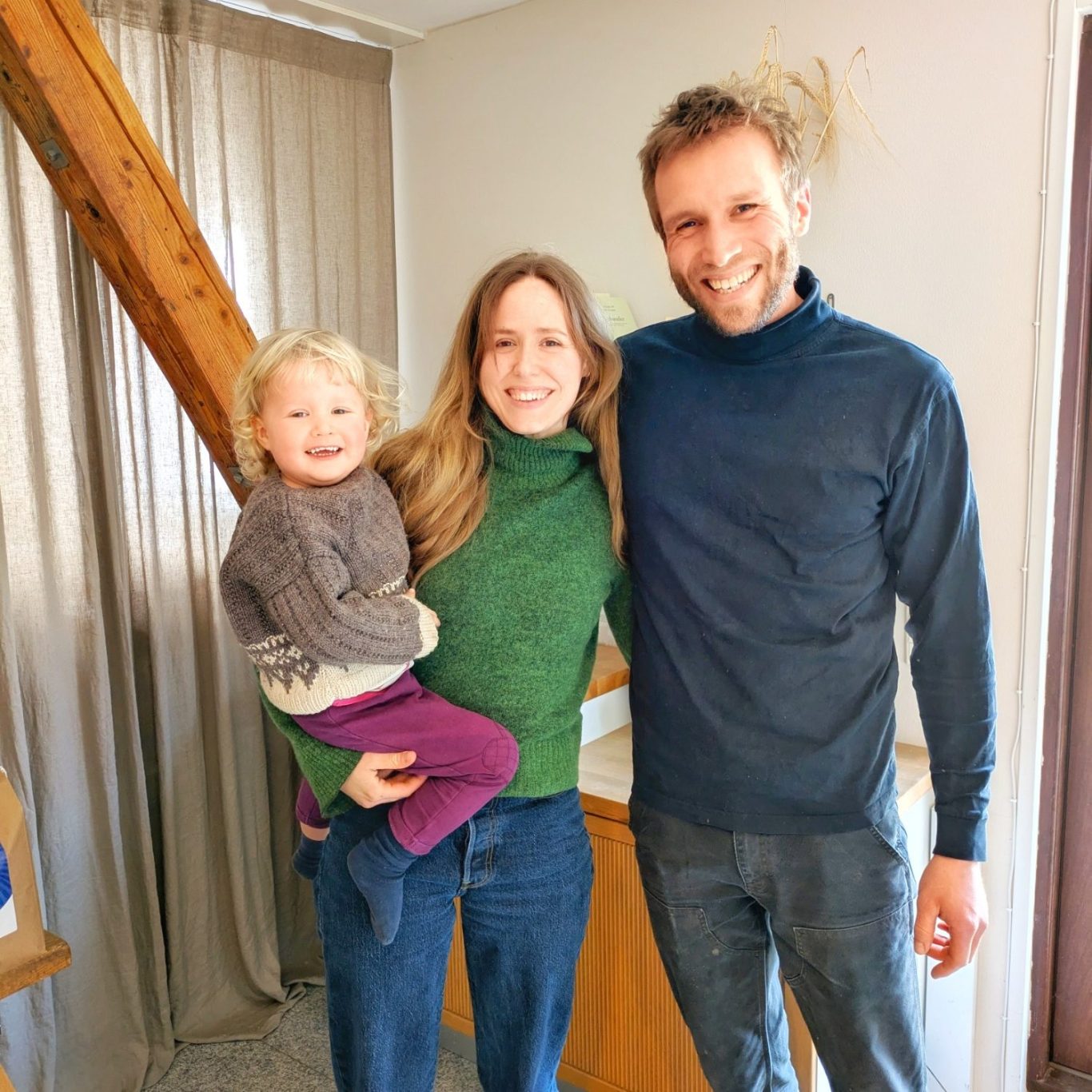
Putting the family first: daily working life at Søtofte Gårdmejeri is tailored to family life, not the other way round.
“We have always stuck to our clearly defined core values – and over the past few years we have realised that we need to fine-tune them. I am particularly proud of how we have approached these changes.”
By this, Marie is referring above all to her ambition to produce horned milk – but that caused problems. Instead of dehorning the animals, the couple switched to hornless breeds two years ago.
Another change: initially, they left the calves with their mothers for the entire period. Now they only stay with them for three weeks. After that, they are looked after by a foster cow until they are three to four months old. “We want to manage things efficiently – whilst also finding the best possible approach for the animals.”
The small family is now looking forward to the Easter holidays – the first they’ve taken since founding Gårdmejeri. They’re spending their few days off here in Ringsted. And anyway, holidays are really meant to be spent on our own doorstep. “It’s the perfect opportunity to show my children their homeland. Denmark has an impressive natural heritage. Why should I get on a plane and harm the environment when this beauty surrounds us right on our doorstep?” Marie gives Ida a kiss on the cheek.
This thoughtfulness, this reflective approach to life, this appreciation of others – all of this runs through our conversation. A young couple who, through their work, are shaping nothing less than a new Danish cheese culture in a thoughtful, highly intelligent way. Despite bureaucratic realities and restrictions on raw milk. Full of passion. And full of hope.
This encounter is part of my ongoing Cheese Stories on international cheese cultures.