1st April 2026
Cheese Stories
German version
Dänemarks Dairy Queen: Siri Vilmann von der Hårbølle Mejeri
This Cheese Story is based on a meeting with Siri Vilmann at Hårbølle Mejeri in Zealand, Denmark. Like the Cheese Story featuring Marie Linea Østergaard and Mikkel Poulsen at Søtofte Gårdmejeri and the one with Marco Dell’Oglio from Bæst in Copenhagen, it exemplifies a dedicated generation of young Danish cheesemakers who – despite restrictions on raw milk – are passionately committed to the national cheese-making craft and are making a lasting mark on it.
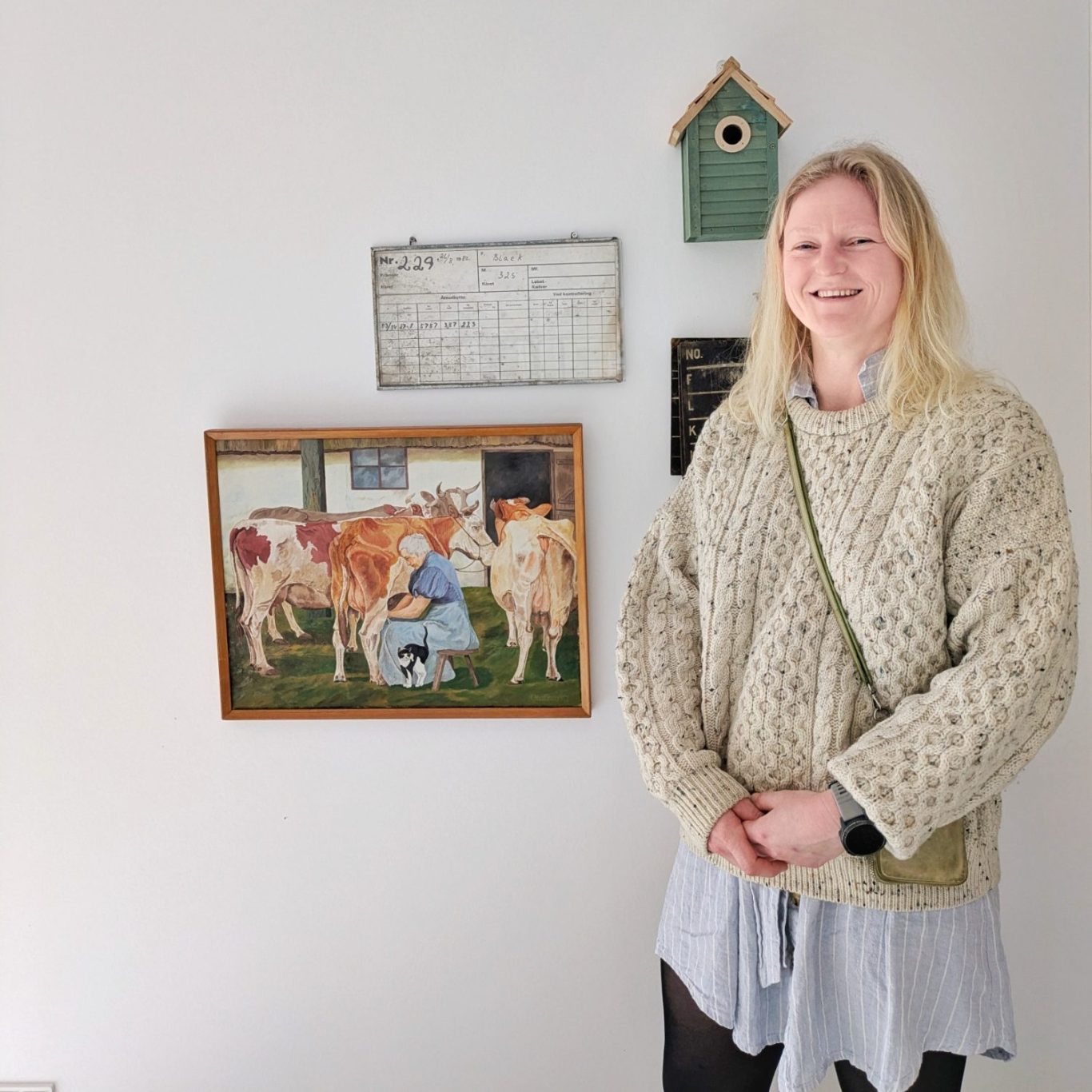
At just 33 years old, Siri Vilmann has managed to make a name for herself both nationally and internationally as ‘Denmark’s Dairy Queen’.
Her name: a household name, and not just in Denmark’s cheese scene. Thomas Berglund also mentioned Siri Vilmann when I asked him during my visit to Almnäs Bruk in Götaland, Sweden, who would be a good person to contact to gain a comprehensive understanding of Danish cheese culture. The same goes for Kerstin Jürss on the east coast of Sweden, and even Peter Dörig from the Finnish Herkujuustola. Everyone in the Northern European cheese world knew Siri – except the internet. A digital enigma: no Facebook profile, no LinkedIn CV.
Consequently, when we met on that glorious Saturday in March, I had no idea who was picking me up by car after my visit to The Beast – a restaurant with its own cheese production in the trendy Copenhagen district of Nørrebro. “Oh yes, we supply The Beast with our milk from Svanholm!”
Siri will explain the exact details to me in more detail over the next few hours during our visit to Øllingegaard Mejeri. But even more than that – not directly, but in a modest, almost casual way – she’ll tell me how, at just 33 years old, she’s managed to make a name for herself as ‘Denmark’s Dairy Queen’.
Right from the very first moments of our greeting, I get the impression of a woman who, through and through, with every fibre of her being, is brimming with pure joie de vivre and warm generosity: she parks right in the middle of the road, jumps out of the car and hugs me, saying, “Are you hungry? I’ve got cardamom buns in the boot. Let’s make ourselves comfortable straight away.” Siri, it’s a great pleasure to meet you!
Never anything else again
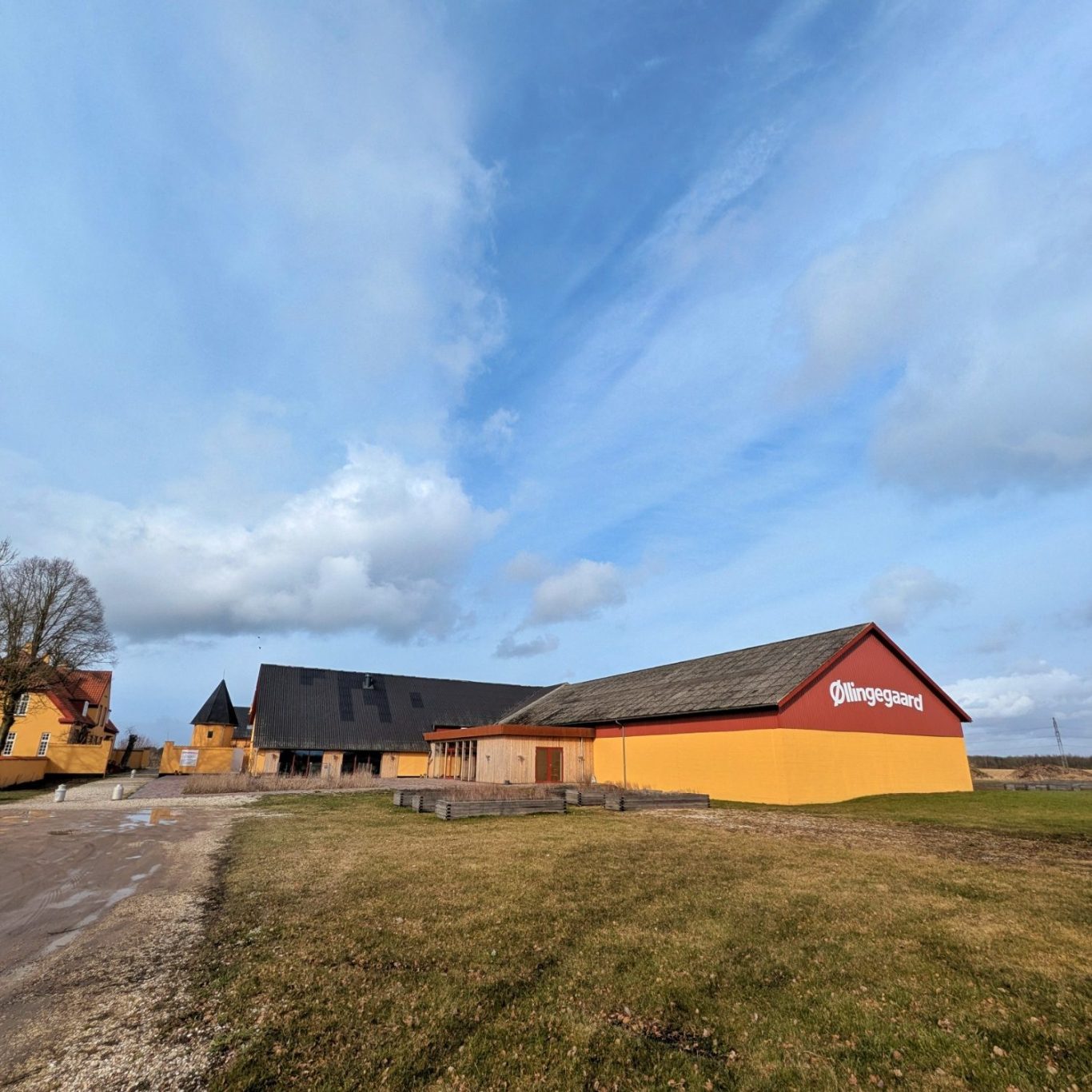
Der 1925 erbaute Gebäudekomplex der Øllingegaard Mejeri mit restaurierten Stallungen und markanten Rundtürmen beherbergt die Handwerkskäserei der Hårbølle Mejeri.
For the next forty minutes, the passenger seat becomes the place where I listen to Siri and her story – captivated by her warm, such a heartfelt manner. We set off for Skævinge to Øllingegaard Mejeri in northern Zealand – one of Denmark’s best-known organic dairies. Here, only organic milk is processed, mainly from smaller, often collective or sustainably run farms such as Svanholm Gods, the milk supplier for mozzarella production in Copenhagen’s Baest.
“Yes, it’s not all that easy to understand – especially the connections between Øllingegaard Mejeri, Naturmælk and Hårbølle Mejeri, for whose cheese production I’ve been responsible again since the start of the year.”
Previously, the Copenhagen native spent several months completing organic farm education – in fact, she has only been back in Copenhagen for six months. “Taking this step back to the capital wasn’t easy. And it’s still a process of getting used to it.” She used to live on the Danish island of Møn. She moved there in 2019 to make cheese for Hårbølle Mejeri. This was followed by several agricultural placements, including in southern Denmark, Sweden and the Netherlands.
“You have to imagine that in one of my past lives I actually studied chemistry,” she laughs, her voice echoing through the car. “But only briefly. I quickly realised that I can’t sit still for long.” A friend finally suggested she try her hand at “something to do with cheese”. And so one thing led to another. Just a few days’ work experience at a small Danish business were enough to realise that this friend clearly knew her quite well. Siri never wanted to do anything else again.
Let go of control
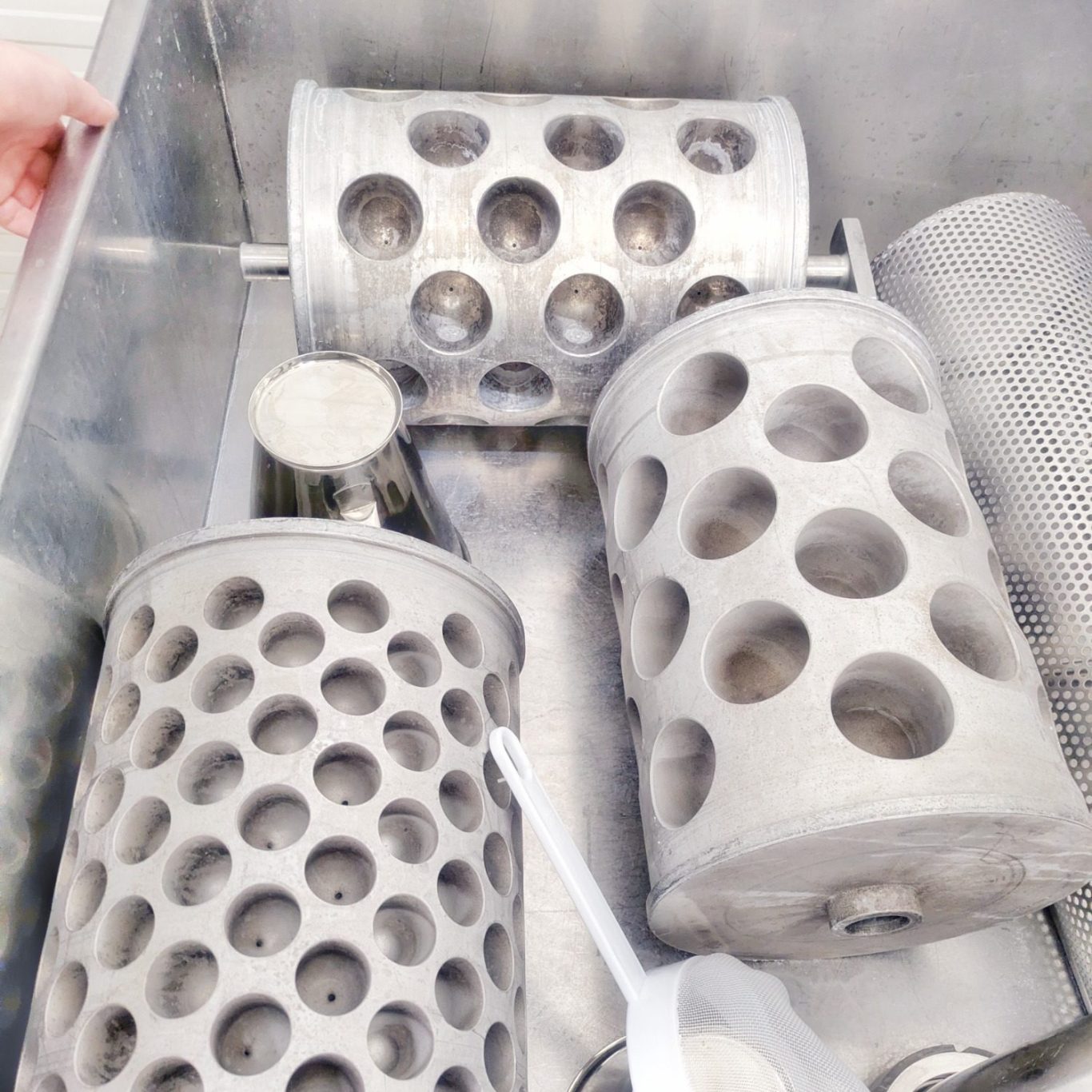
In addition to producing mozzarella, Siri has been experimenting with sheep’s cheese creations at Hårbølle Mejeri for the first time over the past few weeks.
“What do you think makes the art of cheese-making so magical?” I ask her, just before we arrive at Øllingegaard Mejeri. Siri pauses briefly and chooses her words carefully. “Of course, it’s that incredible diversity – everything you can create from a single basic ingredient. And yet you can never fully control it. Nature has taught me to let go, to trust, and to allow something wonderful to emerge from within.”
She gained this perspective on cheese-making – moving away from textbook theory – particularly during her time in New Zealand with David Usher in 2024. “I knew that this eccentric chap down there was running a cheese-making course. Once at the farm, I asked if I could help out before and after the course so that I could make the most of the experience.”
When it came to cheeses that Siri felt were already pushing the limits of what was acceptable, David simply advised her at the time: “Wait and see – it might still turn out all right.” This trust in nature, in letting things take their course rather than jumping to conclusions, in setting aside one’s own judgement and waiting to see – all of this has shaped her approach to cheese-making. “When I run a course here at the Mejeri today, I tell people: Of course you can work with a starter culture from the lab – but kefir works just as well.”
A complex structure
As she parks the car at Øllingegaard Mejeri, my admiration for Siri immediately gives way to amazement at this cheese-yellow building complex, built in 1925, with its restored stables and striking round towers. “It was only modernised two years ago.” The result is an impressive Bullerbü-style paradise for the marketing foundation dairy, which is united under one roof with Hårbølle Mejeri – a traditional cheese dairy producing Naturmælk – as a cooperative venture run by organic farmers.
A prime example of a fundamental structural principle of Danish agriculture, Siri explains to me. Cooperative organisations, known in Danish as the ‘andelsbevægelsen’, emerged in the late 19th century in response to economic pressures: small farms had to hold their own against international competition and so joined forces to set up dairies, in order to ensure quality, pool processing capacity and facilitate exports. This laid the foundation for Denmark’s rise as an agricultural nation. “This model is still deeply rooted today. Many large dairies are owned by the farmers themselves. They make decisions collectively, and the profits flow back into the farms.”
She comes here five days a week to make cheese. “Let’s pop our things inside for a moment, I’ll show you the cheese dairy – and then we’ll make ourselves comfortable!” Siri holds open the copper-framed door to the Gårdbutik for me. Everything still smells brand new. Although we’re here in the rather quiet Hovedstaden region – lots of fields, few people – there are still a few visitors here to buy milk from Øllingegaard Mejeri or cheese from Hårbølle Mejeri straight from the farm shop. Everyone knows Siri, of course. With her warm presence, she instantly fills the whole room.
Cuts and notches
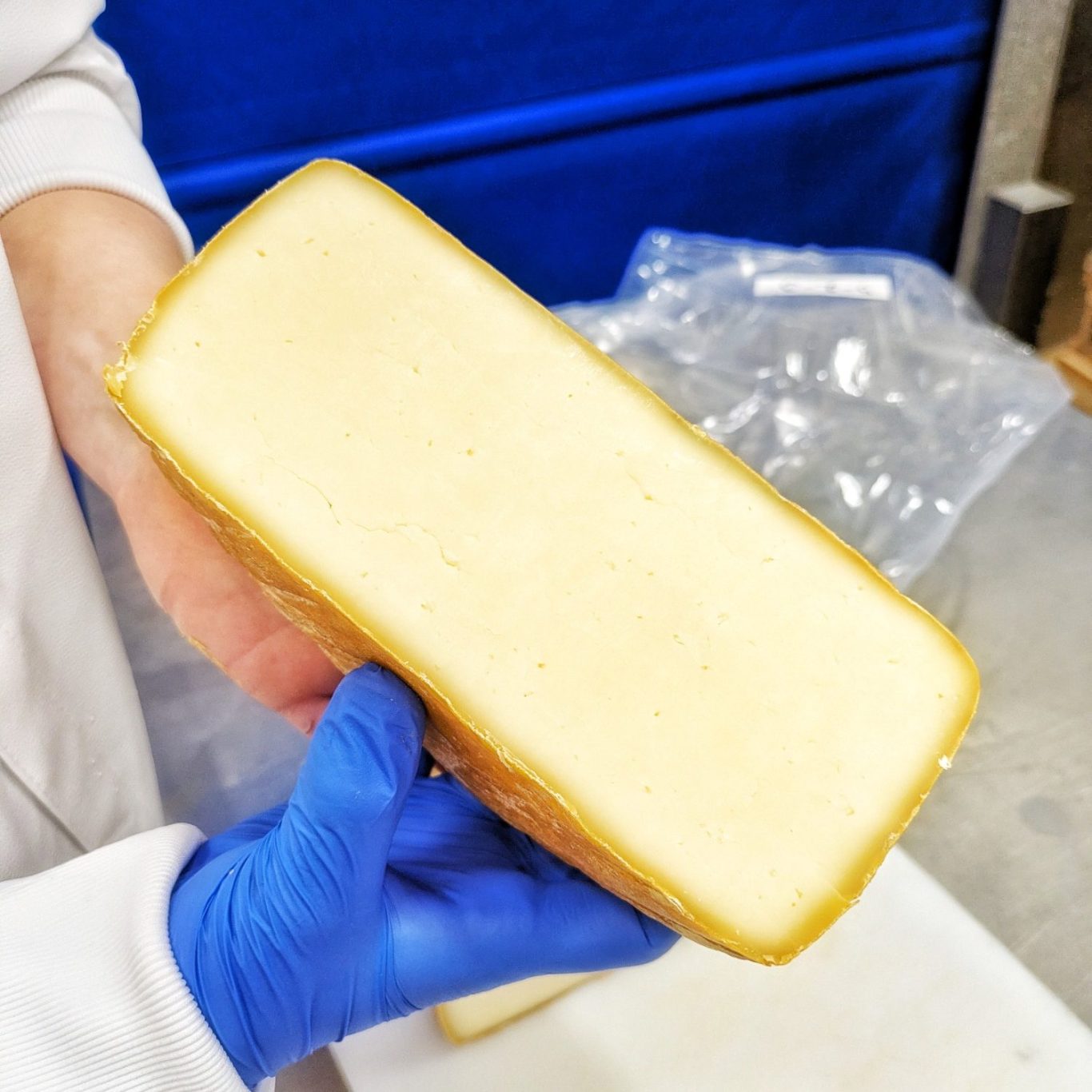
“Look at this wonderful texture! And can you see that almost moss-green line here on the bark?”
“I’ve got a surprise in store for you!” Of course – as if all the hospitality, her shared expertise and the cardamom-flavoured sweets in my bag weren’t gift enough already. Armed with a cheese board and a sharp knife, we set off for the cheese dairy. Although the term ‘production hall’ would be more accurate: I’m standing in an unexpectedly large workshop dating back to the 1990s. Siri makes cheese here in a smaller, separate area for Hårbølle Mejeri – mainly mozzarella, though she’s also been experimenting with sheep’s milk for the past few weeks.
“You’ll definitely be taking some of my feta home later – but first, let’s cut into my Tolkedyb together!” Half sheep, half cow, Siri proudly holds out her two-month-aged cuvée to me. All the cheeses produced here bear a region-specific name. “In marketing, we sometimes spend weeks racking our brains to find the right term that reflects both the character of the cheese and our homeland.”
The semi-hard cheese Tolkedyb takes its name from a body of water – more specifically, a deep channel in the Danish Baltic Sea. Close to the hamlet of Næs and the town of Hårbølle, Tolkedyb marks a cut in the surrounding natural landscape – and here, at the same time, marks the striking beginning of the work with sheep’s milk at Hårbølle Mejeri, which Siri is literally cutting into for the very first time. “Shall we taste it together?”
She cuts the thirty-centimetre-wide wheel in half. “Look at this wonderful texture!” Then she pauses, amazed. “Can you see that almost moss-green line here on the bark?” Siri holds the cut surface up to her nose, closes her eyes and sniffs intently. Fascinated, she keeps looking at the play of colours beneath the bark. “Where on earth does that come from?”
I realise more and more the awe with which she regards the result of her own work here – and even more so what nature has made of it. What she holds in her hands is far more than a product crafted with care and expertise for one’s enjoyment – and even that would be enough. It is an ongoing dialogue with a transformation wrought not by the cheesemaker, but by nature itself: underpinned by trust, brimming with flavour and pure devotion.
Pure indulgence
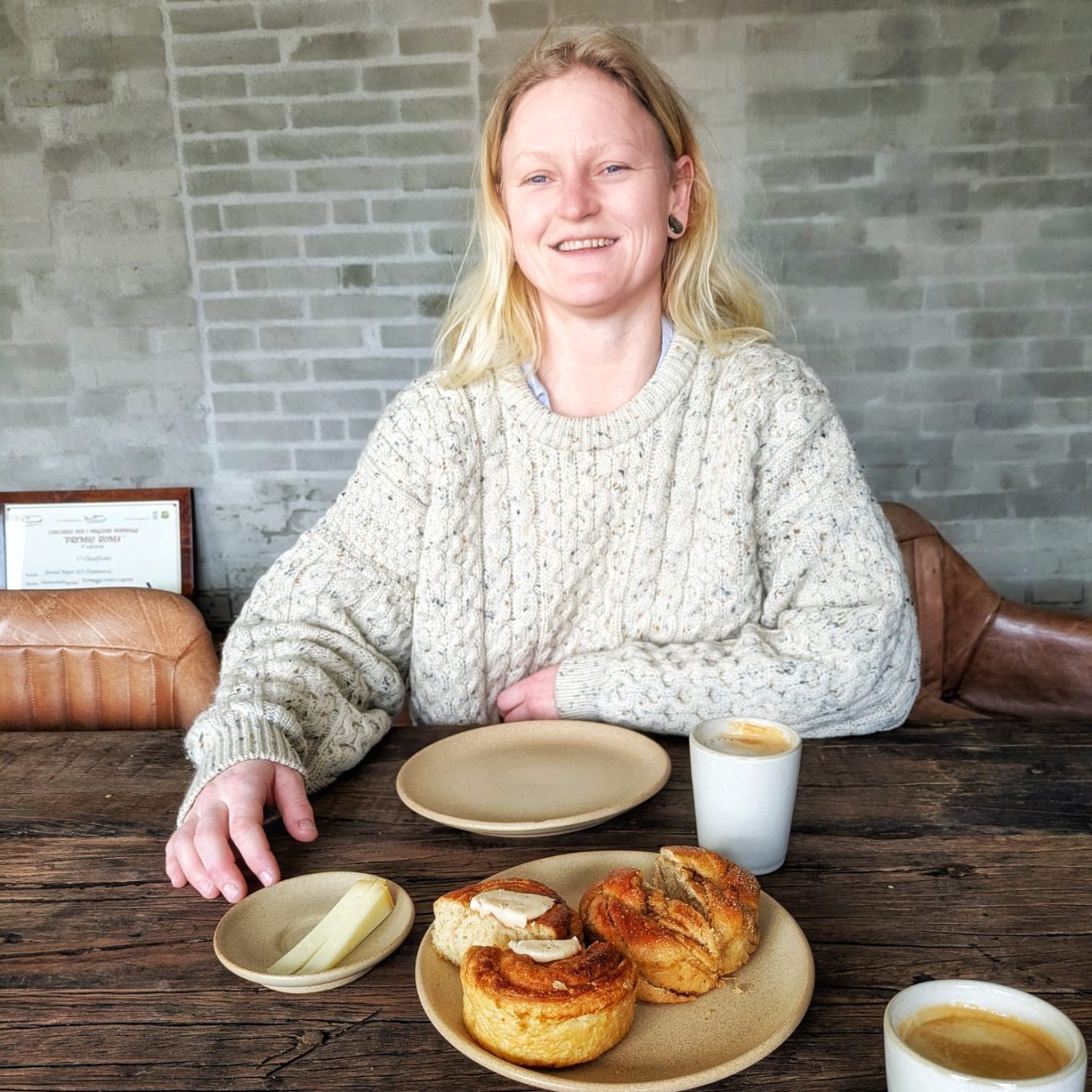
Whether it’s making cheese, having coffee with cardamom buns or socialising: when Siri does something, she does it properly.
Of course we’re having a taste. But that’s not all. “Now it’s really time to settle in!” The milky, fresh flavours of her Tolkedyb still linger on my tongue when, a little later, I find myself sitting at a lovingly laid, long wooden table – “this is where we hold events”: with hot coffee and cardamom buns on ochre-coloured crockery. Siri demonstrates with every gesture she makes – as a hostess, whilst making cheese, in conversation with her guests: This is deliberate. A celebration of life. When she does something, she does it properly.
In just a few weeks’ time, the Nordic Cheesemongers will be gathering here at Øllingegaard Mejeri for their annual meeting – an association of artisan cheesemakers from the Nordic countries. Among those attending will be Thomas Berglund, Marie and Mikkel from Søtofte Gårdmejeri, and Peter Dörig.“Oh, I’m only involved in the organisation,” says Siri modestly when I ask her how stressful a two-day event like this is for her.
And yet I already know, after just a few hours of meeting this Siri Vilmann – previously a mere phantom whose name was known to all – that she will more than enrich this event. With her extensive expertise and the aura she exudes. For the Danish Dairy Queen, it’s not about what she does, but how she does it: with purpose, with dedication – and, whilst the table is already covered in cardamom crumbs, with pure indulgence.
This encounter is part of my ongoing Cheese Stories on international cheese cultures.